
Pre-warning Stage Drought in Mallorca: Good Numbers, Open Questions
Pre-warning Stage Drought in Mallorca: Good Numbers, Open Questions
The reservoirs are currently in a better state than a year ago and the government does not foresee summer restrictions. Still, experts and everyday scenes on the island warn: care and transparency remain necessary.
Pre-warning Stage Drought in Mallorca: Good Numbers, Open Questions
Government signals no alarm for the summer – but water remains a scarce resource
In the early morning, when the cafés on Passeig del Born are still serving the last espressos and the hum of delivery vans from Mercat de l'Olivar passes over the paving stones, everything looks normal. Gardeners water potted plants on building facades, cyclists pass the cathedral. However, the figures behind this normality are not irrelevant: at the end of April the water stores that supply Palma with drinking water are significantly higher than a year ago. The total reserve amounted to 72.31 percent on April 20 this year; at the same time in 2025 it was 57.51 percent – an increase of around 14.8 percentage points. For a regional perspective, see 44% and Still Uneasy: Why Mallorca's Water Situation Remains Regionally Critical.
The regional government has formally placed the island in a pre-warning stage due to drought, yet current information indicates there are no plans for summer water rationing. The municipal utility Emaya emphasizes that user behavior in Palma has become more frugal and this has helped ease the situation. Such figures and assessments are reassuring – but they do not answer all the relevant questions.
Key question: Are the reserves and the measures taken so far sufficient to get through a hot, densely populated summer without shortages? This is where the critical assessment begins.
First layer of analysis: what the reservoir levels say and what they do not. Reservoir values provide a good overview of surface resources, but they do not automatically reflect the availability of groundwater, pumping capacity, water quality or potential technical failures, as explained in Why Mallorca's reservoirs remain empty despite rain — a reality check. A full basin helps as long as the conveyance infrastructure functions and there is no sudden surge in consumption. Also, year-to-year comparisons are useful, but they smooth out extreme events: a dry May or a heat peak with many tourists can rapidly increase demand.
Second layer: sources of demand and sectors. In the city private household use is visible – balcony watering, pools, car washing. Outside the city there are large consumers like golf courses, agriculture and hotels, which add significantly in the high season. So far statements have focused on the total reserve; it is less clear how consumption is distributed between households, tourism businesses and agriculture and what priorities would apply in a crisis.
Third: what is missing from the public discourse. Transparent scenarios for different summer situations (e.g. hotter than average, tourism surge, failure of a pumping station) are rarely offered. Recent reporting on municipalities forced to rely on tanker trucks as a temporary measure underscores the need for concrete contingency planning, see Drought alert in Mallorca: The tanker truck as an emergency exit — and what is really missing. Also hardly addressed are the role of reuse (treated wastewater), leak repairs in the distribution network, seasonal water pricing and supporting measures such as temporary restrictions for lawns or scheduled automatic irrigation times. Citizens and businesses have the right to concrete plans, not just reassuring blanket statements.
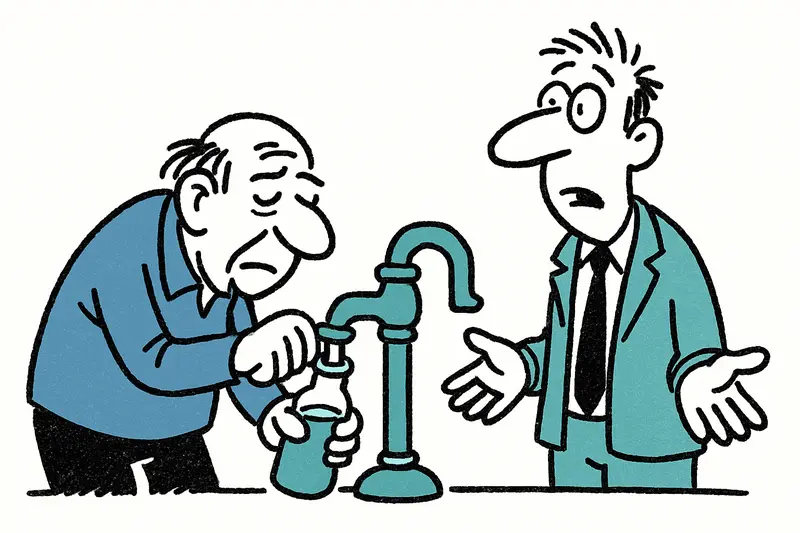
An everyday scene as a reminder: shortly after sunrise at the roadside in Portixol an elderly man fills a bottle at a small fountain while the sea glitters in the background. The routine of this moment hangs on the drop — literally and metaphorically. For many residents water is a familiar, but also scarce resource; therefore they react sensitively to price increases but also to the image of wasted resources in the high season.
Concrete approaches that should be pursued now:
- More transparency: daily, openly accessible data on reservoir inflows, groundwater levels and treatment plants; scenario models for different demand situations.
- Leakage management: priority for inspections and quick repairs in the urban network; funding programs for pressure regulation in distribution networks.
- Sectoral measures: binding agreements with hotels and golf courses for demand management (e.g. time-limited irrigation, use of treated wastewater).
- Incentives for reuse: expansion of facilities to use reclaimed water for irrigation and industry; subsidies for cisterns in private and commercial new builds.
- Demand control instead of pure bans: tiered pricing that charges higher usage more heavily, combined with social exemptions for households in need.
- Multilingual and local communication: campaigns in neighborhoods, markets and on beaches – not just central appeals.
Conclusion: The current storage levels are a reason to take a short breath. But they are not a free pass for careless behavior. Technical robustness, clear scenarios for the summer and concrete measures for high-consumption areas are still missing from the public debate. If the island administration, Emaya and the major consumers now work together on transparent planning and actionable rules, the summer can be faced with less risk. If this does not happen, the positive balance on paper will not be enough to prevent an empty jug in the high summer.
Frequently asked questions
What is the weather usually like in Mallorca in winter?
Can you swim in Mallorca in winter?
What should I pack for Mallorca in the cooler months?
Is Mallorca worth visiting in winter?
What is Palma de Mallorca like in winter?
Is Sóller a good place to visit in Mallorca during winter?
What is Valldemossa like in the cooler season?
Are winter days in Mallorca still sunny enough for outdoor plans?
Similar News
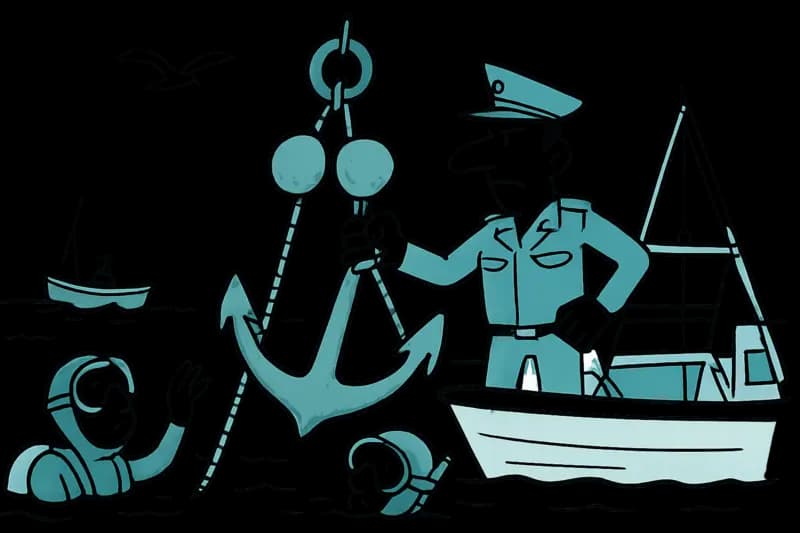
Ancient Piece Brought to Light: Guardia Civil Recovers Roman Anchor Fragment off North Coast of Mallorca
Divers from the Guardia Civil recovered a massive iron piece from Roman times off Mallorca's north coast. The roughly 35...

Who Benefits from the Half‑Hourly Flight on the Edge? Aena, Investments and the Island's Interests
Almost one billion euros is flowing into Son Sant Joan. The figures show the scale of investment and expected beneficiar...

Are the Balearic Islands the Southern Border of Europe? A Reality Check on Immigration
The Balearic Islands are again calling for EU aid after a sharp rise in arrivals by sea. Conflicting priorities between ...

"Expensive chaos" and many open questions: What clients can do when a lawyer suddenly stops responding
Several clients complain that a well-known German lawyer in Mallorca has been unreachable for months. Key question: What...

TV tip: 'The Last Problem' — Mallorca as the setting of a classic crime
A classic whodunit on Mallorca: A new miniseries set in spring 1959 brings storm, an isolated hotel and a dense web of s...
More to explore
Discover more interesting content

Can Cap de Bou

Townhouse Lleo 72
