
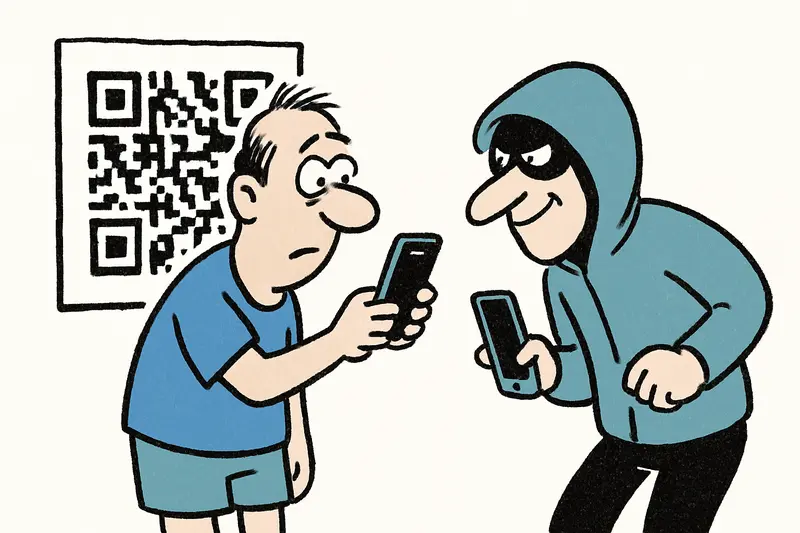
QRishing in Mallorca: How a Harmless QR Code Spies on Your Phone
QRishing in Mallorca: How a Harmless QR Code Spies on Your Phone
Fake QR codes in restaurants, on parking meters or charging stations — the Spanish police warn: QRishing has arrived in Mallorca. Guiding question, analysis, everyday tips and concrete protection measures.
QRishing in Mallorca: How a Harmless QR Code Spies on Your Phone
Why a quick scan in Palma or at the beach can suddenly become expensive
Guiding question: How can travelers and locals in Mallorca recognise a tampered QR code and what should be done if data or malware actually reaches the smartphone?
On an early May morning in Palma: delivery scooters hum along the Passeig del Born, a café on Plaça Weyler fills up, and on the corner of Carrer Sant Miquel a shiny square code is stuck on a tourist menu. Habit makes many guests simply scan — faster than the waitress returns, faster than the order is written down. It is precisely this routine that fraudsters exploit.
The trick currently prompting warnings from the Spanish police is called QRishing. Technically it is often simple: a fake sticker replaces a legitimate code, a standalone sticker is placed in high-traffic spots, or an SMS/email contains a link represented as a QR code; similar incidents have been reported, for example Beware at the parking meter: Fake QR stickers in Palma's port deceive drivers. The goal is always the same: to present the user with a seemingly trustworthy web interface in order to elicit login details, card information or consent to install malware.
Critical analysis: QRishing works not because supposedly highly advanced hacking tools are used, but because people act quickly in everyday situations and overlook small clues. A criminal sticker on a parking meter or beach kiosk spreads more easily when there are no visible checks. At the municipal level there is often a lack of awareness of how easily public infrastructure can be manipulated, as discussed in Fake QR Codes at Palma Harbor: How Secure Are Our Parking Payments?. At the same time, digitalisation relieves restaurateurs and event organisers of care: QR menu? No problem. Responsibility for security thus inevitably shifts from the operator to the customer.
What has been lacking so far in public debate: clear responsibilities and visible prevention. It is not enough to merely warn about the scam. Municipalities should carry out regular inspections of public QR elements and operators of parking machines, electric charging stations or beach kiosks should be required to affix tamper-evident seals. At the moment, awareness-raising often falls to police stations; however, more visible warning signs in busy places would prevent many missteps.
Everyday example from Mallorca: at a parking meter in Port de Sóller residents once discovered an additional paper sticker advertising a foreign payment service. Someone who quickly enters their card there believes they are paying — and instead transmits their data to third parties. Experience shows: not only tourists are affected; residents who go through similar routines daily can just as easily fall into the trap.
Concrete protective measures that help immediately: 1) Don’t scan blindly: approach a QR code critically, especially if it appears on paper stickers or looks crooked. 2) Check the link: modern camera apps show the URL before the page loads — inspect the domain carefully. 3) Never enter bank details: reputable providers rarely request payment data via spontaneous QR links. 4) Enable two-factor authentication: if login data is stolen, access often remains protected. 5) Security software and system updates: keep your phone up to date and, if you suspect an infection, check it with a mobile scanner or have it inspected in a specialist workshop. 6) Use virtual cards/single-use numbers: many banks offer temporary card numbers for online payments — ideal for uncertain situations.
There are also concrete steps available for businesses and authorities: clear labelling of official QR codes, regular inspections by the town hall (ayuntamiento) or the Guardia Civil, and training for hospitality staff so that suspicious changes are reported immediately. At the local level, information leaflets in multiple languages could be available at tourist offices and parking areas — simple, direct prevention often works better than abstract warnings.
What to do if you believe you have become a victim: act quickly. Cancel payments, inform your bank immediately and block affected cards. Change passwords for important accounts and activate any available lock mechanisms. Document the tampered spot (photo of the QR code, location and time) and file a report with the Policía Nacional or the Guardia Civil; there are also reporting channels via Spanish cybersecurity agencies that record such incidents, and one local case where a smartphone signal led to an arrest in Palma's old town illustrates how digital traces can help investigations. Every report helps to recognise patterns and disrupt criminal networks.
Concise conclusion: QR codes are practical, but not an invitation to gullibility. In Mallorca, where tourism and fast routines set the pace, a moment of inattention is enough for serious damage. Responsibility is shared: visitors must become more sceptical, and businesses and municipalities must become visibly safer. Those who stay alert and follow simple check rules make life much harder for fraudsters — and can enjoy their next café visit worry-free.
Frequently asked questions
What is the weather like in Mallorca in spring?
Is Mallorca warm enough for swimming in the sea?
What should I pack for a trip to Mallorca in spring?
When is the best time to visit Mallorca for pleasant weather?
What is Palma like in spring?
Is Deià a good place to visit in spring?
What is the weather usually like in Sóller in spring?
Can you still enjoy Mallorca beaches in spring?
Similar News
Rental Car Theft in El Arenal: What This Incident Reveals About Our Gaps
A teenager steals a running rental car in El Arenal, flees on foot, climbs over walls and is caught by the Guardia Civil...
Red Rope in Palma's Library: What Helps Against Selfie Tourism — and What's Missing
Palma's city library cordoned off an area with a red rope to keep selfie tourism away from reading and working activitie...
Fort San Carlos: Museum, Harbor Dispute — and a Conflict That Demands Answers
The military museum at Fort San Carlos sits right on Palma's harbor, with unexpectedly quiet rooms filled with cannons a...
Old Town Under Pressure: When a Doorway Becomes a Sleeping and Shower Place
For months a woman has been living with a parasol, a clothes rack and personal belongings next to the social welfare off...
When Shopping Weighs Heavier: Mallorca Demands a Tax Pause on Food and Fuel
Rising prices are putting pressure on households and agriculture. The Balearic Islands are calling for temporary tax rel...
More to explore
Discover more interesting content

Can Cap de Bou

Townhouse Lleo 72
