
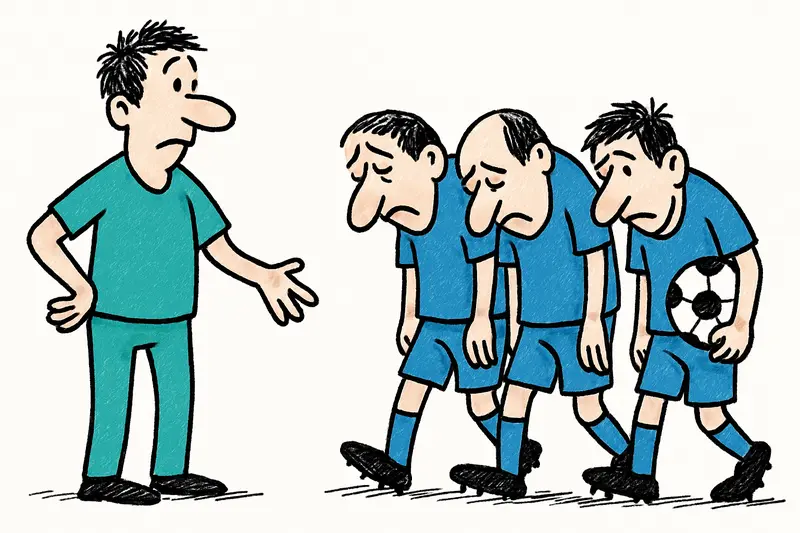
Red Alert: Why Mallorca's Crisis Runs Deeper Than the 0-1 in San Sebastián
The 0-1 at Real Sociedad is merely the next logical consequence of a poor run. Between travel demands, lack of personnel and tactical questions lies the real challenge for RCD Mallorca.
An evening that revealed more than just a result
The Reale Arena sent Mallorca home with a cool wind, loud applause from the Basques and a single goal. The 0-1 against Real Sociedad felt not only like a defeat but like a wake-up call. On the return to Palma, there were few voices to be heard in the bars at the Plaça Major — more the quiet murmur of regulars discussing the matches. You can already picture the players in their heads on the turf of Son Bibiloni – but the question is: what should happen there in the coming days?
The central question: structural problem or just a blip?
Two points after six matchdays are the sober answer to that question. This is no longer a fair-weather problem. The table shows 19th place, and the result in San Sebastián was symptomatic: poor chance conversion, coordination errors in defense, no real rhythm in midfield, a pattern also highlighted in Yellow Alert in Palma: How RCD Mallorca Can Still Save the Season. But is this all just a dip in form? Or is there a deeper structural problem behind it – squad quality, training management, travel stress for an island team?
Aspects that are rarely discussed aloud
In public debate, goals, criticism of the coach and fan chants dominate. What often gets overlooked are the logistical strains on an island team. Flight and ferry times, altered training rhythms, a different sleep management for players are factors that add up. On top of that is the lack of depth in the squad: when the starting eleven and the bench allow hardly any quality changes, every small mishap becomes bigger. Also neglected is the question of clear responsibilities within the club: who carries the strategy during transfer periods? Who decides on playing style and youth development? These questions were brought into sharper focus after the collapse against Barça, as discussed in Two dismissals trigger a crisis? Mallorca after 0-3 to Barça faces tough questions.
Concrete levers Mallorca can act on immediately
There is no miracle cure, but there are practical steps: first, drill set pieces intensively. Many of the current goals conceded come from lapses at corners and free kicks. Second, tactical relief by switching formation – for example a narrower 4-2-3-1 that stabilizes the defense and reduces phases of losing the ball. Third, targeted load management: retime travel, prioritize recovery, offer sports-psychological one-on-one talks for key players. Fourth, more courage to rotate: give young talents from the academy (an asset that is often used too timidly on Mallorca) responsibility instead of relying only on tried but troubled players.
Coach and board: who will pull the emergency brake?
Jagoba Arrasate is visibly under pressure. His answers after the game were short and professional – that is no longer enough as a calming pill, especially after narrow defeats that expose fragile planning, as seen in Two Minutes Decide: Mallorca Shows Courage at the Bernabéu — and Loses Narrowly. The club leadership is called upon: a clear commitment to the plan or a swift readjustment. The decision need not be dramatic: an open conversation with the players, a distraction-free training camp on the island, or a change in the playing idea. What matters is transparency – the fans have a right to know what the plan looks like.
Outlook: Saturday against Alavés will be decisive
The home game against Alavés in this phase is not a normal league match but a stress test for character and system. A win would do a lot morally, but also answer tactical questions. With another defeat, pressure and unrest will grow – within the squad, the training center and across the island; recent narrow losses underline how fine the margins are, for example Too late to ignite: RCD Mallorca lose narrowly 1-2 in Bilbao. Mallorca can no longer afford excuses. On the Plaça Major people will listen closely: not only to whether there is cheering, but whether hope returns to the voices.
In the short term, a lot can happen: concrete training steps, a different match plan, the rise of young players or simply a bit of luck. In the medium to long term the club needs more: a clear strategy for transfers, recovery and the connection between the academy and the professional team. Only then will Red Alert turn back into a manageable daily routine on the island.
Frequently asked questions
Why is RCD Mallorca in trouble after the loss in San Sebastián?
What are the main reasons Mallorca are struggling this season?
How do travel and island logistics affect Mallorca’s football team?
Will Mallorca change formation or tactics to stop conceding so easily?
Is Jagoba Arrasate under pressure at Mallorca?
How important is Mallorca’s next home game against Alavés?
Should Mallorca give more chances to academy players?
What does Mallorca need to improve in the short term?
Similar News

Mueller continues expanding in Mallorca: Artà in 2026, Can Picafort in early summer 2027
The drugstore chain Mueller is opening two new stores in Mallorca: a 1,400 m² shop in Artà on 5 November 2026 and a bran...
The Painter Who Lived Mallorca: Franz Taussig and His Century-Old Secret
A hundred years ago a young Viennese arrived in El Terreno, sketched the island and called himself Francis Caron. Today ...

Airport dispute: Bridge, forecasts and the question of responsibility
A video by the Spanish transport minister has ignited the dispute over DORA figures, capacities and local governance pow...

The Painter Who Invented Himself: How a Young Viennese Drew Mallorca
A hundred years ago a 19-year-old draftsman arrived in El Terreno. His diary and sheets, long known under the pseudonym ...
Released with Conditions: The Plus Ultra Suspicion and a Mallorcan Finca as Residence
A Dutch entrepreneur, sought in connection with the Plus Ultra case, was extradited to Spain after his arrest in Germany...
More to explore
Discover more interesting content

Can Cap de Bou

Townhouse Lleo 72
