
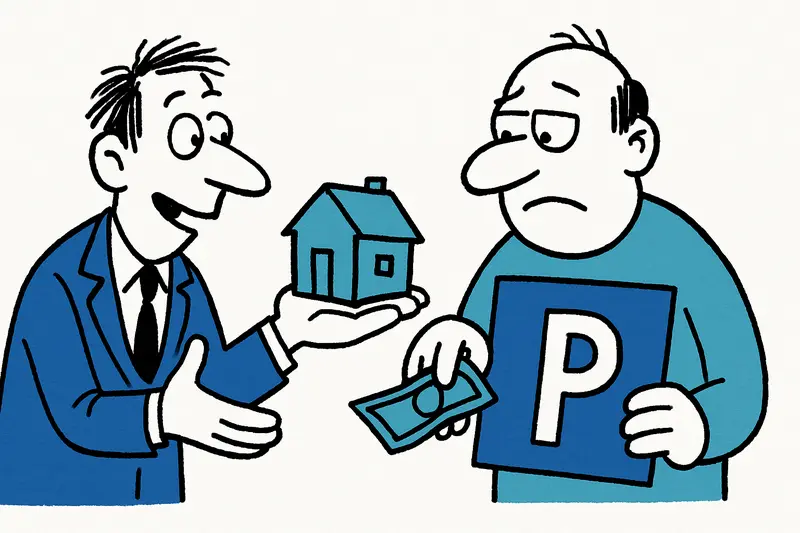
Reality check: Why parking spaces in Palma cost more than apartments elsewhere
Reality check: Why parking spaces in Palma cost more than apartments elsewhere
Parking spaces in Palma's Old Town, Santa Catalina and El Terreno reach, according to experts, prices beyond €120,000. How could a patch of asphalt become so valuable — and what's missing from the debate?
Reality check: Why parking spaces in Palma cost more than apartments elsewhere
Key question
How is it possible that a single parking space in Palma can cost more than an 80-square-meter apartment in large parts of Spain — and what does this say about urban planning and the housing market in Mallorca?
Critical analysis
The calculation is simple and uncomfortable: in neighborhoods like the Old Town, Santa Catalina or El Terreno the average purchase price for a garage parking space, according to the Association of Real Estate Agents of the Balearic Islands, is over €120,000, as discussed in Palma at Two Prices: Why the Same Square Meter Can Suddenly Be Luxury. That means that just for a parking space you pay the sum for which you could, on average, already buy an 80-square-meter apartment in 27 Spanish provinces. In Extremadura, for example, one square meter costs around €696, so such an apartment would amount to roughly €55,700. On the Balearic Islands, by contrast, the price per square meter is about €4,063; an 80-square-meter apartment therefore costs around €325,040. These figures reveal a massive distortion: city centers where space is scarce face a shortage of parking that the market answers with astronomical prices.
The causes are not only economic. José Miguel Artieda, who represents the chamber of estate agents on the islands, points to the classic combination: high buying interest meets low supply, a dynamic described in Why Palma is expensive — and what could be done now. In addition, companies need parking for employees and investors prefer to buy parking spaces when the capital required for apartments is too high. Ten years ago the money for a parking space might have bought a whole apartment elsewhere; today that is inconceivable.
What is often missing in the public debate
The discussion stays too much at the level of headlines about "expensive islands" and too little on concrete mechanisms. It is rarely spelled out what role municipal land policy, development plans and fiscal incentives play. Distributional effects are also missing: who benefits from the scarcity — residents, speculators, employers — and who is left out? The ecological side is also rarely a topic: the price explosion for parking does not automatically push people into climate-friendly alternatives, but into costly solutions that deepen social inequality.
A typical scene in Palma
It is early morning on the Passeig del Born, the sky is grey and cool — around 16 °C, very cloudy. A delivery van honks, an older man with shopping bags looks along the kerb for a free gap, at the Santa Catalina market a vendor is unpacking oranges. Phone calls ring out: "Do you have a parking spot?" — a sentence heard here more often than "How are you?" People circle through narrow lanes, stop at private garage exits and talk about offers they've seen: €120,000 for a space in their neighborhood. The feeling is that here space has turned into money — and the residents lose out.
Concrete solutions
The situation is not a law of nature; it can be influenced politically and through planning. Some possible steps:
1. Clear municipal land strategy: Cities must examine where parking can be created or re-designated — for example through multi-storey car parks on the edges of the Old Town instead of new asphalt areas in the core.
2. Better integration of employer parking: Companies should be encouraged to provide parking for employees with their own or collectively organized solutions outside the most expensive zones; that reduces pressure in the center.
3. Fiscal and legal barriers to speculation: Targeted taxation of stand-alone parking spaces or stricter rules on commercial purchases could make speculation less attractive.
4. Promotion of carsharing, cycling and public transport: Investment in attractive alternatives reduces the need for private parking and makes the city more livable.
5. Resident parking permits and social discounts: Low-income residents should get prioritized access to public parking so that market dynamics do not destroy quality of life.
Why parts of the mainland become attractive
The high prices in the Balearic Islands have led to migration to the mainland: since the pandemic more island residents have increased property purchases on the Spanish mainland — popular regions include Asturias, but also Alicante and Valencia. There buyers get more living space for their money; this is a logical response to local price ratios, and is connected to rising local rental costs detailed in When the Shared Flat Room Becomes a Luxury: Palma Under Pressure.
Pointed conclusion
A parking space must not become a luxury good that determines people's daily lives. When a plot of parking costs more than an apartment in large parts of Spain, market mechanisms collide with social compatibility. Palma needs a combination of planning, regulation and attractive alternatives, otherwise the city will remain a place where space belongs only to those who can pay for it — not to those who live and work here.
Frequently asked questions
Why are parking spaces in Palma so expensive?
Is a parking space in Palma really more expensive than an apartment in Spain?
Which parts of Palma have the highest parking prices?
What does Palma’s parking crisis say about Mallorca’s housing market?
What can Palma do to make parking less of a luxury?
Are parking spaces in Palma also bought as investments?
What should residents in Palma do if they cannot afford a private parking space?
Why are some Mallorca residents buying property on the mainland?
Similar News
Fewer Airlines, Fewer Destinations: What Palma's Winter Flight Schedule Means for Mallorca
Analysis shows: Winter at Son Sant Joan Airport will be quieter, with significantly fewer airlines and destinations. Who...
German tourist dies in Sa Calobra – a reality check for emergencies on Mallorca's beaches
A 40-year-old tourist died at the Torrent de Pareis. The emergency call, a doctor who happened to be present, a defibril...
Deadly Tractor Accident in Bunyola: What Needs to Be Done Now
In a work accident on an estate near Bunyola, a roughly 40-year-old man lost his life. His wife and a small child were o...
Head-first dive into the shallow part of Cala Fonoll: An accident and the unresolved question of responsibility
A young tourist dove into Cala Fonoll and was seriously injured. Key question: Why are clear warning signs missing at da...

Mistaken identity with fatal consequences: Brutal assault in S'Aranjassa — what's missing in the follow-up?
At S'Aranjassa a visitor to a finca was tied up, beaten and thrown out of a van. Three men have been arrested, including...
More to explore
Discover more interesting content

Can Cap de Bou

Townhouse Lleo 72
