
Reality Check Playa de Palma: Why the Trash Doesn't Disappear After Party Nights
Reality Check Playa de Palma: Why the Trash Doesn't Disappear After Party Nights
Kilograms of bottles, cans and packaging — Playa de Palma is once again strewn with rubbish in the early morning. Who really cleans up, and why are the measures insufficient? A critical look with concrete solutions.
Reality Check Playa de Palma: Why the Trash Doesn't Disappear After Party Nights
Kilograms of waste on the beach and promenade — residents and cleaning crews are fed up
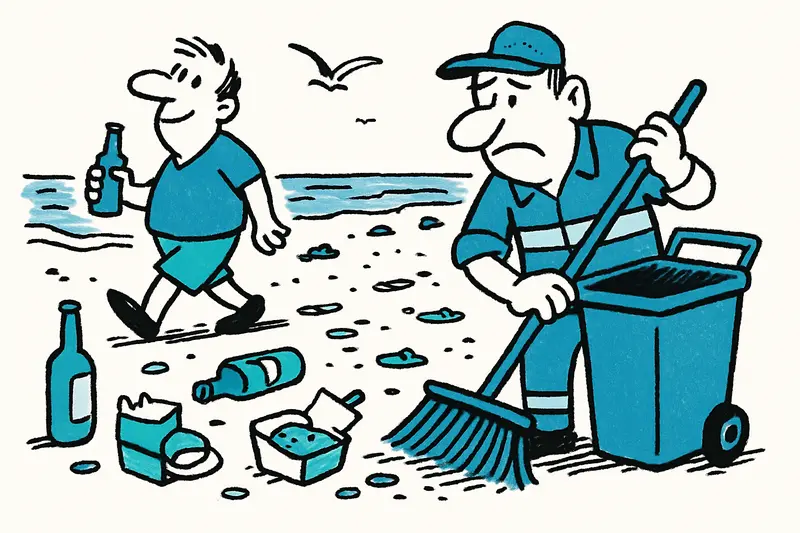
A little after six on a June morning: the sun fights its way over the horizon, seagulls circle, and crushed cans, glass bottles and fast food packaging lie on the sand. This or similar is the daily morning scene at Playa de Palma these weeks. The municipal cleaning service (EMAYA) regularly deploys teams, but the mess returns almost ritualistically. The key question is: why is the current cleaning tactic not enough to get the problem permanently under control during the high season?
First, a sober look: the material problem is obvious — a mix of glass, single‑use plastic, aluminium foil and hygiene items, scattered not only on the first row of the beach but also along the promenade and in side streets of the nightlife districts, as documented in What Lies Beneath Mallorca's Coast: Trash Slipping Out of Sight.
The current reaction — daily early morning cleanups — feels like trying to empty the ocean with a bucket. If kilograms of waste must already be collected in the morning, the signal is clear: the disposal and order model is overwhelmed at peak times. Added to that: cleaners often work under time and staff pressure; EMAYA's presence is visible but reactive rather than preventive.
What is often missing in the public debate is an honest accounting of numbers and responsibilities. How much waste is generated on which nights? Who bears the costs — the city, the operators of bars and clubs, the event organizers? Are there sections of the promenade that are regularly more problematic? Such data are largely absent from the discussion. Also rarely discussed is the role of international promoters, travel agencies and rental platforms regarding guest behaviour.
A snapshot of everyday life explains it better than any statistic: bar owners sweep their entrances in the morning, employees gather the bottles while delivery vans arrive. A jogger skirts a puddle of cola residue, and an elderly couple waits for the tram, visibly annoyed by the sight. Such scenes are observed daily in many corners of the Playa — they make the problem tangible and immediate, as local hoteliers have warned in Foul-Smelling Promenade, Empty Promises: Hoteliers in S'Arenal Put Pressure on Llucmajor.
Concrete, practicable approaches must connect several levels:
1) Align night and early‑morning shifts strategically: EMAYA should intensify pilot shifts during the late night hours and immediately before sunrise — not only collecting, but spot‑cleaning and safely removing glass debris.
2) Product regulation in high‑risk zones: Banning glass bottles in core zones between 23:00 and 06:00 or replacing them with deposit or single‑use box systems would reduce the hazard from shards.
3) Improve local infrastructure: More robust, generously sized waste islands along the promenade, additional mobile collection points after events, more public toilets and beverage collection containers can reduce the amount of uncontrolled waste.
4) Enforcement and sanctions: Visible presence of enforcement officers, clear fines for serious offences and consistent penalties also against organizers who do not take responsibility for their visitors.
5) Cooperation with the industry and countries of origin: Agreements with bars, discos, tour operators and online platforms to place information campaigns when tickets are purchased or at check‑in. Cooperations with German promoters, for example, could help communicate rules of conduct, as debated around the season finale in Playa de Palma at the Season Finale: Profits, Noise — and Who Pays the Bill?.
6) Civic engagement and transparency: Volunteer cleanup actions, clear publication of cleaning balances (tons per night, hours worked) and an app‑based reporting function for particularly affected spots would increase pressure and transparency.
As a short‑term pilot, a model is conceivable: on selected weekends the city tests a package of nightly cleaning runs, a glass ban in core zones, additional mobile containers and intensified control by municipal services. The results — measured in collected waste weight, number of warnings and feedback from residents — should be published openly and compared with proposed frameworks such as Playa de Palma Demands Responsibility: A 36-Point Plan for Cleanliness, Greenery and Safety.
Conclusion: It is not enough to just clean up in the morning. Anyone who wants to solve the problem permanently must tackle sources of pollution, infrastructure and enforcement at the same time. Playa de Palma is too important for the island for this phenomenon to be treated as business as usual. If the city, the restaurateurs and the origin‑market industries do not act together, the morning scene will remain: sunrise, seagulls — and the familiar gathering of tons of waste.
Frequently asked questions
Why is Playa de Palma so dirty after party nights?
Is Playa de Palma cleaned every morning during the summer?
Why do glass bottles cause so many problems at Playa de Palma?
What could help reduce rubbish at Playa de Palma at night?
Are there fines or rules for littering at Playa de Palma?
What kind of waste is usually found at Playa de Palma after a night out?
Could a glass bottle ban help at Playa de Palma?
Why is Playa de Palma still a waste problem even with cleaning crews?
Similar News

Who Benefits from the Half‑Hourly Flight on the Edge? Aena, Investments and the Island's Interests
Almost one billion euros is flowing into Son Sant Joan. The figures show the scale of investment and expected beneficiar...

Are the Balearic Islands the Southern Border of Europe? A Reality Check on Immigration
The Balearic Islands are again calling for EU aid after a sharp rise in arrivals by sea. Conflicting priorities between ...

"Expensive chaos" and many open questions: What clients can do when a lawyer suddenly stops responding
Several clients complain that a well-known German lawyer in Mallorca has been unreachable for months. Key question: What...

TV tip: 'The Last Problem' — Mallorca as the setting of a classic crime
A classic whodunit on Mallorca: A new miniseries set in spring 1959 brings storm, an isolated hotel and a dense web of s...
Nipping Sea Creatures: Why Bathers in Cala Major and Elsewhere Should Be Cautious
In Cala Major, bathers have reported being nipped by small fish. What is behind it, how can problems be avoided — and wh...
More to explore
Discover more interesting content

Can Cap de Bou

Townhouse Lleo 72
