
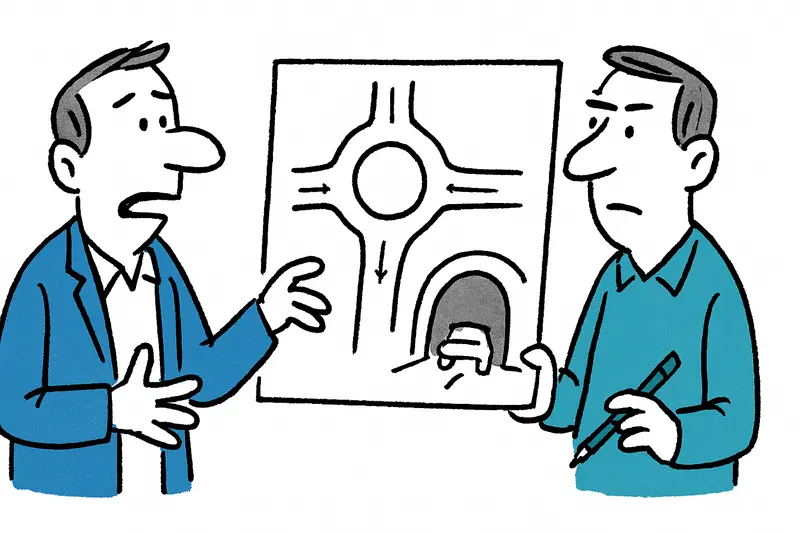
Gènova Tunnel: Palma wrestles with a solution for the daily congestion
The island council presents redevelopment plans for the Gènova Tunnel: roundabout or complex underpass? The decision affects not only travel times but also groundwater, buses, cyclists and the everyday rhythm of Palma.
Gènova Tunnel: Palma wrestles with a solution for the daily congestion
If you drive along Carrer de Gènova at 8:00 in the morning, you know the sound: brakes, a short chorus of horns, the bell of a bus passenger who missed their stop. The island council has put several options on the table to ease this bottleneck, as outlined in Túnel de Génova: Palma busca una solución para el atasco diario. But the central question remains: How much of the city are we willing to sacrifice to traffic — and how much traffic can the city tolerate?
What is really up for debate?
The plan includes two fundamental approaches: a comparatively quick, above-ground solution in the form of a raised roundabout with clearer access lanes and better turning lanes – similar to the junction near Es Molinar – or a much more complex, expensive underground bypass that would redirect traffic more widely. The numbers are striking: more than 100,000 vehicles pass this stretch daily, many heading toward the center. That affects not only private cars but also extends bus travel times, unsettles cyclists and clogs delivery traffic.
The often overlooked side: climate, groundwater and small businesses
While debates quickly focus on construction costs and timelines, other aspects often remain in the shadows. An underpass interferes with soil and groundwater structures, which can have consequences for adjacent buildings and the urban water cycle. Construction work at such a heavily used junction also threatens the daily turnover of small shops and kiosks – the corner where the taxi driver laughs at the kiosk depends on people being able to pass through.
And then there is the climate factor: stop-and-go traffic increases consumption and emissions. A solution that only speeds up car traffic can bring short-term relief — but in the long run attract more cars again (induced demand). This is considered too little in many public discussions.
What do people on the ground say?
Between the kiosk and the bus stop you hear contradictory voices. A taxi driver already calculates saving half an hour in the morning if the junction flows more smoothly. A bike messenger warns of months of construction chaos and speaks for many who rely on bicycles: "If they dig here, the city center will suffer." Such everyday points show: it's not just about paved surfaces, but about commuting routes, noise and the city's daily rhythm.
Concrete opportunities and actionable steps
Instead of immediately choosing the most expensive option, interim steps are available that show quick effects and carry less risk. These include:
- Temporary bus lanes and intelligent traffic lights: With prioritized buses and adaptive traffic signals, public transport could achieve more stable travel times immediately and attract more people to switch.
- Protected bike lanes and delivery zones: Even small interventions, such as protected bike islands or set delivery times, improve safety without long-term construction works.
- - Test roundabout instead of an immediate major construction site: Create a provisional, slightly raised roundabout as a pilot project to observe traffic flows before millions are spent on tunnel plans.
- - Phased construction planning: If a tunnel is built, do it in stages, with clear detour routes and financial compensation mechanisms for affected businesses.
What happens next?
Formally, feasibility studies and environmental assessments are now due. In the coming months, public consultations and traffic reports are expected to follow. If everything goes smoothly, concrete designs could be on the table in spring 2026. Until then, public input is needed: those who live nearby or pass through daily should keep an eye on the public meetings.
In the end, the decision will not only change travel times but also how the area sounds in the future: fewer horns? more birdsong behind a new row of trees? Or months of construction sirens accompanying every morning. Finding the balance between traffic efficiency, quality of life and long-term urban development is the real task — and it deserves more than just a technical fix.
The sun hangs low over the city, the streetlights come on, and Carrer de Gènova prepares for another wave of commuters. Palma now has the chance to plan carefully — and finally reduce the morning stress for thousands without losing the neighborhood.
Frequently asked questions
Why is traffic so bad near Gènova Tunnel in Palma?
What solutions are being considered for the Gènova congestion problem in Palma?
Will a tunnel fix traffic in Palma for good?
How could construction at Gènova Tunnel affect daily life in Palma?
What are the environmental concerns around rebuilding the Gènova junction in Mallorca?
What can Palma do before choosing a major road project at Gènova?
When could plans for the Gènova Tunnel area in Palma move forward?
How could the Gènova road project affect cyclists and bus passengers in Palma?
Similar News

Maribel: Five Decades of Service – Housekeeper from Peguera Celebrated with a Special Honor
Over 50 years in the hotel business: María Isabel “Maribel” Molinos was honored in Palma at the Nit del Turisme by Unive...
Orange Alert over Parts of Mallorca: Are We Prepared?
Dark clouds and an announced wet spell have triggered an Orange alert in parts of Mallorca. A reality check: what's miss...

Sundair & Co.: Sale speculation and what it could mean for Mallorca
Rumors about a possible sale of the airlines Sundair and Fly Air 41, which belong to Schauinsland-Reisen — and whether b...
Anne Wünsche in Mallorca: A job offer with a catch — who fits the role of personal assistant?
Influencer Anne Wünsche has left Berlin and is urgently looking for a full-time personal assistant in Mallorca. Why the ...
Daily from New York: Palma Between Boom and Strain
United will increase the Newark–Palma route to daily flights in 2027 using Boeing aircraft (231 seats). What does the in...
More to explore
Discover more interesting content

Can Cap de Bou

Townhouse Lleo 72
