
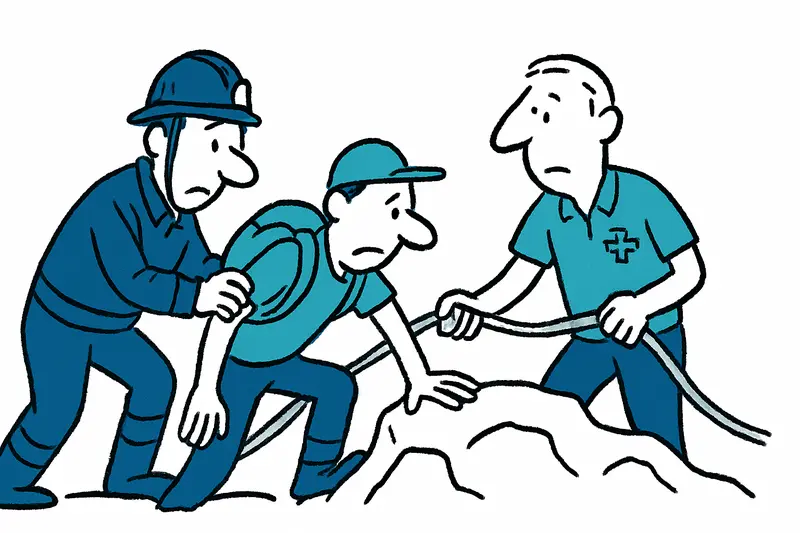
Rescuers Closely Linked: Paramedics and Firefighters Train for Mountain Rescue
Rescuers Closely Linked: Paramedics and Firefighters Train for Mountain Rescue
In the Tramuntana mountains, rescue teams rehearsed cooperation: 23 paramedics completed an endurance test from Biniaraix to the Cúber mountain hut. Further climbing and rope exercises are planned so medical personnel can take part directly in mountain rescue teams.
Rescuers Closely Linked: Paramedics and Firefighters Train for Mountain Rescue
Endurance run to Cúber, climbing and rope tests soon — a step towards greater safety in the mountains
Early yesterday morning, as the sun gilded the rocks of Biniaraix and the scent of rosemary rose from the dry stone walls, 23 paramedics set off into the heart of the Tramuntana. Anyone who's been there knows the narrow stairways, the steep stony paths and the quiet concentration when groups pass each other: hikers, goatherds and now rescue personnel testing their fitness. The stage ended at the mountain hut by the Cúber reservoir — a harsh but fitting proving ground.
The exercise was not for show but a practical test: How manageable are the ascents under operational conditions? How does medical staff react when strength wanes while patients still need care? The answer yesterday was: feasible, but exhausting. For the helpers this meant marching with backpacks, elevated heart rates and short breaths taken at viewpoints where otherwise only photographers stop.
In the coming weeks two more tests will follow. Planned are a climbing assessment and a more technical session with rope and rescue exercises — those situations in which every movement must be precise. The goal of the exercises is for paramedics to no longer wait at the foot of the mountain but to become part of mountain rescue units. That means faster first aid on site, less transport stress for the injured and a team that combines medical and technical expertise.
Why this matters can be seen not only in statistics such as 115 Rescue Missions, Hot Trails: Why Mallorca's Mountain Rescue Got Busier — and What Helps Now but in everyday life: on weekends hikers crowd the GR 221, in summer trails fill with tourists wearing inappropriate footwear, and autumn weather changes can suddenly make steep sections dangerous. When a doctor or paramedic is directly in the team, time can be gained — often the crucial resource between stable and critical.
The initiative brings more than just speed; joint exercises build understanding, as incidents like Four missions in one day: How fit is Mallorca's mountain rescue? highlight. Firefighters learn how paramedics work under stress, paramedics see how technical rescue is conducted. Conversations on dusty rest spots, trying out knots or jointly planning a rappel — these are the small moments that can later save lives.
On Mallorca this has a local dimension: the Serra de Tramuntana is habitat, workplace and recreational area all at once. From the village center of Sóller across the steep terraces of Biniaraix to the hut at the Cúber reservoir — people and helpers know the paths, the scents and the seasons. That rescue organisations are coming together here feels like an anchoring in island life.
For residents this means less uncertainty. When the church in Escorca rings in the morning or a mountain goat with a bell crosses the road, people know: there are teams training extensively. For the many visitors it brings a reassuring side effect — the island offers not only beautiful views but also solid safety structures, as shown by Nighttime Misadventure in the Torrent de Mortitx: What the Mountain Rescuers' Operation Reveals.
Practical effects may soon become visible: joint trainings, coordinated operations with specialised equipment, perhaps information events for hikers. Regular users of the trails, for example the old dry-stone wall at Biniaraix or the stony descent towards Lluc, will notice that rescue partners are training together more often and acting faster.
This is also a small call to the island community: support this work. Whether by taking first aid courses, donating for modern equipment or simply behaving considerately on the trails — everyone can contribute. When a team works effectively in the mountains, the whole community benefits.
And a final, personal glance: if you wait at the Sóller bus stop for the 359, you might hear the distant call of a training team, see fit paramedics with dirty soles and think briefly: good that they rehearse. The Tramuntana is beautiful, sometimes rough — and with such joint steps somewhat safer.
Outlook: The further series of tests will show how quickly the concept becomes viable. For the island this is a practical, down-to-earth way to increase mountain safety. And when at the next exercise a helper pauses on a steep section, takes a deep breath and goes on — everyone will know why the early rise was worth it.
Frequently asked questions
Why are paramedics and firefighters training together in Mallorca's Tramuntana mountains?
Is it safe to hike in Mallorca's Tramuntana if rescue teams are training there?
What should I pack for a hike in Mallorca's Tramuntana?
When is mountain hiking in Mallorca most difficult?
What is the Cúber reservoir area like for training and hiking in Mallorca?
What makes Biniaraix important for mountain rescue in Mallorca?
How does joint training help mountain rescue teams in Mallorca?
What can hikers do to support mountain safety in Mallorca?
Similar News
New trick at Palma Airport: suitcase stolen from the belt — a reality check
On September 28 a 36-year-old allegedly stole a suitcase from the baggage belt of a 51-year-old German passenger at Palm...
Urgent Clearing of Palma's Torrents: Flood Prevention or Symptom of Short-Sighted Planning?
The city of Palma is responding to storm forecasts and has cleared several torrents. We ask: Is the short-term clearing ...
Evaneos and Mexico: A Reality Check for Sustainable Travel
Travel advertising often reads like a promise: local, sustainable, unique. But how deep do these promises really go? A c...
From Megapark to the Altar: Party Singer Now Offers Weddings in Mallorca
A well-known party artist combines partying and marriage: instead of a traditional church there are ceremonies at the Me...
The Maricarmen Case: Why an Eviction Is Forcing Spain's Housing Debate
Images of an 87-year-old woman on a stretcher have sparked a debate in Spain that also runs deep in Mallorca. Who protec...
More to explore
Discover more interesting content

Can Cap de Bou

Townhouse Lleo 72
