
For 45 Years on Mallorca — and Then This: How a Market Visit in Santa Ponsa Became a Lesson
For 45 Years on Mallorca — and Then This: How a Market Visit in Santa Ponsa Became a Lesson
A woman who has lived on the island for decades lost money and important documents at the Mercat Setmanal in Santa Ponsa. Why practical knowledge alone doesn't always help — and what needs to change so this happens less often? A reality check with an everyday scene, analysis and concrete suggestions.
For 45 Years on Mallorca — and Then This: How a Market Visit in Santa Ponsa Became a Lesson
A familiar place, a brief moment of inattention and the wallet is gone. What do we learn from this?
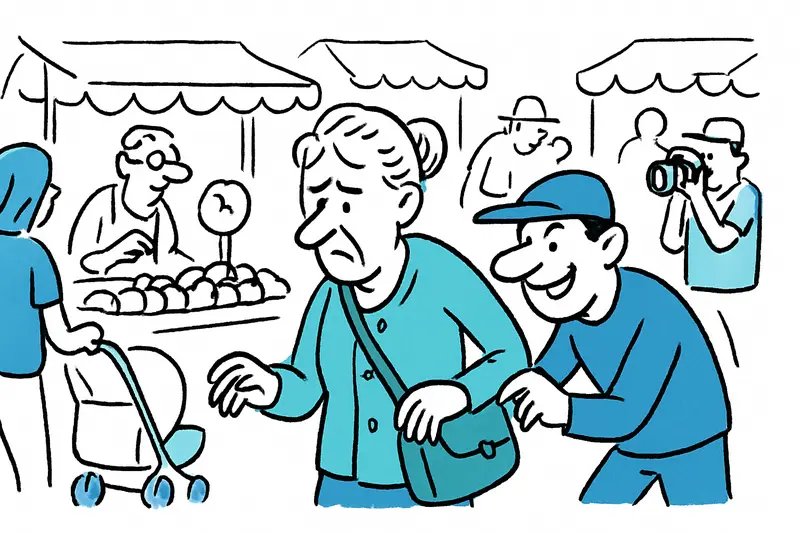
It's Saturday morning, the sun isn't fierce yet, the stalls smell of fresh bread and grilled vegetables, voices overlap: vendors shout out fruit, a stroller creaks, a delivery scooter squeals past. This is how a perfectly normal market trip at the Mercat Setmanal in Santa Ponsa begins — and ends for a long-time resident with a feeling of powerlessness. She has lived on the island for 45 years, was never considered vulnerable, carried a crossbody bag, but had turned the zipper to the back. Afterwards about €150 and several IDs were missing.
Key question: Why doesn't practical experience on Mallorca automatically protect against pickpockets — and what gaps exist between warnings and effective prevention?
In short: knowledge alone is not enough. The atmosphere at weekly markets alone favors thieves: narrow aisles, constant body contact, distractions from goods and conversations. Professionals work quickly and unobtrusively, often in groups. For the affected woman it was especially bitter because she had known and used precautions before — but apparently became careless at one moment when she pulled the bag closer to her body with the back facing out.
This is not an isolated case of naivety. Psychologically, familiarity plays a role: people who experience a place as "safe" unconsciously lower their defenses. After decades on the island a kind of routine blindness sets in. Added to that are small everyday decisions: a bag worn on the back, an open zipper, a moment when you take something out of a bag or get absorbed in a conversation.
What is often missing in the public debate: hard numbers and concrete action guides for residents. Incidents are reported, but rarely is it explained in detail how processes in busy places can be concretely changed. There's also a lack of honest assessment about why traditional advice — "wear your bag in front", "don't show everything at once" — isn't always followed in practice. This isn't blaming victims; it's a sign that information campaigns need to look different.
A small everyday scene: I see the market, how the vendor at stall number seven manages the crowd with a hand gesture, the thermos next to the scales, older residents with fabric bags, tourists with large cameras. These are exactly the tight spots where a hand in a bag goes almost unnoticed, a phenomenon visible in Santa Catalina: Market Between Everyday Life and Performance. In such moments a second decides loss or no loss.
Concrete solutions can be grouped into three levels: personal precautions, market infrastructure and municipal/administrative measures.
On a personal level many things can be changed immediately: carry bags at the front and close to the body, orient zippers upwards, take only what is necessary. Those who want to store cards and IDs can use thin money belts, inner pockets or designated chest pouches. Important: block credit cards immediately; a theft must be reported to the police (Denuncia). For foreign documents it's also advisable to contact the consulate or the relevant immigration office to arrange replacement papers, as one survivor's story shows in When the Money Disappeared: How Andrea Rebuilt Her Life in Mallorca with Spanish.
For market infrastructure simple measures could help: visible information signs at entrances, a clear one-way flow at the narrowest points, prominent lanes for entry and exit, better positioned rubbish zones to ease congestion. Vendors could receive brief training to recognize typical distraction maneuvers and report suspicious cases to security staff. Some towns experiment with temporary information stands at busy markets — a small, low-cost info point with tips and a list of emergency numbers would be helpful.
On the administrative side: more presence of uniformed officers doesn't have to mean the market is militarized. Visible controls act as a deterrent; mobile plainclothes teams can follow up on suspicious behavior more precisely. It would also make sense to communicate reporting procedures and replacement administrative pathways more clearly: Where do you file a report? Which numbers do you call to block cards? What steps are necessary for long-term residents in Spain if documents like the NIE are lost, as outlined in How Mallorca Really Becomes Your Home: A Practical Guide from Island Experience?
Another aspect: neighborhood solidarity. Residents, vendors and organizers often know each other. A brief look or a quick question can unsettle thieves. Responsibility is not only on victims; it's a community problem.
To conclude a sober thought: the woman now feels more vulnerable — which is understandable. But something practical can be derived from a concrete incident: markets are life, soundscapes and encounters. They should be allowed to remain so without a constant risk of loss. If people want that, they must look closely, not only warn.
Conclusion: More than mere appeals are needed — a combination of everyday tips, market-design adjustments and clearly communicated administrative steps. That won't prevent every crime — but it will make victimhood significantly rarer and reduce the feeling of powerlessness. In Santa Ponsa, at a place many of us know, this would be progress visible immediately: fewer open zippers, more watchful eyes, less helplessness.
Frequently asked questions
What practical steps can I take to prevent pickpocketing at markets in Mallorca?
What market safety measures are recommended for markets in Mallorca?
What should I do if my wallet or documents are stolen in Mallorca?
Why might experienced locals feel more vulnerable at Mallorca markets, and how can they stay vigilant?
What is the Mercat Setmanal in Santa Ponsa, and what safety tips apply there?
How can I report theft and replace documents in Mallorca after a market incident?
What simple changes can Santa Ponsa market vendors and organizers implement to deter thieves?
When is the best time to visit Mallorca markets for comfortable weather and manageable crowds?
Similar News
10 percent surcharge on the beach: How legal and transparent is the extra charge at Playa de Muro?
A German part-time resident noticed days after a restaurant visit in Playa de Muro that the bill included a flat ten per...
Body near the Llevant Market: What this death says about our city
A man was found dead on Sunday afternoon near the Llevant Market. Police say the death appears natural. The scene raises...
Celebrities, One-Point Drama and a Summer Evening in Santa Ponça: Padel Celebrates in Mallorca
Around 400 players, a radical format — and well-known faces on the courts of the Mallorca Country Club: the One Point Ch...
Who stays, who goes? A reality check on the future of Mallorcans
An emeritus island geographer sees Mallorcans on the defensive: What does this mean for everyday life, housing and the i...
Acquittal after secret photos in Cala Millor – what the court ruling leaves out
A German tourist photographed a three-year-old girl at a hotel breakfast — the judge acquitted him because no sexual int...
More to explore
Discover more interesting content

Can Cap de Bou

Townhouse Lleo 72
