
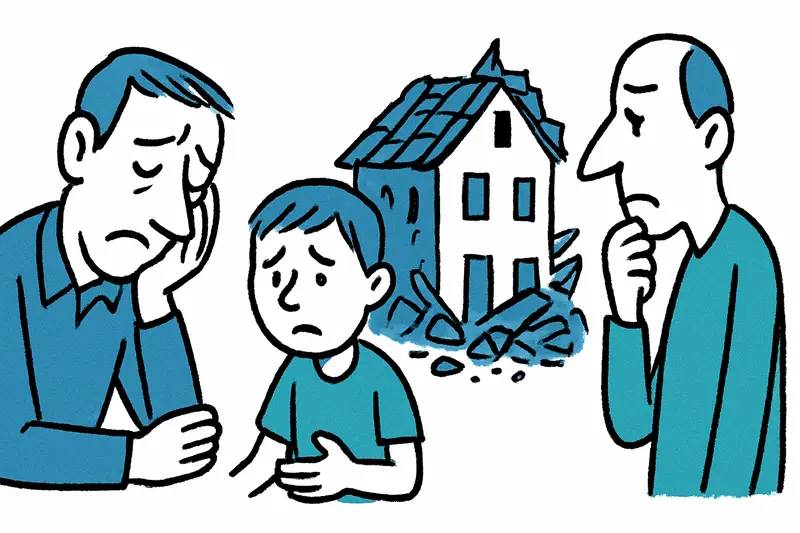
Roof collapse in Manacor: A young person dies, a child seriously injured — what must we change now?
Roof collapse in Manacor: A young person dies, a child seriously injured — what must we change now?
On Calle Sant Francesc in Manacor, the roof of a residential building collapsed in the early hours. An 18-year-old died and his 12-year-old brother was seriously injured and taken to Son Espases hospital. The cause is under investigation; the town hall called for a minute of silence at 12:00.
Roof collapse in Manacor: A young person dies, a child seriously injured — what must we change now?
Central question: Could inspections or simple safety rules have prevented this collapse?
In Calle Sant Francesc, in the tight maze of Manacor's old town, there was a heavy silence the morning after the accident. Emergency vehicles, sirens, the flashing of blue lights and later the quiet gathering of neighbors in the square in front of the town hall — the scene did not fit an otherwise ordinary January morning with dog walkers and delivery vans. The facts are short and painful: during the night the roof of a two-story house collapsed, an 18-year-old died and his 12-year-old brother was seriously injured and taken to Son Espases hospital. The parents were in another part of the building at the time and were unharmed. The Manacor town hall has called for a minute of silence at 12:00.
The investigation is just beginning; authorities are examining the cause of the collapse. Media reports mentioned that there had been recent work on the roof. Such indications are important, but they are only the starting point for a series of questions that go beyond assigning blame: How are minor buildings and private roof works monitored — as highlighted by the Fall in Son Gotleu: A dramatic morning and the question of roof safety? Who checks that companies employed are sufficiently qualified and insured? Mallorca has many older houses with simple roof structures, often built close together. That not only increases the risk for residents but also complicates rescue operations.
Critically viewed: public debate in moments like these often focuses on assigning blame and ritual expressions of caution. That is human, but not enough. What is missing is a sober analysis of systemic gaps: permitted do-it-yourself repairs without notification, insufficient follow-up inspections after approved work, possibly too few building inspectors in municipalities, and whether temporary workers on the island are adequately trained. For private roof works there are often grey areas — who oversees craftsmen who accept short-term jobs? Past incidents, such as the Fatal accident in Santa Margalida: Concrete slabs bury worker, show how dangerous lapses can be.
An everyday scene familiar to many on Mallorca: tradesmen's vans in narrow lanes, scaffolding leaning against houses, and neighbors watching from windows. Work is often started in the early morning to avoid the heat of the day. That same time window was apparently involved here. This does not allow for hasty judgments, but it makes clear how quickly routine can turn into danger.
Concrete proposals that can be implemented immediately: municipalities should draw up a priority list for safety inspections, starting with roof works in densely built areas. After roof work is completed, a mandatory visual inspection by a qualified professional should be required and reported to the municipality. Mobile teams could carry out short-notice checks when risks are reported. For craft businesses, faster and clearer information obligations would make sense: employer and insurance details, minimum qualifications and a short notification to the municipality before work begins.
In the medium term, more staff for building supervision and clear sanctions for violations are needed. Municipal grant programs for safe repairs in low-income households could also prevent cost pressure from leading to unsafe solutions. Furthermore, a multilingual awareness campaign about safe home repairs and the right contacts is not a luxury on an island with many newcomers.
Preparation for emergencies is also important: expedited procedures for emergency rescue, coordinated protocols between fire brigades, civil protection and hospitals, and a clear information chain for relatives. In dense town centers, rapid rescue access is often limited; this must be taken into account in construction and renovation work. Recent tragedies like the Tragedy in Coll d’en Rabassa: Child Killed on Sidewalk — Who Protects Our Pavements? underline the stakes for public safety.
What is missing from the public discourse? The hour after — long-term prevention. We talk a lot about mourning and sympathy, and that is right. But we talk too little about how routine jobs can be made safer, how municipalities deal with serious building risks, and how affected people can be supported without being reduced to a mere cost factor.
The conclusion is brief and honest: The death of a young person is a tragedy that must spur us to act. Manacor and all municipalities on Mallorca should now draw the necessary lessons — faster inspections, better information duties for tradespeople, more building supervision staff and pragmatic assistance for people living with limited means. A minute of silence is a sign of respect. The coming weeks will show whether we turn this into real change.
Frequently asked questions
How can roof collapses be prevented in older Mallorca houses?
What should you do if you see roof work being done on a house in Mallorca?
Do private roof repairs in Mallorca need official checks?
Why are roof accidents in Manacor and other Mallorca towns so hard to deal with?
When is the riskiest time to carry out house repairs in Mallorca?
What safety rules should be followed for roof repairs in Mallorca?
What should Mallorca municipalities do after a serious building collapse?
What can residents of Manacor do to reduce roof safety risks at home?
Similar News
Magaluf: Watchtower Alarm – Lifeguards Pull Unconscious Beachgoer from the Water
After a drama in the late afternoon, two lifeguards at Magaluf beach rescued an unconscious 44-year-old man. He was stab...
Turquoise in the City: How dangerous is the color play of the Sa Riera?
The Sa Riera in Palma suddenly turned turquoise — a pretty motif, but behind the effect lies a discharge of saline waste...

Jeckliner at Sunnesching: Cologne spirit sets sail from Palma
In September 2027 the Mein Schiff 2 briefly becomes a floating carnival stage: four days with Cologne bands, comedy and ...
Finally Home: Mike and Leyla Heiter Buy Villa with Sea View in Mallorca
The reality TV couple Mike and Leyla Heiter have bought a house in Mallorca with a roof terrace and sea view. An Instagr...
Arrest after series in Palma: Who protects apartments from repeat offenders?
The National Police arrested a man in Palma who investigators say may have broken into several apartments. In one incide...
More to explore
Discover more interesting content

Can Cap de Bou

Townhouse Lleo 72
