
Smoke alarm in S'Illot: Evacuation — and what was overlooked
Smoke alarm in S'Illot: Evacuation — and what was overlooked
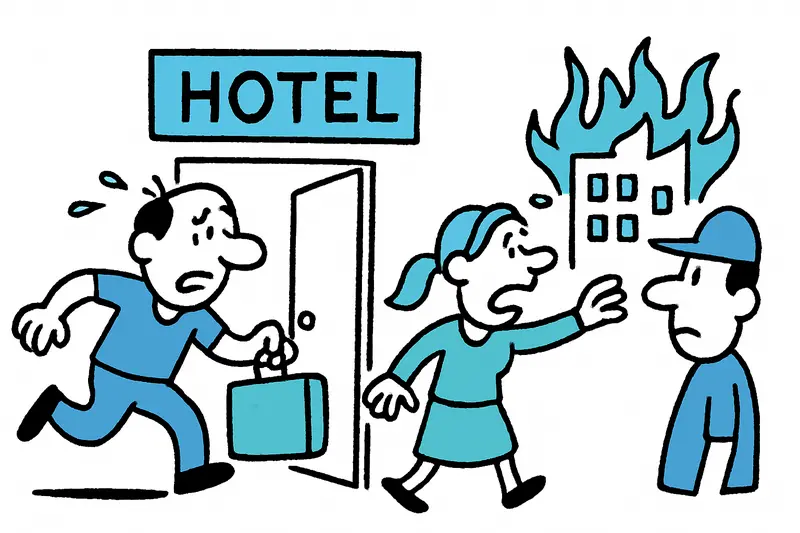
In S'Illot about 110 people had to be evacuated from a hotel overnight after a fan in a room caught fire. There were no serious injuries, but the incident raises questions about safety and preparedness on Mallorca's east coast.
Smoke alarm in S'Illot: Evacuation — and what was overlooked
Leading question: How well are hotels in Mallorca actually prepared for such scenarios?
Overnight a hotel in S'Illot on the east coast was evacuated as a precaution after a fire broke out in a room. Around 110 people had to leave the building temporarily, authorities report. According to emergency services, a fan in the bathroom apparently caught fire. The fire brigade extinguished the blaze and nobody was seriously injured. A pregnant woman received precautionary medical care, a hotel employee suffered a minor anxiety reaction, and a policewoman was treated for smoke inhalation. Afterwards guests were able to return to their rooms.
It sounds routine — but the incident reads like a checklist of questions that often aren't asked aloud. What if it happens later in the high season? How reliable are exhaust systems in many older buildings? And how well prepared are staff and guests for an evacuation when smoke fills the corridors and sirens are barely audible? Events such as Fire in Port d'Alcúdia: Why the big scare is also a wake-up call for fire safety underline these concerns.
The critical analysis starts with the technology: a bathroom fan may seem like a small, trivial trigger, but in cramped hotel rooms cables, dusty motors or incorrectly installed devices can quickly create life-threatening situations. Smoke spreads faster than many think and can make otherwise intact escape routes impassable. The report says nothing about whether there were smoke detectors in the bathroom — but that is precisely what is often overlooked: smoke detectors in all relevant areas, regular maintenance of ventilation systems and clear documentation of inspection intervals.
A second point is staff and communication. In S'Illot the evacuation apparently proceeded quickly enough that there were no serious injuries. But minor panic reactions, like those that occurred here, are typical stress symptoms, especially among pregnant women or older guests. Are employees adequately trained in first aid? Are there procedures for vulnerable guests? In everyday practice what's often missing is the label on the rubbish bin that would signal to the neighboring room: Caution — smoke, ask for help.
What is usually missing from the public debate is the perspective of technical maintenance and the responsibility of owners. In conversations with cleaning staff, waiters and service technicians I regularly hear that spare parts are not ordered immediately because the season is approaching and costs are being squeezed. Sometimes that calculation comes at the expense of safety, as recent evacuations such as Fire at Alcúdia Hotel: Evacuation Succeeds — What Lessons Will the Island Learn? and Smoke in the waste room: brief evacuation in Palmanova — what hotels should learn now have shown. Also rarely discussed are checklists for the seasonal recommissioning of devices after long closures.
A small everyday snapshot: early morning in S'Illot, the seagulls croak over the promenade, the scent of freshly brewed coffee mingles with sea air, and tense colleagues sit at the reception ticking off lists with trembling hands. Guests remain curled up on plastic chairs in front of the hotel, some still in their bathrobes, others on the phone, waiting for the situation to be resolved. Such images show: safety issues are not abstract — they happen in the middle of everyday life on our island.
Concrete, practical solutions for hotels of any size:
1. Regular, documented maintenance: Maintenance logs for fans, electrical connections and vents must be kept and visibly archived. Spot checks by the municipality could be an entry point.
2. Smoke detectors and fire compartmentation: Uniform standards for smoke detectors, including in bathrooms and hotel corridors, as well as regular tests during peak season times.
3. Evacuation drills: At least one practice evacuation per season with staff and volunteers from the property to test escape routes, assembly points and communication.
4. Training for the vulnerable: Staff should know how to prioritize and support pregnant guests, elderly people or guests with disabilities.
5. Transparent information for guests: Short, multilingual notices in the room about escape routes, assembly points and what to do in case of smoke — not as a brochure that gathers dust in a wardrobe, but displayed visibly.
6. First aid and stress management: More staff trained in first aid and simple training for handling panic attacks so that anxiety does not hinder evacuation.
Some of these measures cost time and a few euros, others require only organization. The question should not be whether hoteliers want to do this, but how responsibility on the island can be better distributed: operators, suppliers, municipalities and the guests themselves.
Conclusion: The nighttime alarm in S'Illot ended without major damage — fortunate. Nevertheless, the incident is a reminder that safety often depends on small details: a fan, a detector, an instruction. Those who want to prevent similar incidents in the future must think maintenance, training and clear communication together. Otherwise what remains is the memory of a cold night, trembling hands at reception and the smell of extinguishing water over the promenade — and that would be a shame, because it is avoidable.
Frequently asked questions
What is the weather usually like in Mallorca in the run-up to Easter?
Can you swim in Mallorca during the Easter period?
What should I pack for Mallorca in spring?
Is Easter a good time to visit Mallorca?
What can you do in Mallorca if the weather is not great?
What is Palma like at Easter in Mallorca?
What is Sóller like to visit in spring?
Is the sea around Mallorca warm enough in April?
Similar News
When the Wallet Becomes a Danger: Attack in Peguera and Lessons for Mallorca
In Peguera, two women are said to have stolen the wallet from a 75-year-old German couple. When the victim intervened, t...
Plata stays Plata: Young people take over, Llonguets remain
A small bar on Carrer de l'Argenteria will continue: Tolo Serra hands the place over to young Mallorcans at the end of t...
Unnoticed in the Luggage Compartment: How a Boy Traveled More Than 100 Kilometers in a Team Bus
A minor traveled in the undercarriage of a team bus for more than 100 kilometers until his cries for help were heard. A ...

Cap Vermell Grand: Second Michelin Key – a Gift for the East
The Cap Vermell Grand in Capdepera has been awarded its second Michelin key. For the region this elevates the luxury off...
Eurowings lets four aircraft carry names – a friendly idea that also reaches Mallorca
Eurowings is launching a campaign: four Airbus A320s are to carry the first names of people who help others in everyday ...
More to explore
Discover more interesting content

Can Cap de Bou

Townhouse Lleo 72
