
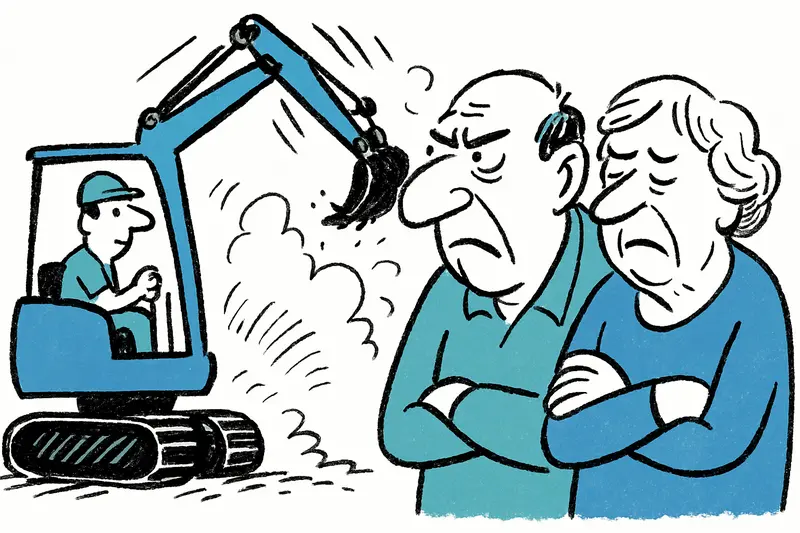
Sa Pedruscada: Why the construction vehicles don't reassure the neighborhood
Earthworks at Sa Pedruscada have brought residents back onto the streets. The central question: Can a development of around 60 holiday apartments proceed while wastewater and legal issues remain unresolved?
Sa Pedruscada: Why the construction vehicles don't reassure the neighborhood
Key question: Can a project of around 60 holiday apartments continue while fundamental environmental and legal issues remain open?
Those who these days drink their morning coffee at the port of Cala Rajada do not only hear the seagulls. Fine dust drifts over the coastal road from the direction of the construction site, and small excavators rumble behind makeshift fences. The machines began earthworks a few weeks ago — and that is precisely what has brought the neighborhood together again.
At Sa Pedruscada a citizens' platform formed, which since 2023 has been opposing the planned holiday settlement under the name “Salvem sa Pedruscada.” The group speaks of around 60 apartments to be built on the site and has sent an open letter to the municipal administration of Capdepera. Among other things, the residents demand a halt to construction because they fear serious environmental impacts and possible deficiencies in the approval file.
The residents' arguments are not only based on intuition: They point to a comparable case on the island — a project with 85 apartments in Pla de na Tesa (Marratxí) — which was halted by the island government because guarantees for wastewater treatment were missing, a situation also highlighted in The End of Son Dureta: Demolition Creates Space — But at What Cost?. The protesters say these are the same concerns that apply to Sa Pedruscada: Who will later control the discharge and treatment of sewage in an area already reaching its capacity limits?
The municipality has meanwhile announced that preparatory work to provide water and electricity connections is underway, a situation similar to Construction Starts in Sant Francesc: A Year of Noise, Life Afterwards?. According to the town hall, the originally planned building height has been reduced — instead of four storeys it will remain ground floor plus one floor. The administration emphasizes that without completed utilities the construction work could not start regularly, unless the simultaneity of different construction phases is explicitly authorized.
The platform raises further points: Since 2023 residents have organized actions, collected donations, met with municipal technicians and hired a lawyer to review the file. According to the activists, this lawyer has documented possible legal violations. That strengthens their case: the project is controversial not only environmentally but also legally.
Critical analysis
The situation is less a local feud than a small lesson about planning processes on the island. Three things stand out: First, network capacity for wastewater and supply lines is often discussed locally but rarely considered in the context of the entire catchment area. Second, building projects are adjusted (fewer storeys), yet quantity and density remain high: 60 apartments change traffic volumes, groundwater demand and the character of a coastal zone, a pressure similar to debates over parking and public space such as Underground Garage and Square in Portopetro: Solution for the Parking Chaos — or a Construction Problem?. Third, communication between the administration, investors and residents appears rushed rather than transparent — which increases mistrust.
What is missing from the public discourse
Hardly anyone talks about the cumulative consequences: more apartments mean more short-term stays, higher water consumption in summer months, greater pressure on drainage systems and increased fire risk in areas close to forests. There is also a lack of a clear account of who is ultimately liable for wastewater treatment if operators change or properties are rented out. These gaps feed legal objections and fuel grassroots protests.
A typical morning in Cala Rajada
I recently stood in front of a bakery on the waterfront: a fisherman was hauling in his nets, tourists were taking photos, and a neighbor pointed to the earthworks above the bay. “If they build this up here, our summer will be different,” he said. Such sentences do not come from files but from everyday life — and they explain why people organize mobilization.
Concrete solutions
- Independent environmental assessment: Commission a neutral review (hydrology, wastewater capacity, biodiversity) with a publicly accessible report and a deadline for remedial actions. - Binding wastewater guarantees: Written promises verifiable by the island government about how sewage will be treated and who is liable. - Construction halt until critical issues are clarified: A temporary suspension prevents facts that are difficult to reverse. - Local citizen participation: Set up a local steering committee with residents, municipal technicians and independent experts. - Reduce density: Examine alternative plans with fewer units and nature-based solutions (rainwater management, decentralized treatment systems).
Concise conclusion
The machines may continue their rounds — that does not change the fact: if fundamental questions about wastewater, environmental impacts and legal compliance remain open, a construction halt is not bureaucracy but precaution. Capdepera now faces a choice: explain transparently how risks will be ruled out, or let the conflict grow. For the people of Cala Rajada it is about something both mundane and significant: their daily lives and the future of a coast that cannot bear unlimited strain.
Frequently asked questions
Can a new holiday apartment project in Mallorca start before wastewater and utility issues are fully resolved?
Why are residents in Cala Rajada protesting the Sa Pedruscada construction site?
How does construction around Cala Rajada affect dust, noise, and daily life?
What is the main environmental concern with building holiday apartments in Sa Pedruscada?
Has the planned building height at Sa Pedruscada in Mallorca been changed?
Why do residents compare Sa Pedruscada to the Pla de na Tesa apartment case in Mallorca?
What can a citizens' platform do when it opposes a development project in Mallorca?
Is Sa Pedruscada in Cala Rajada already fully approved for construction?
Similar News
Why the End of "Los Últimos Mohicanos" Is More Than the Closing of a Bar
With squealing tires and one last glass, an icon on the Palma–Manacor expressway closes. Why the demise of this German b...
Protest camp on Plaza España: Who asks for solutions to the right to housing?
Around 30 activists set up a tent camp on Palma's Plaza España to push for stronger tenant rights. Our analysis asks: Ar...

In the Name of a Gang: Alleged Extortion in El Molinar and What It Reveals About the Protection of Sex Workers
A man is accused of posing as a member of the Hells Angels and extorting two women at accommodation in El Molinar. The s...

When Chile Meets the Mediterranean: A New Flavor at Can Bordoy
At Can Bordoy in Palma's old town, Chilean chef Jhonatan Maldonado combines Patagonian seafood with Mediterranean island...
End of an Era on the Ma-15: Why the Biker Hangout at Son Gual Is More Than Just a Restaurant
"Los Últimos Mohicanos" closes unexpectedly. A meeting place for motorcyclists on the Palma–Algaida border is disappeari...
More to explore
Discover more interesting content

Can Cap de Bou

Townhouse Lleo 72
