
When a ship accident becomes a paid Blick show: The salvage of the stranded yacht at Son Servera
When a ship accident becomes a paid Blick show: The salvage of the stranded yacht at Son Servera
The salvage of the 27-metre oceangoing yacht that has been lying on the sand off Son Servera since January 19 is planned — but the idea of selling close access for 20,000 euros raises questions. Who benefits, who protects the coast and what is missing from the public debate?
When a ship accident becomes a paid Blick show: The salvage of the stranded yacht at Son Servera
Those who pay sit in the front row – environment, transparency and the commons sidelined
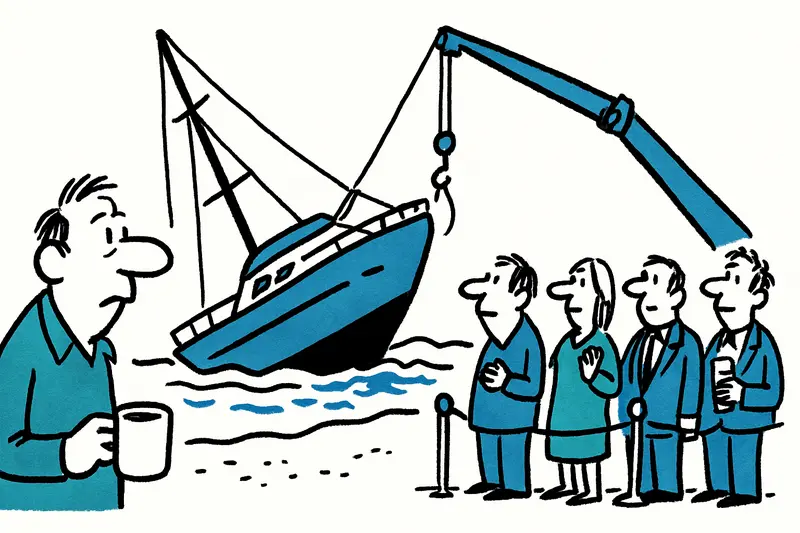
Since January 19 a 27-metre two-masted yacht has been lying on the sand off Son Servera. The vessel, around 80 tonnes, was pushed ashore during the January night by storm 'Harry'. For weeks nothing indicated that the salvage would proceed quickly: legal and financial stumbling blocks delayed the effort. Now a Germany-registered salvage company in Palma, Sud-West Divers, has officially been awarded the contract — and preparations are due to begin at the end of February.
The key question is simple and sharp: Does an accident that affects the coast and the public belong to a product that can be sold exclusively? The owners reportedly offer front-row places for a payment of 20,000 euros. The package includes: provisioning by the skipper, champagne, an observer spot near the cranes and air cushions, and even a possible invitation to the yacht's later maiden voyage — provided repairs and the schedule run as planned.
This is more show than rescue and raises several problems. Drunk Boats, Battered Bays: When Private Boat Rentals Put Mallorca's Coasts at Risk The first: environmental protection. The plan includes pumping out remaining fuel, cleaning the tanks and laying an oil boom of roughly 100 metres. All of this must be monitored independently. Who guarantees that measures are carried out completely and professionally when a VIP area exists at the same time where people celebrate? Is there an official inspector who signs off on the work? And who is liable if leaked pollutants later damage the beach and the ecosystem?
Second: transparency and financing. The pure salvage costs are estimated at around 300,000 euros. It is understandable that owners and the salvage firm look for ways to cover costs. But marketing closer observation places as "donations" appears more revenue-driven than a transparent cost recovery measure. How are the proceeds recorded? Do they only cover costs, or do surpluses flow to the owners or the salvage company? Local authorities should demand access to contracts, permits and the handling of any surplus funds.
Third: safety and access. The area around the salvage site will be cordoned off; non-payers are apparently only allowed to watch from a distance. On a small island where beaches and coast belong to the public, this is sensitive. Imagine the scene: on a mild morning regulars on the Cala Bona promenade sit with their coffee, hear the engines of the salvage boats, smell diesel and see a crane rigging — but anyone who wants to get closer needs cash in their wallet. For residents and onlookers this feels like exclusion.
Public debate and media coverage have named some details, but crucial questions remain open. Boat tragedy off Mallorca: Between grief, legal battles and the question of a Plan B Equally opaque is the provision in case repairs fail or owners do not cover follow-up costs after salvage. Salvage law can be complicated: who ends up paying if the ship remains in Port d'Alcúdia? Wrecks in the Bay of Pollenca: Municipality pays – but who bears responsibility?
Concrete solutions can be proposed. Authorities should set up a mandatory information page listing permit numbers, contracted companies, environmental assessments, liability rules and the exact intended use of external income (so-called "donations"). Independent environmental monitoring — for example by the Consell de Mallorca or an accredited NGO — must be present during pumping and lifting phases. The exclusion zone is understandable for safety reasons; it must not, however, become a sales zone for privileges. Instead of expensive entries, a limited lottery-based access for residents and community members would be fairer, combined with a publicly streamed live channel documenting the work.
Practical financial safeguards can also be required: before heavy lifting begins a bond or escrow account should be in place to cover potential disposal costs or environmental damage. If the owners generate income from visitor spots, a transparent split between cost recovery and a reserve for environmental follow-up costs would be legally secure and fair.
A small everyday snapshot from the area: on the Paseo in Son Servera fishermen talk about the operation. The men with weathered faces and oil-stained fingers murmur that what is needed in such actions is calm, experience and clear responsibilities. On the Cala Millor promenade retirees sit in the morning with thermoses; they look out to sea, shake their heads and discuss whether a special admission for a day at the coast is morally justifiable. These voices should be heard — not only those of the yacht owners and their advisors.
Conclusion: a wrecked ship is not an event object. The salvage must be technically sound, legally and environmentally compliant and socially fair. What threatens here is the commercialization of an incident that uses beach and shoreline as a backdrop. Authorities and society should now demand clear rules: full transparency, independent environmental control, financial securities and fair access arrangements. Otherwise all that will remain of the rescue is a loud crane, a closed cordon and bitter questions about who really defends the sea on Mallorca.
Frequently asked questions
What is happening with the stranded yacht off Son Servera in Mallorca?
Can you watch the yacht salvage at Son Servera in Mallorca?
Why is the Son Servera yacht salvage causing criticism in Mallorca?
What environmental precautions are needed when salvaging a yacht on Mallorca’s coast?
How much does a yacht salvage in Mallorca usually cost?
Why are residents in Son Servera and Cala Bona upset about the yacht salvage?
What role does the salvage company in Palma play in the Son Servera operation?
What should authorities require during a yacht salvage on Mallorca?
Similar News
When the Wallet Becomes a Danger: Attack in Peguera and Lessons for Mallorca
In Peguera, two women are said to have stolen the wallet from a 75-year-old German couple. When the victim intervened, t...
Plata stays Plata: Young people take over, Llonguets remain
A small bar on Carrer de l'Argenteria will continue: Tolo Serra hands the place over to young Mallorcans at the end of t...
Unnoticed in the Luggage Compartment: How a Boy Traveled More Than 100 Kilometers in a Team Bus
A minor traveled in the undercarriage of a team bus for more than 100 kilometers until his cries for help were heard. A ...

Cap Vermell Grand: Second Michelin Key – a Gift for the East
The Cap Vermell Grand in Capdepera has been awarded its second Michelin key. For the region this elevates the luxury off...
Eurowings lets four aircraft carry names – a friendly idea that also reaches Mallorca
Eurowings is launching a campaign: four Airbus A320s are to carry the first names of people who help others in everyday ...
More to explore
Discover more interesting content

Can Cap de Bou

Townhouse Lleo 72
