
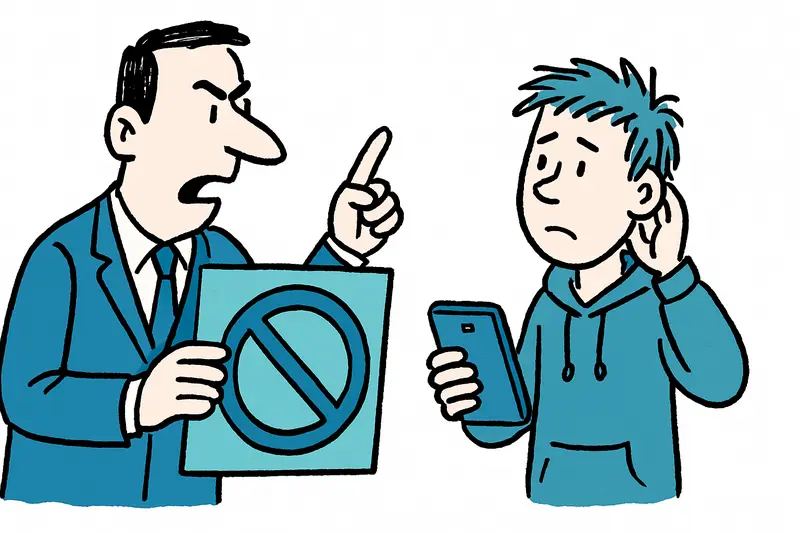
Sánchez’s Plan: Ban Social Networks for Under-16s — Good Protection or the Wrong Focus?
Sánchez’s Plan: Ban Social Networks for Under-16s — Good Protection or the Wrong Focus?
Madrid plans a ban on social networks for under-16s and tighter platform obligations. A reality check for Mallorca: what will be missing, and what will truly help parents?
Sánchez’s Plan: Ban Social Networks for Under-16s — Good Protection or the Wrong Focus?
Main question: Can a blanket access ban for under-16s effectively protect them without violating rights and leaving families in Mallorca stranded?
In Dubai Spain’s prime minister announced keeping children under 16 away from social networks and placing stronger duties on platforms. The rapid timeline — a package of measures is to be decided as early as next week — surprised many. On Mallorca the topic hits a sensitive everyday reality: in the supermarket, on the Passeig des Born or on the Platja de Palma you increasingly see small children occupied with tablets. The Balearic government is simultaneously planning to train parents more specifically from September through the Balearic Islands' "Nous Actius" free, mobile workshops for 9- to 17-year-olds: an admission that technical bans can only be part of the solution.
The idea sounds simple: less time on social media, less harm. But the implementation raises questions. Legally a national ban is complicated — it clashes with data protection, the right to information and the European single market. Practically many contradictions remain: who reliably controls the minimum age? Age checks via identity cards raise data protection concerns and can be easily circumvented. Apps are not only distributed through official stores; tourists, holiday children and families with foreign passports live on an island shaped by outsiders in summer — how is comprehensive control supposed to work there?
Politically it is also unclear which platforms are meant. Does the ban apply to all services with user-generated content or only to the big names? And what if providers simply raise the registration age while the content remains accessible via third-party sites? Without clear technical specifications there is a risk of symbolic politics: a law text that sells well but changes little.
What is often missing from public debate is concrete support for families and schools. On Mallorca some parents say openly they need practical tools, not just bans; this demand is sharpened by cases such as Palma mourns: 15-year-old dead – WhatsApp groups, pills and the unanswered question of responsibility. Parent evenings, clearer instructions for parental controls, locally accessible counselling centres for digital media education — these are things that could help in the short term more than a blanket login ban. The study by the University of the Balearic Islands, which found that over 90 percent of families with small children consider screen use too high, shows: the problem is familiar everyday life, not an abstract national phenomenon.
An everyday scene from Mallorca: a morning in Palma, a café with a frosted espresso, children’s noise mixing with the cries of seagulls. A boy, perhaps five, is watching a video, the mother is on the phone, the grandfather reads the newspaper. No one minds — the situation is comfortable. But on the next street corner, at the municipal office, comes the other side: guardians who don’t know how to restrict access or how to respond to problematic content. This second scene reveals the gap between political statements and lived reality.
Concrete approaches that could work on Mallorca should combine several levels: first, mandatory digital education in schools from primary level — not only technology, but media literacy, critical questioning and conflict resolution online. Second, financial support for local parent courses and counselling centres in municipalities like Inca, Manacor and Calvià. Third, more technical measures: age-appropriate authentication that respects data protection — for example anonymous age certificates that transmit only age, not identity. Fourth, clear obligations for app stores and payment providers: no paid access to supposedly age-restricted services should be granted without identity checks.
Platform liability is important, but it must not be the only answer; recent incidents like a Palma arrest after an alleged online threat post underline the need for operators to provide faster reporting channels, better-moderated children’s sections and transparent recommendation algorithms. At the same time public investment is needed in psychological support for families already struggling with excessive use. Funding for school social work and counseling hours at schools could be as effective as legal bans.
Last but not least: authorities should communicate more realistically. A ban without a test phase, evaluation and technical standards will cause trouble for parents and uncertainty for schools and tourism businesses. A graded approach would be better: pilot projects in the Balearics, evaluation with the University of the Balearic Islands, adjustment and then expansion. That way measures are integrated into everyday life instead of being imposed.
Conclusion: The intent to protect is understandable — but a ban alone is not a miracle cure. On Mallorca practical proximity is needed: simple tools for families, more education in schools, local counselling services and technical solutions that respect data protection. Those who want to protect children must not only issue bans but also empower parents and build structures that make the digital everyday life truly manageable.
Frequently asked questions
Should Mallorca parents worry about social media use by under-16s?
Will a social media ban for under-16s actually work in Mallorca?
What can Mallorca families do instead of waiting for a social media ban?
What kind of digital education do children in Mallorca need?
Where can parents in Mallorca get help with children's screen use?
What is the Nous Actius programme in the Balearic Islands?
Why is age verification for social media difficult in Mallorca?
What local support could help reduce harmful screen use in Mallorca?
Similar News
Why the End of "Los Últimos Mohicanos" Is More Than the Closing of a Bar
With squealing tires and one last glass, an icon on the Palma–Manacor expressway closes. Why the demise of this German b...
Protest camp on Plaza España: Who asks for solutions to the right to housing?
Around 30 activists set up a tent camp on Palma's Plaza España to push for stronger tenant rights. Our analysis asks: Ar...
In the Name of a Gang: Alleged Extortion in El Molinar and What It Reveals About the Protection of Sex Workers
A man is accused of posing as a member of the Hells Angels and extorting two women at accommodation in El Molinar. The s...

When Chile Meets the Mediterranean: A New Flavor at Can Bordoy
At Can Bordoy in Palma's old town, Chilean chef Jhonatan Maldonado combines Patagonian seafood with Mediterranean island...
End of an Era on the Ma-15: Why the Biker Hangout at Son Gual Is More Than Just a Restaurant
"Los Últimos Mohicanos" closes unexpectedly. A meeting place for motorcyclists on the Palma–Algaida border is disappeari...
More to explore
Discover more interesting content

Can Cap de Bou

Townhouse Lleo 72
