
Sant Salvador: The Christ That Becomes a Touchstone for Memory Politics
Sant Salvador: The Christ That Becomes a Touchstone for Memory Politics
A statue, 33 applicants and a ministry under review: Why the crowned Christ on the mesa near Felanitx has suddenly become more than a photo subject.
Sant Salvador: The Christ That Becomes a Touchstone for Memory Politics
Guiding question: Can a popular postcard motif also be a political symbol — and how should society deal with it?
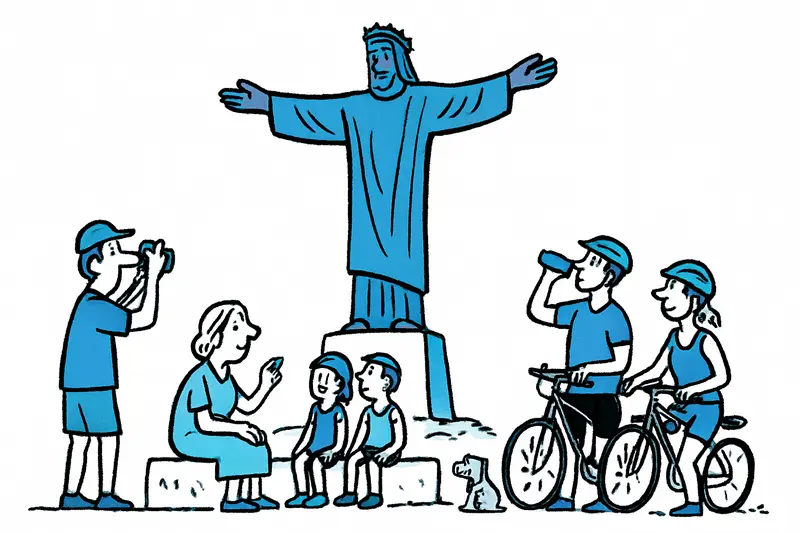
Visitors on the table mountain of Sant Salvador often stand with their backs to the wind, camera in hand, the island spread out before them. Families picnic by the park benches, two cyclists drink from their bottles, and pilgrims light candles in the small monastery. In the middle of this tourist idyll stands the Christ statue that for decades has adorned postcards, selfies and long-distance phone calls home. Now it is the subject of an application: 33 citizens together with the organization Memòria Històrica de Mallorca want the figure officially classified as a problematic symbol. The Interior Ministry is reviewing the request.
The facts are clear: historian Bartomeu Mestre i Sureda (Balutxo) has submitted documents that, according to him, document a change from the original design. A simpler depiction of the Sacred Heart of Jesus had been planned; after the death of the initiator Mateu Alzamora Tauler in 1933, the completed Christ is said to have been installed in 1934 with a crown, adornments and a raised arm that the applicants consider to resemble the so-called Roman salute. That gesture is evaluated as a fascist symbol — and that is at the core of the dispute, as recent incidents such as graffiti with swastikas on the Picornell bust in El Molinar show.
The situation raises a simple but explosive question: Does the aesthetic appearance of a monument matter more than its history of creation? In Felanitx two expectations collide. One: monuments are part of religious, local identity and a tourist attraction. The other: monuments are historical witnesses that must be reviewed in the light of the past and their political connotations.
Critical analysis: Legally speaking, the application is not an immediate demolition order, but the start of a procedure. The ministry must assess the evidence, determine whether the statue should be included in the official catalog of symbols that run counter to democratic memory, and possibly derive measures from that. Historical research, photographic documentation and provenance are central here. It is important that the applicants' argumentation is not based solely on today’s sensitivities, but on documented decisions and design changes from the 1930s.
However, public discourse often lacks a nuanced view of the place itself. Sant Salvador is more than a statue on a pedestal. The hill is a meeting place for locals, a site for devotion and outings, with buses rolling in from Palma on Saturdays and a cacophony of voices that make up Mallorca’s everyday life. If the debate swings only between removing the symbol and protecting the monument, the question of how the local population is included in the decision remains unanswered. Popular culture can also shape perceptions, as seen in a new thriller that relocates Nazi ratlines and Vatican secrets to Mallorca, which illustrates how narratives about the past enter public imagination.
What is little noticed here: monument protection, memory work and tourism policy must be conceived together; even technical choices such as the exterior lighting of the Sant Salvador monastery have social and financial implications. Simple removal would change the photo backdrop, but would not automatically create historical education. Conversely, pure conservation without context would cement the problems being criticized.
Everyday scene from Mallorca: On a sunny autumn morning an elderly woman sits on the wall in front of the chapel and tells three teenagers in swimsuits why she used to lay roses here as a child. A bus full of British retirees takes pictures. A dog barks. Such encounters make clear how interwoven memory and everyday life are — and how important it is to listen to the people who live here.
What is missing from the public debate: First, a local hearing that does not only give voice to the applicants and specialist historians, but also to residents, municipal employees, conservators and the operators of the visitor paths. Second, a concrete plan for how to deal with the object practically and pedagogically: information instead of taboo, context instead of neglect. Third, a transparent timetable for decisions so that months of uncertainty about the site's future do not arise.
Concrete approaches:
1) Temporary information signage: Already during the review, a factual panel could be placed at the entrance to briefly inform visitors about the different interpretations of the statue — year of origin, disputed design features, note about the ongoing review procedure.
2) Local round table: The municipality of Felanitx could establish a moderated round that brings together residents, church representatives, historians, tourism providers and the applicants. This would prevent the decision from being made solely by offices in Palma.
3) Examination of alternative measures: Instead of demolition, authorities could consider relocation to a museum, removal of certain symbolic details or complementary artistic interventions. Each option requires conservation expertise and legal clarity.
4) On-site educational offerings: Guided tours, brochures and small exhibitions in the monastery could make the monument's history transparent and give visitors the tools to place the object in historical context.
These proposals respect the needs of different groups: the concern about trivializing political symbols, the claim to preserve cultural memory landscapes and the local community’s interest in participation.
Concluding summary: The dispute over the Christ of Sant Salvador is more than a quarrel about the image on the postcard. It is a touchstone for how Mallorca deals with its own history: visibly, accompanied and locally anchored or quickly and without context removed. The wiser answer would be a combination of transparency, participation and education. Only in this way can the place remain alive without whitewashing the past.
Frequently asked questions
Is the Christ statue on Sant Salvador a political symbol?
How should Mallorca handle monuments with controversial histories?
What practical steps could Felanitx take about the Sant Salvador statue?
Why is local participation crucial in the Sant Salvador decision?
What does Sant Salvador mean for everyday life in Mallorca?
How can education help contextualize controversial monuments in Mallorca?
What would trigger official classification of the statue as a symbol counter to democratic memory?
Are there options to move or modify the statue without removing it?
Similar News
Why the yacht "Sasha I" remains in Palma — a reality check
The luxury yacht "Sasha I" has been held in Palma since 2023. Spanish authorities maintain the seizure despite a propert...
Curious Derby: When the Away Game Is Only 150 Meters Away
On Saturday FC Germania Mallorca meets U.D. Pla de na Tesa — a local derby that is effectively decided on the doorstep. ...

Protection failed? A murder in Coll d'en Rabassa and the gaps within
A jury found a man responsible for his partner's death: 66 stab wounds, the crime carried out in front of their shared d...
Palma opens s’Aigua Dolça: New sports centre opens on October 15
The new municipal sports facility s’Aigua Dolça above the Paseo Marítimo opens on October 15 in several stages. Initiall...
Deadly accident in Mortitx: Why the Ma-10 becomes a danger stretch at rallies
At kilometre 10 of the Ma-10 a Porsche plunged into a ravine. The driver, a 63-year-old German, died and his passenger s...
More to explore
Discover more interesting content

Can Cap de Bou

Townhouse Lleo 72
