
Why the yacht "Sasha I" remains in Palma — a reality check
Why the yacht "Sasha I" remains in Palma — a reality check
The luxury yacht "Sasha I" has been held in Palma since 2023. Spanish authorities maintain the seizure despite a property claim by the ex-wife. What does this mean for legal clarity and everyday life on the island?
Why the yacht "Sasha I" remains in Palma — a reality check
Since 2023 the "Sasha I" has been moored in Palma's harbor and draws more than just the curious along the Passeig Marítim. The engine is off, the lines are secured, and the Guardia Civil regularly passes the quays. The island atmosphere is unchanged — gull calls, the clink of the shrouds, on a clear October morning with around 17°C even a faint salty chill in the air — but legally nothing has been decided: the yacht remains under European control.
Key question
Who has priority in cross-border asset disputes: individual property rights after a divorce or the combined effect of sanctions against a former spouse?
Critical analysis
The case brings together two difficult legal patterns. On one side is the claim of a former spouse who asserts the yacht as her sole property. On the other side are procedures and measures by European authorities that block assets under sanctions provisions. Courts have repeatedly found that the formal separation of companies and assets is not sufficient when economic connections persist. The core message of the rulings: a mere notarized document from a third country does not replace the actual disentanglement of ownership relations in practice.
The court requires robust evidence — not just declarations on paper. In practice this means: anyone claiming sole ownership of the yacht must comprehensively demonstrate the economic reality of that claim. Many requests fail at this point, because offshore structures, trusts and cross-border corporate networks are complex and hard to verify.
What is missing from the public debate
The debate often plays with buzzwords like "oligarchs" and "confiscated." More useful would be concrete information: How exactly is ownership proven within international corporate clusters? Who bears the costs for maintenance and berth while the legal dispute continues? The public sees the static image of a luxury yacht at the quay, but not the months-long procedures, expert reports, checks of commercial registers, or how inconsistent documents across different legal systems can lead to contradictory outcomes.
Everyday scene in Mallorca
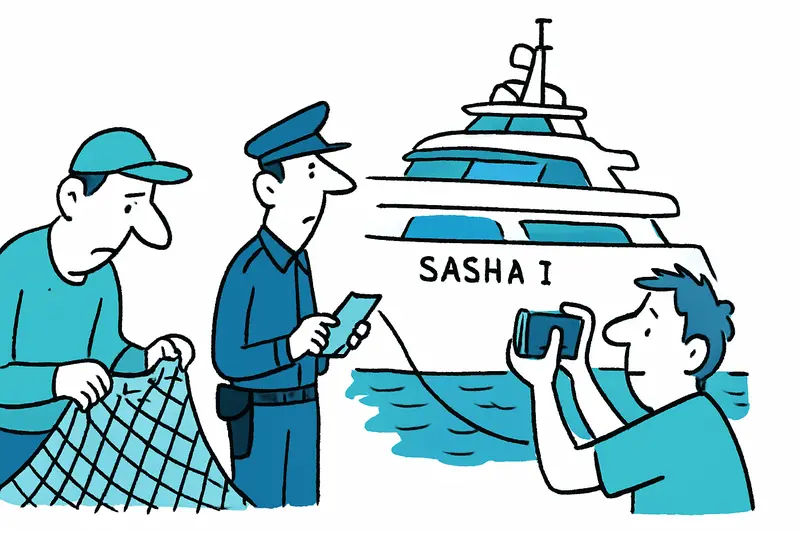
A walk early in the morning along the Passeig is enough: a fisherman cleans nets, the smell of fried tapas still lingers, a police officer writes something in his notebook while tourists take photos of the yacht. The "Sasha I" has become part of that picture — a silent colossus that catches glances, sparks discussions at café tables and makes residents wonder why legal entanglements take so long here.
Concrete solutions
1. Better transparency obligations: uniform, EU-wide disclosure requirements on beneficial ownership would clarify ownership relations faster.
2. Standardized verification mechanisms: criminal and administrative authorities need clear standards on which documents count as proof of genuine asset transfers — not just notarized papers from third countries.
3. Financial security for upkeep: a regulated procedure ensuring that berth and maintenance costs are not indefinitely borne by public bodies or third parties; for example through provisional securities from claimants.
4. Interjurisdictional cooperation: intensified cooperation between EU authorities, port administrations and courts in third countries could clarify facts more quickly.
Punchy conclusion
The "Sasha I" does not remain in the harbor because of a voyeuristic spectacle, but because authorities and courts insist on hard evidence of actual ownership relations. For Mallorca this means: visible consequences of geopolitical sanctions remain part of everyday life — at the quay as well as on the bill for berth fees. When scanning the boats around the island in autumn, one sees more than luxury: a piece of international law being worked through slowly but insistently.
Frequently asked questions
Who decides ownership of a yacht when cross-border disputes and sanctions are involved?
Why does the yacht in Palma stay moored even though ownership decisions are still pending?
What is daily life like around Palma harbor when a yacht dispute dominates the scene?
What counts as proof of ownership in international yacht disputes?
How could EU-wide rules help speed up resolving yacht ownership disputes?
How are private ownership rights weighed against sanctions in these cases?
What misconceptions surround cases like Sasha I in Mallorca?
If I’m visiting Palma, how should I view the Sasha I at the harbor?
Similar News

Curious Derby: When the Away Game Is Only 150 Meters Away
On Saturday FC Germania Mallorca meets U.D. Pla de na Tesa — a local derby that is effectively decided on the doorstep. ...

Protection failed? A murder in Coll d'en Rabassa and the gaps within
A jury found a man responsible for his partner's death: 66 stab wounds, the crime carried out in front of their shared d...
Palma opens s’Aigua Dolça: New sports centre opens on October 15
The new municipal sports facility s’Aigua Dolça above the Paseo Marítimo opens on October 15 in several stages. Initiall...

Deadly accident in Mortitx: Why the Ma-10 becomes a danger stretch at rallies
At kilometre 10 of the Ma-10 a Porsche plunged into a ravine. The driver, a 63-year-old German, died and his passenger s...

24 Graves in Felanitx: Who Wins — Hospital or Culture?
During the hospital construction in Felanitx, a necropolis with 24 graves and Islamic pottery was discovered. A test exc...
More to explore
Discover more interesting content

Can Cap de Bou

Townhouse Lleo 72
