
When Walling Up Becomes a Permanent Solution: How Santa Margalida Struggles with Aggressive Squatters
When Walling Up Becomes a Permanent Solution: How Santa Margalida Struggles with Aggressive Squatters
In Santa Margalida the municipality has bricked up a multi-family building on Lluna and Major streets after repeated break-in and occupation attempts by organized groups escalated the situation. A reality check: How far can authorities go, what is missing from the debate, and which practical steps does the island need?
When Walling Up Becomes a Permanent Solution: How Santa Margalida Struggles with Aggressive Squatters
Key question: Is the municipality allowed to simply wall up a building — or is it covering up a structural problem?
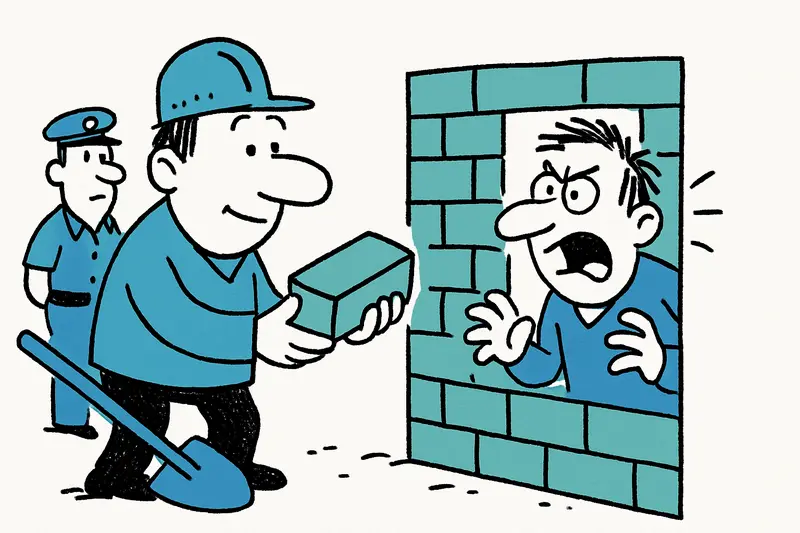
Late morning in Santa Margalida: the church bell strikes half past eleven, waiters at the café on the plaça carry cups with streaked crema, and at the corner of Carrer Lluna there is still the smell of fresh mortar in the air. Where a block of flats with two entrances once stood, freshly laid bricks are now visible. The municipality has sealed the entrances on Lluna and Major streets. Background: several nighttime intrusion attempts, changed door locks and a 24-hour Guardia Local guard service were unable to permanently fend off the attacks, as reported in Who Acts First? Squatters in Santa Margalida Cause Trouble in Half-Finished Housing Blocks.
The decision to brick up the building reads as harsh, almost final, at first glance. You can feel the desire for immediate effect: no squatters in, no danger for residents. But the action raises questions. Legally, protecting public order is weighed against the property rights of the owner; practically, short-term safety is weighed against long-term consequences. Who will bear responsibility for the building in the future if the original construction company is bankrupt? Who will pay the bill for the sealing? Such matters rarely resolve themselves.
Critical analysis
The municipality acted out of a security dilemma: repeated attempts by organized groups to take control create local pressure. A 24-hour guard shows that police respond on site. But guards and bricks are reactions to symptoms, not causes. Walling up prevents entries; it does not protect against the dereliction of a house, legal dead ends or the emergence of new conflict zones. Moreover, physically sealing a building can lead to legal entanglements. Property rights, municipal building regulations and future uses remain unresolved.
What hardly appears in public debate is the perspective of the owners and the neighbors, who often swing between anger and relief. There is a lack of honest engagement with what empty or decaying buildings attract: lack of maintenance, lengthy court proceedings, bureaucratic hurdles and a market that prioritizes returns over social uses. The problem of organized groups is also often generalized instead of being named precisely: not every internal movement is the same, but aggressive occupation attempts change the village's sense of security, as seen in incidents beyond Santa Margalida such as Valldemossa: Violence During Attempted Occupation — Who Protects the Houses in the Village?.
What is missing from the public discourse
First: an inventory of vulnerable properties. Second: clear rules of responsibility for insolvent developers and their remaining assets. Third: practicable emergency instruments for municipalities so protective measures remain legally secure and transparent. Fourth: a plan for possible reuses — vacancy as a risk can become an opportunity if there are programs for social housing, non-profit use or temporary uses. In conversations with market-goers, people say quietly: "We don't want barricades, but we want safety." This voice too often goes unheard; similar concerns have been raised by residents in other towns, for example "They want to drive us out": Longstanding residents in Santa Catalina against alleged investor.
Everyday scene from Mallorca
An elderly man feeds pigeons in front of the church, a school class walks by. The Guardia Local slowly drives down Carrer Major, two officers wave to the children. On the construction site, or rather: at the bricked-up entrance, two men stand with shovels, chatting about brick prices. Between them are the puzzled looks of neighbors who don't know whether the house will one day be renovated, sold or demolished. Such street scenes are typical: small town, big questions.
Concrete solutions
1) Municipal registry for at-risk properties: create records, prioritize and increase transparency. 2) Emergency legal framework: time-limited, court-proof measures for acute dangers — clearly regulated procedures instead of arbitrary actions. 3) Inter-municipal funds: resources for securing and repairing buildings, financed by contributions, fines or a special levy on brownfield sites. 4) Stricter owner obligations: those who let properties decay for years could be held accountable. 5) Reuse initiative: incentives for temporary uses, cooperative models or municipal takeovers so vacancy does not become a crime hotspot. 6) Preventive neighborhood structures: local sponsorships, supplemented by video surveillance at critical points and coordinated checks with the courts.
Punchy conclusion
The act of sealing with bricks was a visible signal: the municipality wants to stop the chaos. But walls are not policy, they are a bandage. Anyone who wants long-term safety and order in villages like Santa Margalida must tackle the whole system: laws, ownership responsibility, municipal resources and usable programs. Otherwise an acute reaction will become a permanent state — and the island will gradually turn into a chain of sealed-off building gaps. We don't have that much time.
Frequently asked questions
Why are some empty buildings in Mallorca being bricked up?
What happens when squatters repeatedly try to enter a building in Mallorca?
Is it legal for a municipality in Mallorca to wall up a building?
What are the main problems with vacant buildings in Mallorca?
What can Mallorca towns do to prevent squatting in empty properties?
What is the situation in Santa Margalida with the bricked-up flats?
What should owners do with unfinished buildings in Mallorca?
Can empty buildings in Mallorca be reused instead of left unused?
Similar News

More water than last year: Mallorca's reservoirs breathe easier
September rain refilled the Tramuntana's reserves: overall fill around 35 percent, Cúber at 40.42 percent, Gorg Blau at ...
Three Luxury Hotels in Banyalbufar: Lots of Money, Many Questions
A Danish investor plans three exclusive accommodations in Banyalbufar — including the historic Son Valentí. The announce...
2.1 tonnes of cocaine on sailing yacht off Spain's coast – a reality check for the coastguard
A 14-metre yacht was seized with 2.1 tonnes of cocaine. Who monitors the ports, how does the international hunt succeed ...

Heat Bonus in Mallorca: 100 Euros Extra for Outdoor Staff at MarSenses
MarSenses pays employees who worked outdoors in August an extra €100 as recognition. Lighter uniforms, reduced hours for...
Renovating in Mallorca: What You Really Can Do Without Neighbour Consent
Many think they can do whatever they want in their apartment. That's partly true — but only as long as structural elemen...
More to explore
Discover more interesting content

Can Cap de Bou

Townhouse Lleo 72
