
Serra in Dry Mode: Gorg Blau and Cúber Only One-Third Full
The two main reservoirs of the Serra de Tramuntana — Gorg Blau and Cúber — are, according to recent measurements, only about 31% full. A look at the Ma-10, the villages and the water suppliers shows: this is more than just a summer slump.
Reservoirs shrinking — a wake-up call from the Serra
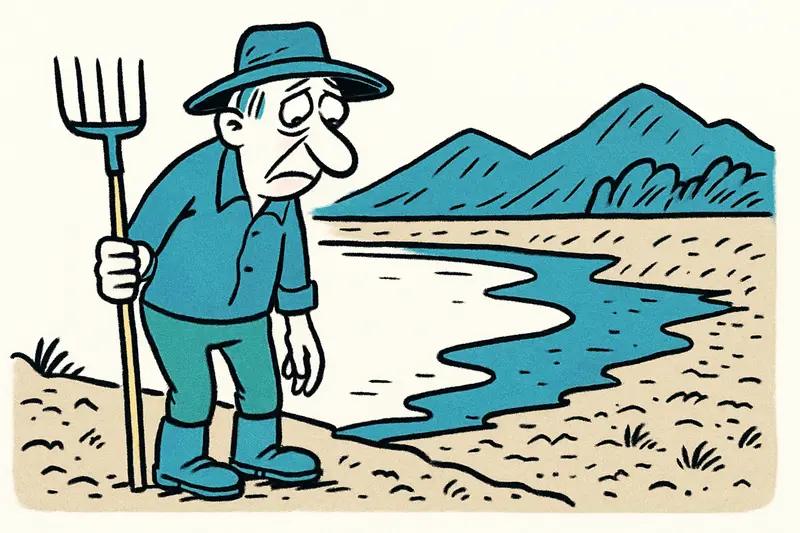
Early in the morning, when the heat has not yet roared and the cicadas only make a quiet rattling, an older gardener stands on the Ma-10 and stares at Gorg Blau. "You could once sit barefoot on the edge here," he says, half annoyed, half resigned. The brown edges of the lake tell a simple, bitter story: Gorg Blau and Cúber are currently only about 31 percent full. Local coverage has highlighted the regional impact in When the reservoirs shrink: How Mallorca's water shortage affects Palma and the villages.
The key question
How do we prepare so that a few rainy days do not come too late? That is the question now being talked about in the villages — from Escorca to the Ma-10.
Why the levels fell so sharply
The water utility reported a total fill level of 30.98% on Monday, August 25. Specifically, Gorg Blau was around 30.59% and Cúber about 31.59%. By comparison: on July 21 the reservoirs were still at 38.86% — a drop of almost eight percentage points in only four weeks. And at Cúber the level fell by about 16% within five weeks. A reality-check piece recorded similar figures and context in Why Mallorca's reservoirs remain empty despite rain — a reality check.
The explanation is banal but harsh: there has been hardly any rain, and demand — from tourism, refilling hotel water tanks, private pools and garden irrigation — has risen strongly. Added to that: the usual cool, water-rich winter reserves did not materialize this year. Less supply, higher extraction — and the problem is made.
Who feels it immediately?
First the landscape: hikers find exposed shoreline soils, small fishing boats stand like forgotten toys on dry ground. In the villages around Escorca people discuss it on the plaza; hotels fill their own tanks, some gardeners switch off the sprinklers. In many households a pre-warning is now in effect — with the exception of the southern Tramuntana. The same picture on Menorca and Ibiza; Formentera has so far been spared.
And yes: the neighbor has covered his pool — on principle. Small everyday gestures that suddenly become political.
What is not being discussed enough?
Publicly you often hear the usual tips: shorten showers, collect rainwater, water in the evening. That is right, but insufficient. Three aspects are often overlooked:
1. The infrastructure question: Old pipeline systems, missing cross-connections between reservoirs and limited pump capacity make technical rerouting expensive and slow. A few booster pumps help in the short term but do not solve the structural problem.
2. Usage priorities: Drinking water is in many cases treated the same as water for agriculture or hotel pools. There is a lack of clear rules and incentive systems that reward frugal use.
3. Reuse: Mallorca has potential for treated wastewater as an irrigation source — technically possible, but politically and financially still needing expansion. The debate about Palma's reliance on measures such as desalination and reuse is examined in Water shortage in Mallorca: As Gorg Blau and Cúber shrink — is Palma really prepared?.
Concrete measures that can be implemented
In the short term, the well-known saving measures help: night-time irrigation instead of midday, rainwater cisterns for the garden, shorter showers, filling pools less often. For municipalities and suppliers, quick measures include:
- Temporary rerouting between reservoirs where technically possible.
- Accelerated deployment of additional pumps and mobile transfer units.
- Granting subsidies for rainwater use on fincas and in hotels.
In the medium term the island needs more ambitious projects: upgrading infrastructure, investing in water treatment for agriculture and golf courses, smart meters and tariffs that reward frugal behaviour.
What does this mean for everyday life?
It is not a catastrophe from one day to the next, people say on the Ma-10, but it is a warning signal that we should not ignore. A few rainy days would relieve a lot — until then, small, real savings in every household and on every finca are the best we can do. And the authorities? They urge saving and are examining technical solutions. That takes time and money — both are scarce. Some towns have issued stark local warnings, for example Sóller Facing a Drinking Water Emergency: Ten Days Until the Crisis?.
If you live in the area: watch for notices from your municipality. And please bring the gardener on the Ma-10 a glass of water — he is doing what he can.
Frequently asked questions
Why are Mallorca's Gorg Blau and Cúber reservoirs so low right now?
Is it still safe to swim in Mallorca when reservoir levels are low?
What can households in Mallorca do to save water during a dry summer?
What does low reservoir water mean for Mallorca hotels and fincas?
What is happening with water scarcity in Escorca and the Serra de Tramuntana?
Why doesn't Mallorca just move water between reservoirs more easily?
Could treated wastewater help with Mallorca's water shortage?
Should people in Mallorca expect water restrictions this summer?
Similar News
Finally Home: Mike and Leyla Heiter Buy Villa with Sea View in Mallorca
The reality TV couple Mike and Leyla Heiter have bought a house in Mallorca with a roof terrace and sea view. An Instagr...

Arrest after series in Palma: Who protects apartments from repeat offenders?
The National Police arrested a man in Palma who investigators say may have broken into several apartments. In one incide...

How a Teenager Without a Driver's License Stole a Rental Car — and What It Means for El Arenal
In El Arenal a minor took advantage of an unattended rental car with its engine running. Flight, climbing over walls and...
Three-ton llaut salvaged in Puerto Portals – volunteers clear microplastics from the harbor
During the weekend operation in Puerto Portals, divers pulled an approximately three-ton llaut from the harbor. Associat...

Naked Pillar in Bunyola: Why a Climbing Prank Is More Than an Accident
During the Sant‑Mateu verbena a 20‑year‑old fell at a protected wayside cross in Bunyola and pulled the stone cross off ...
More to explore
Discover more interesting content

Can Cap de Bou

Townhouse Lleo 72
