
Ses Fonts Ufanes: When the springs reappear — natural wonder and visitor pressure in Campanet
Ses Fonts Ufanes: When the springs reappear — natural wonder and visitor pressure in Campanet
After heavy rains, the Ses Fonts Ufanes at Gabellí Petit have reemerged from underground. A natural event — but each time it raises questions about protection, access and responsibility.
Ses Fonts Ufanes: When the springs reappear — natural wonder and visitor pressure in Campanet
After rainfall the groundwater is pushed to the surface. For residents and nature managers the spectacle is both a gift and a burden.
Key question: How do we preserve a rare natural phenomenon without overwhelming the landscape and the people who live there?
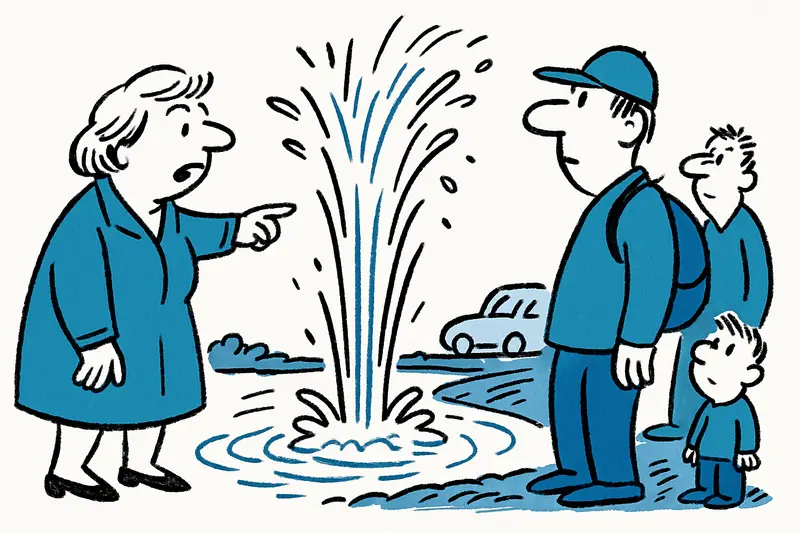
On Tuesday afternoon, after days of persistent rain in the Serra de Tramuntana, the well-known fonts reappeared on the Gabellí Petit estate near Campanet: water bubbling from the ground, at first as small bubbles, then as a roaring jet, until a short lively stream ran through the valley. People who stepped outside in the surrounding villages heard the unusual gurgling — and saw cars at the roadside, groups with wet shoes and children with bright faces.
The phenomenon has a clear cause: the slopes around Puig Tomir and the storage capacity of the groundwater basin beneath, and regional reservoirs' levels also matter, as reported in Serra in Dry Mode: Gorg Blau and Cúber Only One-Third Full. After extended periods of precipitation the saturation is sufficient and the water finds a path upwards. This happens regularly in winter and spring — not equally strong every year, but often enough that traditions and expectations have developed.
The flip side of this fascination is clearly visible: narrow access roads, lack of parking, pedestrians on farm tracks, disregard for fences and agricultural land. The photos taken on such days show happy people — but also bent guardrails and litter at the roadside. For residents this means noise, lost privacy and at worst damage to properties.
Critical analysis: There are three problems that repeatedly converge. First: infrastructure that was not designed for thousands of visitors. The track leading to the spring area is a farm road, not a visitor centre. Second: information deficits. Many arrive without knowing how fragile the area is — they trample reeds, step on plants, or park on fields. Third: regulatory gaps. Simple, quickly implementable rules for peak times and clear local contacts are missing.
What is often underemphasized in the public debate: the springs react sensitively to interventions in the catchment area. Soil compaction from parking, waste or illegal camping are not minor issues. Residents’ concerns are rarely voiced loudly — the people who live here cannot manage groups of visitors every weekend. Instead of only sharing images of bubbling water, discussions about long-term protection and fair access rules should be louder.
An everyday scene from Campanet: on the Plaça, in front of the small bar at the edge of town, an older woman discusses with the barkeeper whether people from the north will roll in again next weekend. The barkeeper shakes his head; he knows the stories of overturned bins and lost keys. Children play and pull at the branches of the olive trees — a quiet street until the first tour buses appear.
Concrete solutions, practical and immediately implementable:
- Time windows and visitor guidance: A simple system with announced observation windows reduces continuous flows. Digital notices (municipal website, social media channels) and signs at access roads help.
- Park-and-ride and shuttles: Fewer cars at the field edge, with a shuttle from the town limits or a designated parking area.
- Temporary access restrictions during high water: When the springs gush strongly, paths are often slippery and dangerous. Clear notices and, where necessary, barriers protect people and nature.
- Volunteer and ranger programs: Local volunteers can inform visitors, collect litter and explain simple rules. A visible presence calms and guides behaviour.
- Information signs at the start of the trails: Why the springs form, why trampling damage is problematic, phone numbers for inquiries (for example the Balearic environmental number: 971176800) — simple facts foster understanding.
These measures do cost money and organisation, but they are less demanding than cleanup after every surge of visitors. Above all, they are a contribution to solidarity with those who live and work here; similar tensions over water and tourism have arisen elsewhere, notably in Valldemossa on the drip: When jerrycans are louder than tourist walks.
Conclusion: The Ses Fonts Ufanes are as much a part of Mallorca as the smell of wet earth after rain. Wonder is justified, curiosity natural. But wonder must not turn into entitlement. If municipalities, the environmental administration and visitors now work together pragmatically — with clear rules, little bureaucracy and some consideration — the natural wonder can be preserved for everyone within the UNESCO World Heritage listing for the Serra de Tramuntana. Anyone who wants to find out whether the springs are currently gushing can call the responsible environmental office: 971176800. And if you visit Campanet next time: footwear, respect and a rubbish bag never hurt.
Frequently asked questions
When do Ses Fonts Ufanes usually appear in Mallorca?
Can you swim at Ses Fonts Ufanes near Campanet?
Why do the springs at Ses Fonts Ufanes suddenly come out of the ground?
What should you wear and bring when visiting Ses Fonts Ufanes?
Is there parking at Ses Fonts Ufanes in Campanet?
How can visitors help protect Ses Fonts Ufanes in Mallorca?
Where is Ses Fonts Ufanes located in Mallorca?
How can I check whether Ses Fonts Ufanes are currently flowing?
Similar News
Reality check: Palma's "white" torrent — harmless salt or neglected warning sign?
White crusts on the Torrent de Sa Riera are causing a stir. Emaya describes them as salt deposits. Our reality check: wh...
When Ryanair's fleet grows: What Mallorca's travelers should know
Ryanair will soon receive 737 Max 10 jets. The larger aircraft offer potential savings — but also new risks for flight o...

Rising fuel and housing costs: Why Mallorca's overland buses are suddenly overcrowded
More and more people are leaving Palma — and boarding TIB buses: Between January and August 2026, the network recorded o...
Carriages Without Horses: Palma Plans E-Carriages – a Reality Check
Palma plans to switch to electric carriages in 2027. The prototype was shown near the cathedral. What is the technology ...

Record season, empty coffers: Who really benefits from the tourism boom?
Full hotels and more flights: the numbers sound impressive — yet many locals feel no benefit. A reality check with an ev...
More to explore
Discover more interesting content

Can Cap de Bou

Townhouse Lleo 72
