
Shock in Andalusia: What this train accident reveals about Spain's rail system
Shock in Andalusia: What this train accident reveals about Spain's rail system
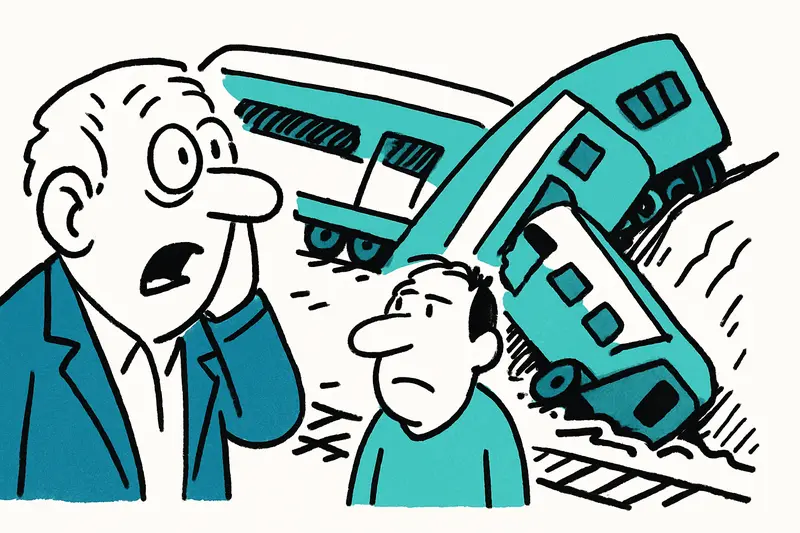
A head-on collision between two high-speed trains near Adamuz has caused numerous deaths and injuries. The tragedy raises fundamental questions about rail safety, emergency logistics and the transparency of the investigations.
Shock in Andalusia: What this train accident reveals about Spain's rail system
The news from Adamuz hits as suddenly as a train in the dark: two high-speed trains collided on Sunday evening, dozens of people died and many more were injured. Numbers and locations can be named – but the truly urgent question is different: how could a high-speed train leave its track and trigger a catastrophe in oncoming traffic?
Key question
How could a system built for 300 km/h and supposedly equipped with modern safety features fail so that carriages plunge down an embankment and people are trapped in “piles of metal debris”?
Critical analysis
On paper many things come together here: a modern fleet, a dense network, private operators alongside the state railway. In reality, friction arises: interfaces between train protection, track maintenance and the coordination of different operators are particularly vulnerable. If one train derails and blocks another track, this is not just an isolated failure – it exposes possible gaps in the system architecture: Did trackside signals work? Was the automatic train protection system reliably triggered? Was there human error or a technical fault?
There is also the question of infrastructure upkeep: the accident site lies in a hard-to-reach, rural section. Physical obstacles, embankments and narrow access for rescue teams are de facto risk factors there. The combination of high speed, rural topography and a potential source of error is dangerous.
What's missing in the public discourse
Debates usually revolve around assigning blame or emotional reactions – understandable, but incomplete. What is missing is a factual engagement with:
- the role of private operators in maintenance and operational safety; - transparency in technical audits and safety checks; - clear protocols for emergency medicine and logistics in hard-to-reach track sections; - the question whether investments in comfort were prioritized over redundant safety mechanisms.
Past local cases, such as the Fatal accident near Son Castelló: Three passengers come forward — where are the gaps in responsibility?, have raised these same concerns about oversight and responsibility.
An everyday scene in Mallorca
On Passeig Mallorca, in front of the café, an older commuter quietly talks about the accident. He takes the train to Madrid every month, knows Atocha, has friends who often travel south. Today conversations are silent, the newspaper lies unopened. The wind carries the reports into side streets — for many here on the island distant grief quickly becomes a personal risk: what if the train a friend takes runs on a similar route, as incidents like the Head-on Crash near Manacor: Two Dead, Questions Remain suggest?
Concrete solutions
The tragedy requires immediate and medium-term measures that go beyond expressions of condolence:
- Immediate, independent investigation with publication of black box data so that technical causes, not speculation, are in the foreground. - Comprehensive review of automatic train protection systems (including compatibility between different operators). - Prioritized safety inspections on track sections with difficult geography; tougher measures to eliminate danger points such as poorly secured embankments. - Expansion of rescue access routes and drill runs for large-scale accident scenarios in rural sections; better coordination between fire services, emergency medical services and rail operators. - Improved crisis communication: fast, binding information for relatives, clear contact points at major stations, on-site psychosocial immediate assistance.
Practical steps for Mallorca
Lessons can also be learned here on the island: the Balearic railways could run their emergency plans with local hospitals. Stations like Palma could designate gathering points for relatives. Small measures — reserved parking spaces for emergency vehicles, regular rescue drills on branch lines — cost little and help in an emergency. The urgency of drills is underlined by recent collisions such as the Crash on the Ma-10: Bus collides head-on with a truck — What does this say about our roads?.
Pointed conclusion
This night in Andalusia is not an isolated accident but a warning signal. Beyond grief, it is necessary to soberly identify where technology, organization and politics can fail. More transparency, independent audits and practical reinforcements in the rescue network are not a luxury — they are an obligation to the people who board a train trusting they will arrive safely.
Frequently asked questions
What can Mallorca travellers learn from Spain’s recent train accident?
Are trains in Mallorca affected by the rail safety concerns raised in Andalusia?
What are the biggest safety risks on rural train lines in Spain and Mallorca?
What should passengers do if there is a major train accident in Mallorca or mainland Spain?
When is the best time to travel by train in Mallorca?
How important are automatic safety systems on high-speed trains in Spain?
What role do private train operators play in rail safety in Spain?
Where should relatives go for help after a serious train incident in Mallorca or Spain?
Similar News
Reality check: Palma's "white" torrent — harmless salt or neglected warning sign?
White crusts on the Torrent de Sa Riera are causing a stir. Emaya describes them as salt deposits. Our reality check: wh...
When Ryanair's fleet grows: What Mallorca's travelers should know
Ryanair will soon receive 737 Max 10 jets. The larger aircraft offer potential savings — but also new risks for flight o...
Rising fuel and housing costs: Why Mallorca's overland buses are suddenly overcrowded
More and more people are leaving Palma — and boarding TIB buses: Between January and August 2026, the network recorded o...
Carriages Without Horses: Palma Plans E-Carriages – a Reality Check
Palma plans to switch to electric carriages in 2027. The prototype was shown near the cathedral. What is the technology ...
Record season, empty coffers: Who really benefits from the tourism boom?
Full hotels and more flights: the numbers sound impressive — yet many locals feel no benefit. A reality check with an ev...
More to explore
Discover more interesting content

Can Cap de Bou

Townhouse Lleo 72
