
Short Jump, Big Fright: Pregnant Holidaymaker Falls on Rocks at s'Arenal
Short Jump, Big Fright: Pregnant Holidaymaker Falls on Rocks at s'Arenal
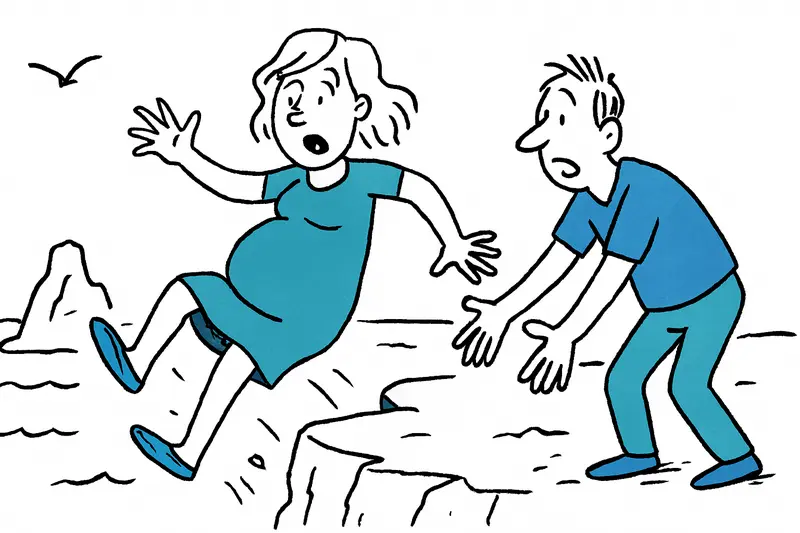
A 29-year-old British woman, ten weeks pregnant, jumped into the water near the jetty at s'Arenal on Monday afternoon — slipped on rocks and suffered an ankle fracture. Her partner helped, rescue teams treated her and took her to Clínica Rotger.
Short Jump, Big Fright: Pregnant Holidaymaker Falls on Rocks at s'Arenal
Key question: Why do small dares at the sea repeatedly end with injuries — and what can the island do about it?
On Monday afternoon, around 2:30 pm, a short jump into the sea turned into a painful accident. A 29-year-old holidaymaker from the UK, ten weeks pregnant, jumped from the jetty near the s'Arenal yacht club from a height of about one and a half metres into the water. On impact she slipped on rocks and suffered a fractured ankle. Her partner helped her back to shore, the beach rescue team administered first aid and an ambulance then took her to Clínica Rotger after the ankle had been splinted.
I know this spot: bars along the Passeig pound their beats into the hot afternoon, seagulls circle over the boats and the smell of sunscreen mixes with the salty wind. Many people think: a jump from one and a half metres is harmless. And yet a wrong angle, a hidden rock base or a wet stone slab is enough to turn a harmless action into a medical emergency.
Critical analysis: The incident highlights two things clearly. First, the mismatch between tourist temptation and the danger at the many rock edges around Palma: places that invite jumping are often not marked as such — and even less as hazardous. Second, how quickly an injured person can end up in a precarious situation despite rapid assistance, especially when a pregnancy is involved. The immediate medical response appears to have been well organised: partner assistance, beach rescue, ambulance, hospital admission. But the accident could have been prevented.
What is missing from public discussion: there is a lot of talk about rescue operations and individual incidents, but hardly any about systematic prevention. What is lacking is a sober debate about which spots are particularly risky, how visitors are informed and how private providers, municipalities and safety services cooperate. The role that alcohol, group behaviour or smartphones (for photos and videos) play in these jumps is also rarely discussed openly. All of these are factors that would allow targeted measures.
Everyday scene: on a hot afternoon the beachfront walker sits with an iced coffee on a bench at the Passeig, tourists pass by in flip‑flops, youngsters balance on the tip of the jetty – nobody immediately thinks of a trip to Clínica Rotger. The scene is banal, almost cheerful. That a pregnant woman ended up among all this makes the situation particularly sensitive: worry and haste mix, the partner looks uncertain, other passersby gather, an ambulance siren blares along the promenade.
Concrete solutions that can be implemented quickly and relatively cheaply:
1) Visible, multilingual warning signs and pictograms: At known jumping spots, on jetties and rock ledges, easy-to-understand signs should be installed (Spanish, English, German) giving warnings such as: “Do not jump / rock slabs slippery / varying depths”. Pictograms work even without text.
2) Markings and simple barriers: Where particularly dangerous spots are known, yellow lines or small barriers can make it clear: do not jump here. Such markings prevent impulsive jumps and are cheaper than costly structural changes.
3) Better information duty by accommodation providers: Hotels and holiday rentals could provide information about hazardous spots at beaches during check-in (both paper and digital) – especially important for families and pregnant guests.
4) Lifeguard training focused on special patient groups: Lifeguards should receive regular refreshers on the first aid care of pregnant people – covering positioning, communication with emergency services and quick transport decisions.
5) Public outreach instead of only reaction: During the summer season short campaigns via local channels, social media and tourist information stands: why you should not jump from jetties, and alternatives such as designated diving platforms or safe bathing areas.
6) Mapping dangerous spots: A simple island map with marked risk areas, available digitally, could give guests orientation and allow authorities to prioritise safety measures.
These measures cost less than many think and help reduce annoyance, pain and the emergency workload for rescue services.
Punchy conclusion: A one-and-a-half metre jump should not lead to medical treatment. The island has plenty of experience with the summer season, crowds and dares at the sea. What is needed are fewer moral lectures and more clear, pragmatic rules: signs, markings, information — and better trained rescuers. Then the jump remains a brief thrill and not the end of a holiday with an open ankle and unnecessary fright.
Frequently asked questions
What is the best time of year to visit Mallorca for pleasant weather and fewer crowds?
Can you swim in Mallorca year-round?
What should I pack for a Mallorca trip?
Are there family-friendly beaches in Mallorca?
What outdoor activities are popular in Mallorca?
How can I get around Mallorca without a car?
What should I expect on arrival at Mallorca’s airport?
Is it safe to swim in Mallorca when the sea is rough?
Similar News
When Rescuers Stand Down: Why the Lifeguards' Strike in Calvià Is More Than Just a Loud Bang
Lifeguards in Calvià have called a strike for August 23. What's behind the conflict, what risks are looming — and what i...
Pickpocketing at Ballermann: What the intervention of two off-duty police officers shows
Two off-duty officers stopped two suspected pickpockets near Playa de Palma and secured the victim's phone and wallet. T...
Who Pays the Price? Why Holidaymakers in Mallorca Are Now Skimping on Excursions and Taxis
Several bus companies report idle capacity, and taxi drivers notice more cautious guests. Our guiding question: How deep...
Off-duty police officers stop thieves at Ballermann – a reality check
Two off-duty police officers observed on Playa de Palma how two men stole a tourist's phone and wallet. What does the in...
Two Children on a Windowsill: A Nightmare Raising Questions About Supervision Duty in Mallorca
In Palma, two minors balanced on a narrow third-floor windowsill while the grandfather responsible for supervision slept...
More to explore
Discover more interesting content

Boat Tour with BBQ along Es Trenc Beach

Private transfer from Mallorca Airport (PMI) to Pollensa
