
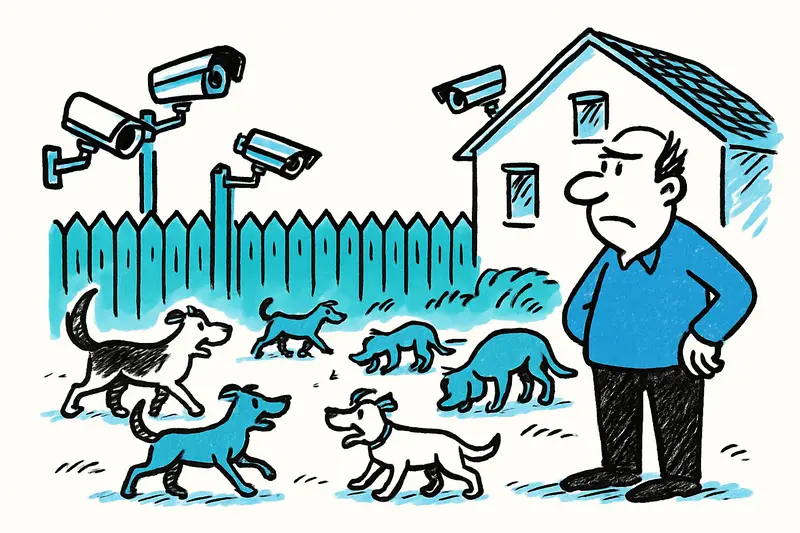
Six cameras, five dogs, a large estate: when security becomes a private matter
Six cameras, five dogs, a large estate: when security becomes a private matter
Caro and Andreas Robens have further secured their estate in Ses Palmeres — six new cameras on a 2,000 m² property. An occasion to reflect on privacy, neighborhood relations and solutions in Mallorca.
Six cameras, five dogs, a large estate: when security becomes a private matter
Why residents like the Robens are upgrading — and what's missing in the surveillance debate?
In Ses Palmeres, a quiet corner of the municipality of Llucmajor, there is more technology in the garden this week than usual: six new cameras around the house, in addition to existing systems and the usual guard dogs. It concerns a 2,000-square-metre property with about 300 square metres of living space, five dogs, a need for peace and the worry about burglaries in the neighborhood. It is understandable that people want to better protect their homes. But the upgrade raises questions that we should all take a closer look at.
Guiding question
How much private security is permitted — and at what point does protection turn into digital surveillance that affects others?
Critical analysis
Cameras create visibility, and visibility creates control. On a property like the Robens', permanently installed devices can significantly increase the feeling of protection: recordings show who comes and goes; motion detectors trigger an immediate alarm; footage helps with police reports. But surveillance has side effects. Cameras aimed directly at boundaries or driveways sometimes capture parts of public spaces or neighboring properties, as seen in a trial in Palma over secretly installed cameras. In dense residential areas that means: one person's gaze can intrude on another's freedom of movement. This is discussed too little in Mallorca — instead people often hear only the buzzword "more security", reflected by Palma's investment in cameras, drones and AI.
What is missing from the public debate
First: clear information for homeowners. Many do not know exactly that there are legal limits, for example regarding the recording of public paths or the storage of image data, a topic raised in Gina Schumacher, Cameras and the Island: Who Draws the Line?. Second: neighborhood rules. A few houses down the lane there are no standards on how cameras should be positioned or whether signs must be posted. Third: affordable alternatives. Not every family can afford expensive equipment and private security firms, leaving most people with a sense of being left alone.
An everyday scene from Llucmajor
In the late afternoon you hear the squeak of a gate on the driveway, the small guard dogs bark in the background, a delivery van rolls past, and a light Levante breeze blows around the bend. The camera on the driveway tree registers every movement, the base station hums in the living room. This is modern everyday life: the village remains as it always was, but the personal bubble is now overlaid electronically.
Concrete solutions
1. Neighborhood agreements: Residents could jointly agree on rules — e.g., camera heights, orientation and labelling of devices. This prevents unnecessary conflicts. 2. Publicly accessible advice: Municipalities or local police stations could offer information evenings explaining which recordings are legally permitted and how long data may be stored. 3. Technical presets: Many modern systems can be configured to film only the owner's property or to detect motion only in defined zones. Using these functions respects neighbors' privacy. 4. Community projects: Instead of each household upgrading individually, street groups can invest in better lighting, motion sensors or alarm chains — these measures often deter more effectively than individual cameras. 5. Clear signage: A visible notice about video surveillance is not only legally sensible but also creates transparency for passers-by and neighbors.
Why this matters for Mallorca
Our island thrives on proximity: short distances, neighbors who know each other. If security questions are answered solely by technology, a piece of social cohesion is lost. At the same time there are real reasons for caution: burglaries have a heavy impact on those affected. The challenge is to reconcile protection and community — without a garden wall becoming a glass barrier for others.
Conclusion
Caro and Andreas Robens act out of the experience of their neighborhood — that is understandable. Their six additional cameras make their home more visible, but not necessarily the neighborhood safer. Security in Mallorca needs both: reliable technical means and a spirit of cooperation that sets and explains rules. Cameras are tools, not a substitute for communication. When neighbors, politicians and the police develop solutions together, the village remains lively and protected — without constant surveillance that sows distrust.
Frequently asked questions
Are home security cameras allowed in Mallorca?
Can a camera in Mallorca film the street or my neighbour’s driveway?
What is a sensible way to protect a house in Mallorca without overdoing surveillance?
Do Mallorca homeowners need to put up signs for video surveillance?
What should residents in Llucmajor do if they are worried about burglaries?
Why are some homeowners in Mallorca adding more security cameras?
What privacy issues can home cameras create in Mallorca neighbourhoods?
Where can Mallorca residents get advice on legal camera use?
Similar News
Magaluf: Watchtower Alarm – Lifeguards Pull Unconscious Beachgoer from the Water
After a drama in the late afternoon, two lifeguards at Magaluf beach rescued an unconscious 44-year-old man. He was stab...
Turquoise in the City: How dangerous is the color play of the Sa Riera?
The Sa Riera in Palma suddenly turned turquoise — a pretty motif, but behind the effect lies a discharge of saline waste...

Jeckliner at Sunnesching: Cologne spirit sets sail from Palma
In September 2027 the Mein Schiff 2 briefly becomes a floating carnival stage: four days with Cologne bands, comedy and ...
Finally Home: Mike and Leyla Heiter Buy Villa with Sea View in Mallorca
The reality TV couple Mike and Leyla Heiter have bought a house in Mallorca with a roof terrace and sea view. An Instagr...
Arrest after series in Palma: Who protects apartments from repeat offenders?
The National Police arrested a man in Palma who investigators say may have broken into several apartments. In one incide...
More to explore
Discover more interesting content

Can Cap de Bou

Townhouse Lleo 72
