
Thick Smoke Cloud over Santa Maria: Why the Fire Reopens Questions About Prevention
Thick Smoke Cloud over Santa Maria: Why the Fire Reopens Questions About Prevention
A fire in abandoned livestock barns near Santa Maria caused a dense smoke cloud over Mallorca over the weekend. Firefighting operations are underway, evacuations were carried out as a precaution. Time for a reality check: How well are we prepared?
Thick Smoke Cloud over Santa Maria: Why the Fire Reopens Questions About Prevention
Fire in abandoned livestock barns, response teams from several towns, and a renewed flare-up in the afternoon
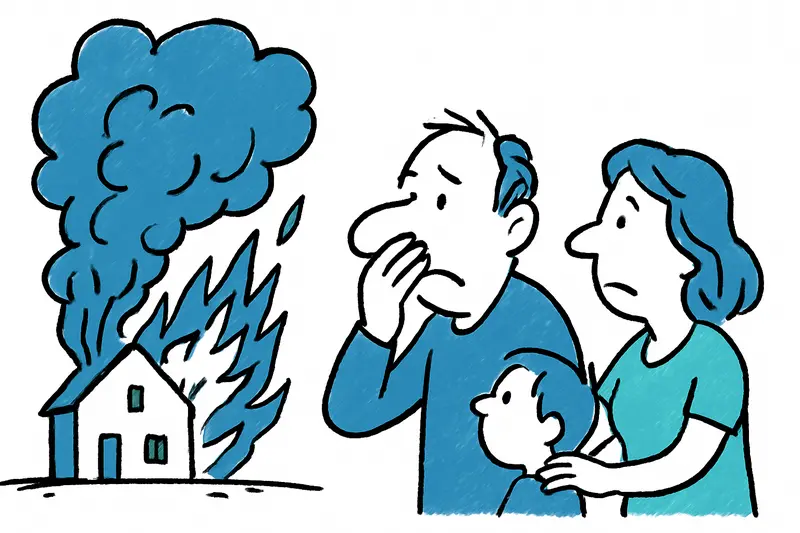
In the early hours of Saturday at around 2:25 a.m., a fire broke out in abandoned livestock barns near Santa Maria del Camí. The flames were initially contained until morning, but the fire flared up again in the afternoon. Due to the heavy smoke, residents in the immediate area were evacuated as a precaution; firefighting efforts continued after authorities reported the fire "under control" again at around 6:00 p.m.
On site were units from the fire stations of Inca and Calvià as well as the helicopter "La Milana", four aircraft from the Institute for Nature and Forestry (Ibanat), 18 wildfire fighters and two environmental officers. The cause of the fire is still unknown. On Sunday, large parts of Mallorca and Menorca were at the highest wildfire danger level; open flames in forested areas are prohibited.
Key question
Why do empty, agriculturally used buildings burn — or reignite — even though the signs of high fire danger are clear?
Critical analysis
The number and composition of the forces deployed shows two things: first, that the island has specialized air and ground units that can respond quickly; second, that such operations tie up resources that may become scarce during larger wildfires. The fact that the fire reignited after initial containment points to smoldering hotspots in hard-to-reach material — hay, old wood pieces, roof beams. Such fire sources need time and intensive follow-up checks, otherwise exactly what residents experienced yesterday happens: smoke, evacuation, unrest.
What is missing so far in the public discourse
The debate quickly focuses on the strength of the response and warning signs. Less attention is given to the fact that abandoned barns, haystacks and scrub directly adjacent to buildings pose a constant danger. There is also often no clear register of vacant agricultural structures and their responsible parties — who ensures that barns do not become stores of combustible material? Preventive infrastructure is rarely discussed as well: firefighting water reservoirs, maintained firebreaks, and regular inspections during heat periods.
Everyday scene from Santa Maria
On Sunday at midday the square in front of the church still smelled of smoke; older neighbors held their hands over their mouths, and parents led children away from the playground. Traffic on the Ma-13 slowed as people from surrounding villages drove to the viewpoint to see the smoke column. From the valley came the droning beat of the helicopter "La Milana", the stoic sound now associated with wildfire season here.
Concrete solutions
1) Inventory: Every municipality needs a publicly accessible register of abandoned agricultural buildings with contact details for owners and deadlines for hazard removal. 2) Preventive land management: Municipalities should order mandatory inspections of hay and storage sites during high-risk periods and impose fines for neglect. 3) Local firefighting infrastructure: Expand water extraction points and small firefighting ponds where tanker trucks have difficulty maneuvering. 4) After-fire management: Deployment plans for extended follow-up inspections and mobile thermal imaging cameras to quickly locate smoldering hotspots. 5) Communication: Clearer, earlier warnings to residents and mandatory evacuation drills in fire-prone locations.
Why this makes sense
These measures cost money, but they save manpower, nerves and infrastructure when a fire breaks out. A controlled register and mandatory inspections could prevent hay and old scrap in vacant barns from becoming ignition traps. Water points and firebreaks give fire departments time before a blaze can spread over a wide area.
Concise conclusion
The fire in Santa Maria was locally contained, but it exposed an old weakness: prevention is often just reaction. If we do not now work consistently on property maintenance, owner responsibilities and local firefighting infrastructure, we will see such alarms more often. For people in the villages: heed the drone of helicopters, but also ask who in your neighborhood is responsible for ensuring that old barns do not become a danger.
Frequently asked questions
How is Mallorca addressing wildfire risk around abandoned barns and storage sites?
What happened during the Santa Maria fire near Mallorca's Santa Maria del Camí?
Why do fires in Mallorca sometimes reignite even after initial containment?
What evacuation and warning measures are used when smoke fills villages near Santa Maria?
What firefighting infrastructure and planning help Mallorca respond to wildfires?
What roles did local units play in the Santa Maria incident?
How can residents help prevent fires in Mallorca during hot periods?
What was Mallorca’s wildfire danger level during the latest incident and how did it affect daily life?
Similar News

Eviction in El Arenal: Who protects neighbors — and who protects the homeless?
A vacant hotel on Carrer Girona was cleared and secured. The neighborhood breathes a sigh of relief. But the action trea...

'La Tapita' loses its home: Who will protect Palma's last affordable meeting places?
The bar 'La Tapita' on Simó-Ballester Street will close at the end of December. For neighbors, police officers and small...

Million Heist at Bulgari: Who Is Responsible for Palma's Security Gaps?
Three men stole jewelry worth around one million euros – the crime series began at the end of September and was likely c...

Who pays the bill? Tourists, prices and the reality in Mallorca
Rising costs are felt by travelers and locals alike. A walking observation through Palma's old town shows how tourists e...

Phone robbery at Playa de Palma: Two juveniles arrested — a reality check
On Monday morning three young women were attacked at Playa de Palma; two youths snatched a phone from one of them. The N...
More to explore
Discover more interesting content

Can Cap de Bou

Townhouse Lleo 72
