
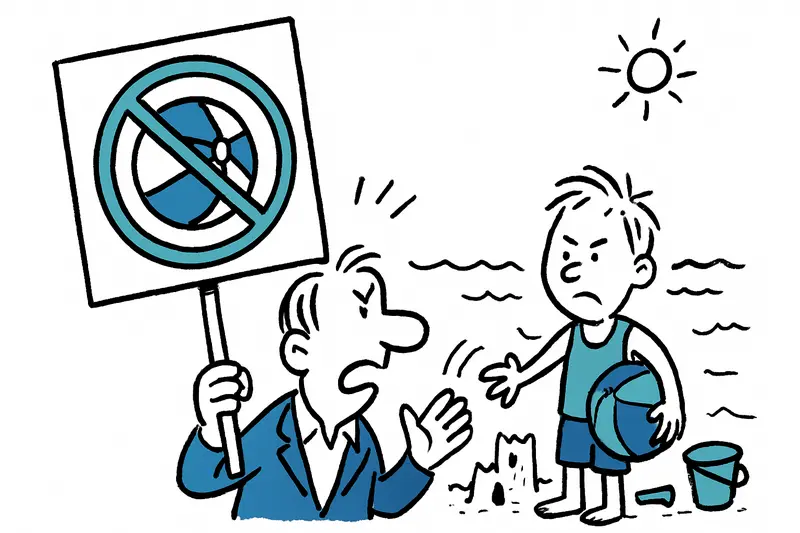
Sóller wants to ban beach games in summer — a local test
Sóller wants to ban beach games in summer — a local test
The municipality of Port de Sóller plans to ban games, sports and loudspeakers on the beach during the high season. Why the rule can be problematic and how it could be implemented better.
Sóller wants to ban beach games in summer — a local test
Key question: Does the new beach regulation protect the peace — or make the beach lifeless?
The municipality of Port de Sóller plans to ban games, sports and the use of speakers on the beach and in the water during the high season, as reported in Sóller wants to ban beach games in summer — a local test. Ball games should only be allowed in designated zones; anyone who violates this risks a fine of up to 3,000 euros. That sounds like clear rules, but what does it mean for families, vendors and the late beach music after sunset?
On the Passeig, where the yellow tram from Sóller often rings and fishermen unload nets early in the morning, the beach is a mixed place: children kick a ball at the edge, seniors read the newspaper in the shade of the pine trees, and a few cafés set tables by the water in the evening. A general ban affects exactly this coexistence. It solves a practical problem — noise and conflicts — but it also creates new ones: How large are the "designated areas"? Will they be far enough away from cafés, or tucked into a corner no one wants?
In the analysis three problem areas emerge: First, proportionality. A fine of 3,000 euros feels like a heavy hammer; against youngsters with a beach ball it is excessive. Second, practicality: Who enforces the ban on the sand and in the water? Lifeguards, police, or a private service? Third, transparency: Public communication is missing so far — maps for the designated areas, exact season dates, time rules or exceptions (children, organized sports, cultural events) are not named.
Technical and social details are also missing: No information on signage, no details on decibel limits, no indication whether landlords, beach bars and tour operators were involved. Such points decide whether a regulation is accepted or leads to daily conflicts, a debate summarised in Sóller wants to regulate the beaches: rules, controversy and what's missing in the debate.
Concrete proposals on how the municipality could regulate the matter more fairly and practically:
1) Mapped play zones: At least two clearly marked areas along the shoreline, with information signs on the Passeig and at the access points. The zones should be family-friendly and easily accessible, not in remote corners.
2) Graduated sanctions: Warnings and stepped fines instead of an immediate high maximum penalty; increased sanctions for repeat offences. This keeps the rule enforceable and proportionate.
3) Time windows instead of a total ban: Restrictions during the hottest afternoon hours and in the evenings, free use in the morning hours or in clearly defined leisure windows.
4) Dialogue with residents and businesses: Bring local shops, beach bars and hoteliers together to find practical solutions; publish clear maps online.
5) Pilot phase and evaluation: Test the ban for one season first, collect data (number of conflicts, reports, complaints) and then adjust.
On the street people already voice opinions: A beach vendor at Platja d'en Repic says she hopes for peace for her older regulars; a father from Sóller worries his children will no longer find space to play. The soundscape at the harbor — gulls, engines, voices in Catalan and Spanish — will not disappear, but the new rules change what is considered normal.
Conclusion: The intent to reduce disturbances on the beach is understandable. The current wording, however, risks overregulation and conflicts because important implementation details are missing. A more broadly supported, phased and clearly communicated solution would be more likely to create peace without turning the beach into a strictly regulated place where children and residents can no longer come together.
A small practical tip: If you come to Port de Sóller in summer, check the notices on the Passeig or ask the tourist information before visiting the beach: this will avoid misunderstandings and costly fines.
Frequently asked questions
Can you play ball games on the beach in Port de Sóller during summer?
How big can beach fines be in Mallorca for breaking local rules?
What should families know before going to Port de Sóller beach in summer?
Are speakers allowed on Mallorca beaches in summer?
What is the Passeig in Port de Sóller like in summer?
Why is Sóller considering stricter beach rules at all?
Will there be designated play zones on the beach in Port de Sóller?
What is the best way to avoid problems with the new Port de Sóller beach rules?
Similar News

From the Reality Studio to the Pitch: Aleks Petrovic Makes Mallorca His Base
The former participant in numerous TV shows moves from Dubai to the island and launches a project with FC Germania Mallo...

When the Phone Falls Silent: Concern for Sarah Joelle in Mallorca — and What It Reveals
After days without a response, the TV personality's unreachability in Mallorca sparked concern. Shortly afterwards an al...

Ultraluxury on the Ground: Four Seasons Jet in Palma — a Reality Check for Formentor and the Island
A high-priced flight crosses Mallorca and its guests stay for days at the Formentor resort. What does the island get bes...

Death of a Witness and the Justice Backlog: Why the Kegel Brothers Trial Matters in Mallorca
A witness in the Playa de Palma fire case has died, and the trial against eight German holidaymakers has been delayed un...

Champagne Reception, Red Carpet and Mini Originals: The Pre-Nit del Art at Gallery Mensing
Almost 400 guests, champagne, pop-art feats by Tom Boston and a raffle for the Parkinson's foundation: Gallery Mensing t...
More to explore
Discover more interesting content

Can Cap de Bou

Townhouse Lleo 72
