
Soller gets a Hypercenter – Opportunity or Problem for Local Life?
Soller gets a Hypercenter – Opportunity or Problem for Local Life?
A large supermarket is being built in the Son Angelats industrial area. The opening promises lower prices for residents and visitors — but it raises questions about impacts on small retailers and traffic. A status report from the Orange Valley.
Soller gets a Hypercenter – Opportunity or Problem for Local Life?
Key question
Will the new shopping center in the Son Angelats industrial area really reduce the financial burden for residents and visitors — or will it merely shift problems by putting pressure on small shops and increasing traffic in the valley?
Critical analysis
For years the topic of "shopping in Soller" has come up at café counters and outside bakeries. The core facts are simple: large discounters like Aldi on Mallorca: Expansion with Opportunities — and Open Questions, Mercadona or Carrefour are located in the island capital Palma, about 30 kilometers away; in the town center there are mostly small family shops and a larger Eroski. A hypercenter in the industrial area could increase choice and provide relief through lower prices. That sounds good — but the benefit is not automatic.
A large market changes shopping patterns. It draws customers from the port and surrounding villages, concentrates demand and can, through this concentration of purchases, affect smaller retailers who today provide fresh vegetables, local specialties and daily social exchange. If the hypercenter becomes the only place for cheap staples, there is a risk of siphoning off local purchasing power that has so far stayed in village shops and at weekly markets.
What is missing from the public debate
People more often hear buzzwords like "cheaper" or "finally Mercadona" — but rarely the questions about infrastructure, delivery traffic and protection mechanisms for local providers. There is no open plan on how to manage delivery traffic, Sóller wants to tame the parking chaos: Three parking lots and 300 resident spaces — is that enough?, or regulate transition periods for small businesses. Nor is there much discussion about the composition of the assortment: should cheap imports dominate, or will there be binding quotas for regional products?
Everyday scene from Soller
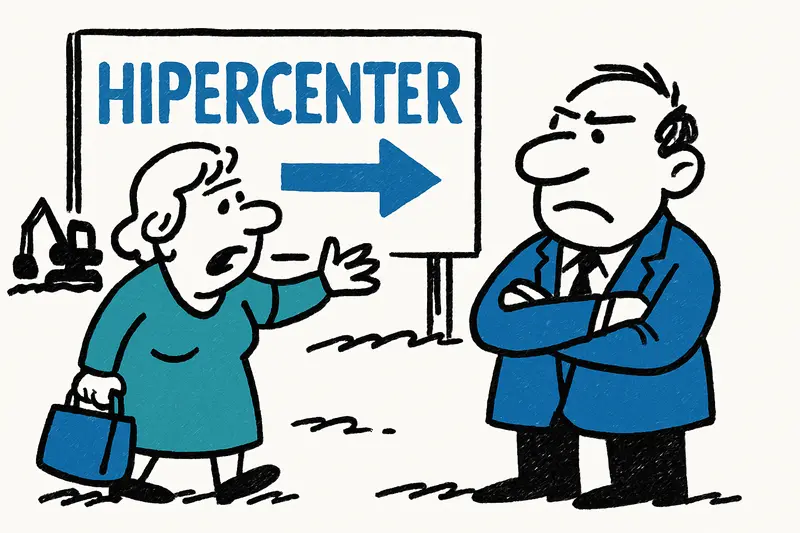
Mornings at the Plaça de la Constitució: the tram clatters in, an elderly woman with a shopping bag waves to the driver, two craftsmen in front of the bakery are talking about olive oil prices. Later, in the Son Angelats industrial estate, building dust hangs in the air, a construction sign announces the new hypercenter, and a delivery truck maneuvers awkwardly between pallets. Such scenes show the coexistence of tradition and change — and how quickly the rhythm of a place can be reshaped.
Concrete solutions
There are practical steps that can secure the expected benefits for consumers without destroying the local fabric: First, clear conditions in the permitting process that regulate parking and delivery times to limit traffic load and noise. Second, incentives for the hypercenter operator to include local producers as a fixed part of the assortment — reserved shelf space for products from the Tramuntana region could be part of the concession. Third, transition programs for small retailers, for example local marketing grants or a shared delivery network that reduces operating costs. Fourth, municipal price controls for staples are legally difficult, but information services on price developments and a shopping guide for residents could help in the short term.
Why this concerns everyone
It is not just about cheaper canned goods and bread prices. A supermarket is infrastructure: it determines how people shop, how often they use their cars and which businesses in the town center survive. Properly managed, it can increase quality of life; poorly managed, it can hollow out places.
Concise conclusion
The new hypercenter offers real chances for financial relief. The real challenge, however, lies in the implementation: who will regulate parking, delivery times and integration requirements for local products? Who will support small shops during the transition? Without such answers, a short-lived joy over lower prices risks long-term loss of variety and everyday life. Soller therefore needs not just a supermarket now, but a concept that keeps prices, traffic and the townscape in view at the same time.
Frequently asked questions
Will a new hypercenter in Sóller really make shopping cheaper for residents?
What impact could the new supermarket in Sóller have on small local shops?
Will the hypercenter in Sóller increase traffic in the valley?
What should residents in Sóller look for in a new shopping center project?
Where do people in Sóller currently go for big supermarket shopping?
Could a hypercenter in Sóller help protect local products from the Tramuntana region?
What can Sóller do to reduce the downsides of a new hypercenter?
Is a new supermarket in Sóller good for everyday life or not?
Similar News
Reality check: Palma's "white" torrent — harmless salt or neglected warning sign?
White crusts on the Torrent de Sa Riera are causing a stir. Emaya describes them as salt deposits. Our reality check: wh...
When Ryanair's fleet grows: What Mallorca's travelers should know
Ryanair will soon receive 737 Max 10 jets. The larger aircraft offer potential savings — but also new risks for flight o...
Rising fuel and housing costs: Why Mallorca's overland buses are suddenly overcrowded
More and more people are leaving Palma — and boarding TIB buses: Between January and August 2026, the network recorded o...
Carriages Without Horses: Palma Plans E-Carriages – a Reality Check
Palma plans to switch to electric carriages in 2027. The prototype was shown near the cathedral. What is the technology ...

Record season, empty coffers: Who really benefits from the tourism boom?
Full hotels and more flights: the numbers sound impressive — yet many locals feel no benefit. A reality check with an ev...
More to explore
Discover more interesting content

Can Cap de Bou

Townhouse Lleo 72
