
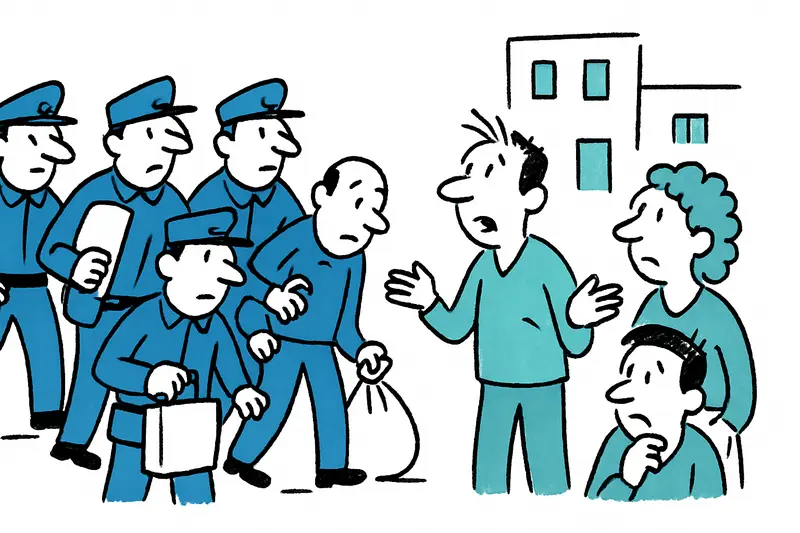
Raid in Son Gotleu: Six arrests — a neighbourhood asks for real solutions
Raid in Son Gotleu: Six arrests — a neighbourhood asks for real solutions
Six men were arrested in Son Gotleu and larger quantities of drugs were seized. The operation addresses the problem in the short term. The big question remains: How can the situation be prevented from recurring?
Raid in Son Gotleu: Six arrests — a neighbourhood asks for real solutions
28.05.2026 — In Palma's densely built neighbourhood Son Gotleu, a major police operation (covered in Major operation in Son Gotleu: 60 police officers, many questions) led to six arrests. During the raid, officers seized around 70 grams of heroin, more than half a kilo of cocaine and about 250 grams of marijuana. Special units, sniffer dogs and the narcotics division were involved, as reported in Why so many police officers in Son Gotleu? A look behind the controls; residents had repeatedly complained about open drug dealing in the area.
Key question
How can it be prevented that such a raid remains only a one-off event and that open drug dealing in Son Gotleu does not soon return?
Critical analysis
The operation shows that authorities can identify points of trade and temporarily put them out of action. However, repression alone is rarely a lasting answer. Where do drug markets thrive? In neighbourhoods with high population density, cramped living conditions, few leisure opportunities for young people and limited presence of social services. Son Gotleu is a district with many families, multiple languages heard on the streets and narrow sidewalks — a place where problems become visible quickly, but are not always easy to solve.
What is often missing from the public discourse
There is much reporting about arrests; less so about the social causes that push people to the margins of the market — and about the lives of residents between clotheslines, the smell of bakeries and bus routes. Also rarely discussed are preventive work, harm-reduction services, low-threshold counselling centres and a coordinated plan between police, city administration and civil-society actors. Without these components, raids leave a gap that other dealers can move into.
Everyday scene from Son Gotleu
Imagine the street with its small shops: an older man buying bread in the morning; children running through the street after school; a woman carrying her shopping from the market. In recent weeks such scenes have been overlaid by insecurity: suspicious looks, conversations on balconies and the silence after a night-time operation. This mix of normality and tension is typical for areas affected by open dealing.
Concrete solutions
- Combine stronger but visible presence: regular foot patrols and community policing teams that are approachable and build trust, rather than only appearing for short periods.
- Expand social services: more counselling centres for people with addictions, low-threshold therapy places, youth work and leisure projects that reach children and adolescents during the day.
- Improve public spaces: better street lighting, well-kept squares and support for small businesses can increase the feeling of safety and make illegal meeting points less attractive.
- Strengthen reporting channels: anonymous hotlines and digital reporting forms, accompanied by clear feedback to tipsters, create trust that complaints lead to action.
- Prevention in schools and through neighbourhood initiatives: education, early counselling and local networks between schools, social work and the police.
What is legally and practically possible
Police actions are necessary to remove acute dangers. Lasting change, however, requires city budget decisions, coordination with regional health policy and civil-society partners. A useful approach would be an interdisciplinary plan that links operations, prevention and social work — with clear metrics that measure not only arrests but also a reduction in complaints and improved access to help.
Pointed conclusion
The raid cleaned up, but did not heal. Son Gotleu needs more than operations: it needs trust, services and visible on-the-ground work. When the headlines fade and calm returns, city authorities and police should take the quiet unease seriously and, instead of just striking, work steadily and in partnership. Residents are not only afraid of drugs — they want their everyday life back. That would be a success no photo of taped-off streets can fully capture.
Frequently asked questions
What is the weather like in Mallorca in autumn?
Can you still swim in Mallorca in late season?
What should I pack for Mallorca in autumn?
Is Mallorca a good place for walking and sightseeing in autumn?
What is Port de Sóller like in the autumn season?
Is Palma of Mallorca worth visiting outside the summer months?
What is the weather usually like in inland Mallorca in autumn?
Is autumn a good time to visit Mallorca for a quieter trip?
Similar News
Magaluf: Watchtower Alarm – Lifeguards Pull Unconscious Beachgoer from the Water
After a drama in the late afternoon, two lifeguards at Magaluf beach rescued an unconscious 44-year-old man. He was stab...
Turquoise in the City: How dangerous is the color play of the Sa Riera?
The Sa Riera in Palma suddenly turned turquoise — a pretty motif, but behind the effect lies a discharge of saline waste...

Jeckliner at Sunnesching: Cologne spirit sets sail from Palma
In September 2027 the Mein Schiff 2 briefly becomes a floating carnival stage: four days with Cologne bands, comedy and ...
Finally Home: Mike and Leyla Heiter Buy Villa with Sea View in Mallorca
The reality TV couple Mike and Leyla Heiter have bought a house in Mallorca with a roof terrace and sea view. An Instagr...
Arrest after series in Palma: Who protects apartments from repeat offenders?
The National Police arrested a man in Palma who investigators say may have broken into several apartments. In one incide...
More to explore
Discover more interesting content

Can Cap de Bou

Townhouse Lleo 72
