
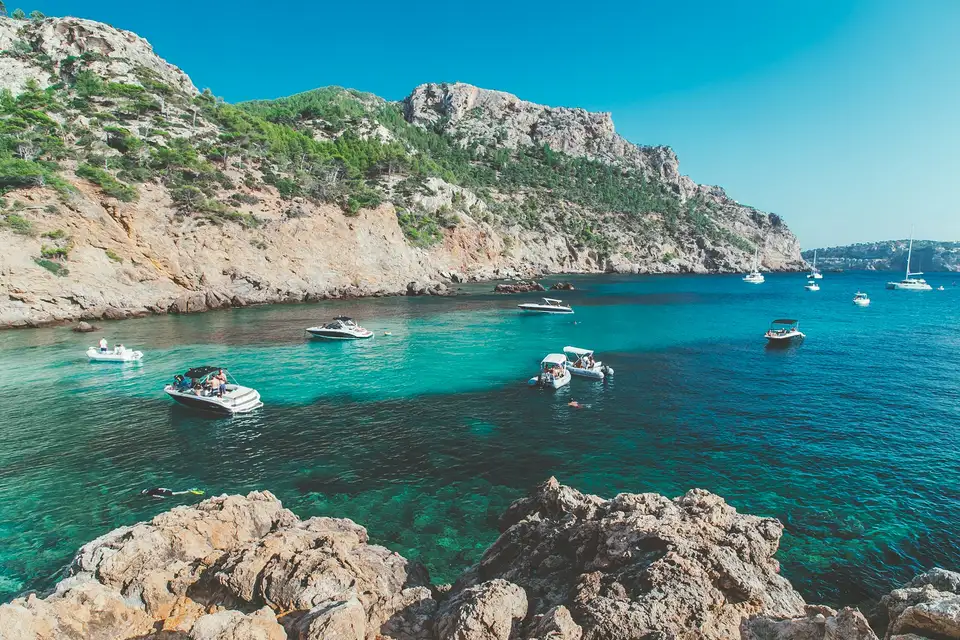
Spray on the Ma-10: When the message 'Mallorca is not Germany' reaches the Tramuntana
On a stretch of the Ma-10 between Estellencs and Andratx, German slogans have been painted on the road and embankment. A reality check: what do such graffiti say about the island, and how can we deal with them sensitively?
Spray on the Ma-10: When the message 'Mallorca is not Germany' reaches the Tramuntana
Key question: How can a clear stance against vandalism be taken without letting legitimate criticism of mass tourism tip over into naked nationalism?
Early in the morning, when the sun still lies low on the slopes of the Serra de Tramuntana, you hear the familiar sounds on the Ma-10: a coach with screeching brakes, a rental car with a bike rack, the distant chirping of cicadas. Between Estellencs and Andratx, near the Coll de Sa Gramola, a message in German has been painted along a straight stretch and on a rising bend: 'Mallorca ist nicht Deutschland' (Mallorca is not Germany). The words appear twice, in different arrangements, visible to anyone passing by.
At first glance this feels like crude provocation: a targeted address to a group of visitors, affixed to a heavily used connecting road that links walkers, cyclists and holidaymakers. But the picture is more complex than a simple act of hatred. Graffiti are vandalism, not a political debate. At the same time, the message expresses anger about a real problem: overcrowded places, cars parked everywhere in villages, and a widespread feeling among many locals that their everyday life is suffering under the pressure of mass tourism. Incidents linked to these tensions have included scratches on cars with German license plates in Santanyí.
Critical analysis: vandalism as a cipher for powerlessness. Graffiti of this kind operate on two levels. They mark an emotion — anger, frustration, sometimes fear — and they seek public attention. But public attention needs roads that belong to everyone and rules that protect coexistence. When forms of protest slide into illegal damage to property, they alienate not only target groups but also shift the discourse away from concrete demands (for example fewer coaches, regulated parking, opening hours, noise limits) toward an ethnic sharpening; similar symbolic provocation has also surfaced in other places, such as xenophobic graffiti at Playa de Palma.
What is often missing from the public debate: the voice of small towns. Discussions about tourist numbers, airport capacity or hotel beds take place in Palma, in regional forums and in Brussels. The people who cross the Ma-10 in the morning are the ones who clean up the rubbish, mark parking spaces and live with the noise and traffic. Their experiences rarely appear in statistics but are made visible by actions like these graffiti. What is lacking is a channelled, local participation format that translates resentment into concrete, verifiable demands; public communication can be further distorted by campaign tactics, as seen in provocative poster campaigns in Palma and Inca, which sharpen polarisation.
An everyday scene: A cyclist from Palma pedals up the steep bend, breathes the scent of pine, dodges a large coach, brakes, sees the fresh paint on the wall and shakes his head. On the roadside, the small bar that serves early-morning guests — its owner wipes the concrete wall with a cloth ten minutes later and murmurs: 'Get rid of it, we don't need hostility here.' So close to the tourist flow as to the local terraces, direct frictions arise — visible, audible, tangible.
Concrete solution approaches that could work: first, an accelerated cleanup service for road graffiti — quick removal deprives the message of publicity. Second, binding mediation platforms at municipal level: regular citizens' meetings along the Ma-10, moderated by neutral bodies, with documented lists of measures. Third, pragmatic traffic management: more regulated coach parking outside sensitive sections, clear markings for cycle and footpaths so conflicts are not fought on the carriageway. Fourth, complementary educational work — small information campaigns in several languages giving behavioural tips and raising awareness of local culture without a moralising tone. Fifth, sanctions against property damage coupled with community service in the affected places so that penance and restoration go hand in hand; this is relevant where extreme vandalism has provoked strong local reactions, for example the case of nazi graffiti on Aurora Picornell's bust in El Molinar.
One last important point: responsibility does not lie solely with the authorities. Tourism companies, landlords and tour groups share responsibility for the local climate. A rental-car company that gives guests city maps with small notes on respectful behaviour; a hotel that chooses excursion partners who respect local rules — that matters. Equally important is for local administrations to be transparent about what steps they are taking against overload and how citizens can participate in decision-making.
Conclusion: The message on the Ma-10 is a symptom, not the disease. Ignoring it or assigning simple blame does not help. We need quick measures against vandalism, serious forums for the concerns of small places and concrete agreements between providers and municipalities. Only then will frustration turn into political action instead of paint on the wall. On the stretch between Estellencs and Andratx everyone goes on at the end — ideally with a sense geared more toward solutions than exclusion.
Frequently asked questions
What does the 'Mallorca is not Germany' message on the Ma-10 reflect about local concerns?
How can small towns along the Tramuntana turn tourism pressure into constructive policies?
What practical steps can the Ma-10 corridor adopt to reduce conflicts between visitors and residents?
What roles do locals and tourism businesses play in managing Mallorca's tourism impact?
What should visitors know to respect Mallorca's towns and natural spaces?
When is the best time to visit Mallorca to avoid crowds?
What packing tips help travelers respect Mallorca's environment and pace?
How can authorities improve tourism decision-making in Mallorca to avoid conflicts like on the Ma-10?
Similar News
Why Mallorca Has Become So Terribly Expensive — A Reality Check
Rents are exploding, staple food prices are rising, wages are lagging behind. A look at the causes, what is missing from...
When Paradise Becomes Unaffordable
Hotel rooms, paella and the weekly grocery shop: Mallorca is becoming more expensive for many. Who pays the bill — guest...
End at Ballermann: What Is Lost with the Dino Mini Golf at Playa de Palma
On October 25 the dinosaur mini-golf course at Playa de Palma will close after more than 30 years. Why the city is recla...

Expensive Address Calvià: What Does First Place Mean for Mallorca?
The National Institute of Statistics (INE) ranks Calvià as Spain’s most expensive municipality for property purchases. W...
Emergency over Spain: Ryanair Dublin–Tenerife flight diverted to Santiago after medical emergency
A Ryanair flight from Dublin to Tenerife was diverted to Santiago de Compostela due to a passenger's acute health proble...
More to explore
Discover more interesting content

Can Cap de Bou

Townhouse Lleo 72
