
When Paradise Becomes Unaffordable
Hotel rooms, paella and the weekly grocery shop: Mallorca is becoming more expensive for many. Who pays the bill — guests, workers or the people who live here? A critical assessment and concrete proposals from everyday island life.
When Paradise Becomes Unaffordable
Key question: Who will be able to afford Mallorca in the future?
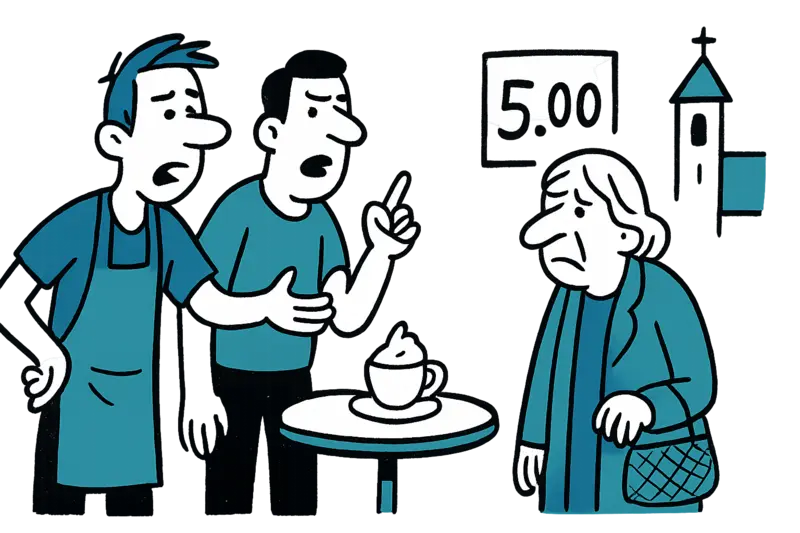
The question sits in Palma's street cafés just as much as in supermarket aisles: who stays when the everyday becomes unaffordable? Because a cappuccino with cream on the Plaça de Cort costs €6.50 and a simple paella in the old town quickly reaches €32, daily life feels tighter for many people here than it used to. These are not abstract buzzwords — they are menu prices and receipts — and they raise the central question: is the island paying for its own success with the living space of those who live and work here? This trend is examined in Rising Cost of Living in Mallorca: Who Pays the Price?.
Critical analysis. Several cogs mesh together. Yes, the island location and transport costs play a role. But they do not explain why hotel prices doubled in one decade and have quadrupled since 2008 (see When the Off-Season Gets Expensive: Why Mallorca's Hoteliers Keep Raising Prices). Nor are a few expensive restaurants the core of the problem (discussed in When Dinner Becomes a Luxury: How Mallorca's Pricing Estranges Its Restaurant Scene). What matters is market power, investment strategy, and a supply of short-term rental apartments that drains the housing market. At the same time, operating costs for businesses (energy, staff, repairs) are rising and are often passed on to guests and customers. The bill then lands with the regular customer, the waiter and the pensioner who has to calculate her olive oil purchase more precisely at the supermarket (see Why Food Is Noticeably More Expensive in Mallorca — and What We Can Do About It).
What is missing from the public discourse. Much noise about high prices, little attention to the social consequences. Discussions often focus on visitor numbers or publicity photos of yachts and luxury hotels — not on social strata that are being pushed out by rising rents. Equally rare are reliable figures on redistribution effects caused by short-term rentals, concrete analyses of how tourism taxes could flow directly into social housing, or voices from cleaning and catering sectors that precisely explain how wages relate to price levels.
An everyday scene from Palma. Morning at the Plaça de Santa Eulàlia: tourists with maps, an older woman with a shopping basket, the church bell, a scooter zipping by. The woman stops in front of an ice cream café, looks at the price sign — almost five euros for a scoop — and moves on. On the other side of the plaza a young waiter is arguing shift schedules with his boss; he works two jobs because his salary alone does not cover the rent. This is not an isolated case; these are small stories that statistics do not show, but that happen every day on the island.
Concrete approaches to solutions. Instead of vague promises, measures are needed that work: 1) transparency requirements for short-term rentals and an adjustment of licensing so that apartments remain available to the housing market; 2) targeted conversion of tourism tax revenues into municipal and affordable housing; 3) support programs that relieve small, local hospitality businesses of energy and personnel costs, combined with wage obligations; 4) municipal incentives to convert vacant commercial properties into permanent housing; 5) active regional price monitoring so that wages and minimum standards can be linked to real developments in the cost of living. No single measure solves everything, but a package reduces risks for the local population.
Why some proposals can work. If tourism tax is used purposefully — not for image campaigns, but for affordable housing — a feedback loop is created: guests directly contribute to preserving the housing that keeps the island alive. And when municipalities steer more clearly in designating tourist zones and residential areas, pressure on peripheral neighborhoods can be reduced. It is important to shape measures so that they provide short-term relief and increase the supply of permanent housing in the long term.
What we do not need. A simple return to cheap tourism is not a solution — it only shifts the problem. Likewise, sugarcoating does no good: “Good quality costs” is no consolation for people whose income and housing situation are falling behind. The island lives from coexistence: locals, craftsmen, gastronomy and visitors. If this balance is lost, Mallorca loses more than prices — it loses everyday life, culture and substance.
A look ahead — concrete steps for the next legislative period. Short term: an inventory of all tourist-used apartments, strict license controls and a fund from tourism tax revenues to create rental housing. Medium term: urban planning guidelines that promote mixed-use development and support for cooperative housing models. Accompanying this should be a campaign to raise awareness: guests are welcome, but not at any price.
Punchy conclusion. Mallorca stands at a crossroads. The current development is not a law of nature, but the result of decisions — political, economic and social. Those who love the island should ask: for whom are we shaping this house by the sea? Without clear, bold steps, a paradise that exists only on postcards threatens to emerge, while the people who give it life every day must look for their fortune elsewhere.
Frequently asked questions
Why is housing in Mallorca becoming unaffordable for locals?
How could tourism taxes help with affordable housing on Mallorca?
What practical steps could Palma and Mallorca take to shield locals from rising prices?
Why are short-term rentals a big part of the problem for Mallorca's housing market?
What is often missing in the public discussion about Mallorca's prices?
What would a solid policy package look like to address Mallorca's housing and tourism balance?
How can visitors help maintain Mallorca's balance between locals and tourism?
What concrete steps are proposed for Mallorca in the next legislative period?
Similar News
End at Ballermann: What Is Lost with the Dino Mini Golf at Playa de Palma
On October 25 the dinosaur mini-golf course at Playa de Palma will close after more than 30 years. Why the city is recla...
Expensive Address Calvià: What Does First Place Mean for Mallorca?
The National Institute of Statistics (INE) ranks Calvià as Spain’s most expensive municipality for property purchases. W...
Emergency over Spain: Ryanair Dublin–Tenerife flight diverted to Santiago after medical emergency
A Ryanair flight from Dublin to Tenerife was diverted to Santiago de Compostela due to a passenger's acute health proble...
Ten Years in a Tent: A Couple in Son Verí and the Gaps in the Housing Market
A British couple has lived for around ten years in a makeshift shelter near Son Verí. Their story is not an isolated cas...
After the Storm: Golden October Brings Warm Days and Sea Bathing in Mallorca
After heavy rain the weather on Mallorca is settling. Sun, mild air and 24°C water lure people once more to beaches and ...
More to explore
Discover more interesting content

Can Cap de Bou

Townhouse Lleo 72
