
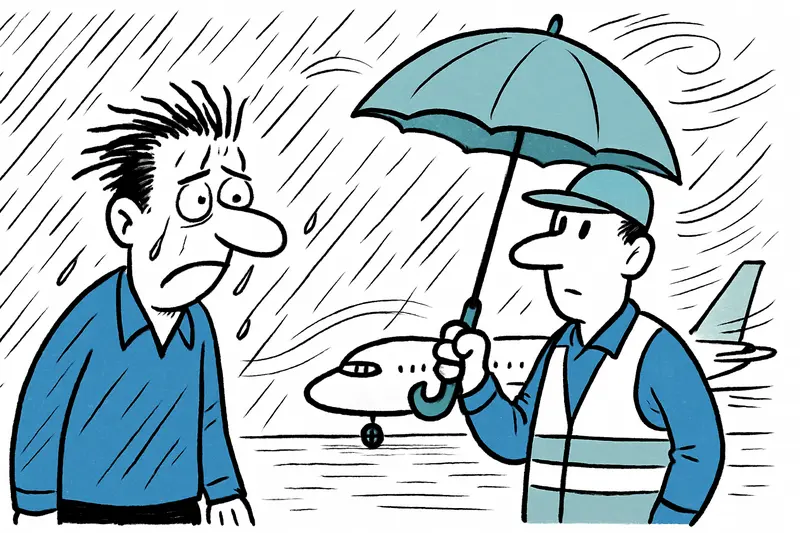
Storm over the Balearic Islands: Diversions, Delays and an Uncomfortable Question
Storm over the Balearic Islands: Diversions, Delays and an Uncomfortable Question
A strong storm on January 31 caused diversions and cancellations at Palma and Ibiza airports. Emergency number 112 kept the orange warning level — but how robust is the system really?
Storm over the Balearic Islands: Diversions, Delays and an Uncomfortable Question
Key question: How well is air traffic on Mallorca prepared for such storms — and who ends up left out in the rain?
Brief summary
On Saturday, 31 January 2026, a powerful storm brought stormy conditions to the Balearic Islands. Due to strong crosswinds and difficult operating conditions, several crews were unable to land as planned at Son Sant Joan (Palma) and Ibiza airports. A flight from Madrid was diverted to Valencia, one from Barcelona turned back. In the early morning hours there were delays of up to three hours; five connections were cancelled, six aircraft were rerouted for operational reasons. Emergency number 112 maintained the orange warning level for Mallorca, Ibiza and Formentera; high seas were reported for Mallorca and Menorca. For other parts of Mallorca (except Llevant) and Menorca a yellow warning applied with gusts of 70–80 km/h; on the ridges of the Serra de Tramuntana peaks around 120 km/h were possible.
Critical analysis
Technically, what happened is understandable: pilots and air traffic controllers must not take unnecessary risks in strong crosswinds and turbulence. Nevertheless, the incidents reveal weaknesses in the practical implementation of safety and communication chains. The short-notice diversion to Valencia or the decision for an aircraft to turn back are correct but costly measures — for airlines, airports and above all for travellers. Crucial questions remain: Why were contingency plans insufficient to get affected passengers on their way quickly? How coordinated was the interaction between the airport operator, airlines and emergency services?
What is missing from the public discourse
When people talk about images of flying road signs and shifted flights, little attention is paid to the fact that behind every diversion there are people with connecting trains, appointments and children. There is a lack of transparency about transport and care arrangements in weather-related cancellations. The question of alternative transport chains — more bus services, coordinated rental-car pools, faster rail connections — rarely comes up. And hardly anyone talks about the working conditions of ground staff, who often have to improvise in wind and rain.
Everyday scene from the island
In the morning at the departure hall of Son Sant Joan: wind lashes along the glass façades, the whistling mixes with the engine noise of service vehicles. Travellers press themselves against closed cafés, children slap their hands against fogged-up windows. A taxi driver on the Paseo Marítimo speaks quietly about three cancelled jobs in one shift. At the bus station a family tries to secure a seat on an intercity bus — for many the only way not to lose the day.
Concrete solutions
1) Predictable standards: Airlines and the airport should make public which wind limits and diversion rules apply so that passengers can plan better before travelling.
2) Coordinated contingency logistics: A joint crisis unit (airport operator, airlines, 112, bus companies) with fixed contact channels can process diversions faster and bundle transport alternatives.
3) Improved passenger information: SMS/app updates in real time about replacement flights, buses or accommodation options reduce uncertainty on site.
4) Protection for travellers: Minimum standards for meals, accommodation or travel expenses in weather-related disruptions should be contractually agreed rather than negotiated case by case.
5) Training and protection for ground staff: Better equipment and clear protocols for operations in strong winds stabilise procedures.
Pointed conclusion
From a safety perspective the decisions were correct. Still, the storm exposed operational gaps that particularly affect travellers and ground staff. Anyone who lives or works on Mallorca knows the sudden changes in weather — so it would not be a luxury to turn these days into rules that create planning security instead of additional frustration. A bitter lesson: storms remain natural, but the chaos can be planned for.
Frequently asked questions
Why do flights get diverted from Mallorca Airport during storms?
How bad can flight delays be in Mallorca during severe weather?
Is it safe to fly to Mallorca when there is a storm warning?
What should travellers do if their Mallorca flight is cancelled because of weather?
What weather warnings apply in Mallorca during strong storms?
How windy can it get in the Serra de Tramuntana during a storm in Mallorca?
Who handles weather-related disruptions at Palma Airport in Mallorca?
How can Mallorca improve passenger support during storm disruptions?
Similar News

Rental Car Theft in El Arenal: What This Incident Reveals About Our Gaps
A teenager steals a running rental car in El Arenal, flees on foot, climbs over walls and is caught by the Guardia Civil...

Red Rope in Palma's Library: What Helps Against Selfie Tourism — and What's Missing
Palma's city library cordoned off an area with a red rope to keep selfie tourism away from reading and working activitie...
Fort San Carlos: Museum, Harbor Dispute — and a Conflict That Demands Answers
The military museum at Fort San Carlos sits right on Palma's harbor, with unexpectedly quiet rooms filled with cannons a...
Old Town Under Pressure: When a Doorway Becomes a Sleeping and Shower Place
For months a woman has been living with a parasol, a clothes rack and personal belongings next to the social welfare off...
When Shopping Weighs Heavier: Mallorca Demands a Tax Pause on Food and Fuel
Rising prices are putting pressure on households and agriculture. The Balearic Islands are calling for temporary tax rel...
More to explore
Discover more interesting content

Can Cap de Bou

Townhouse Lleo 72
