
Three Boats on the Sand: What the Stranding at Son Matias Reveals about Our Coastal Planning
Three Boats on the Sand: What the Stranding at Son Matias Reveals about Our Coastal Planning
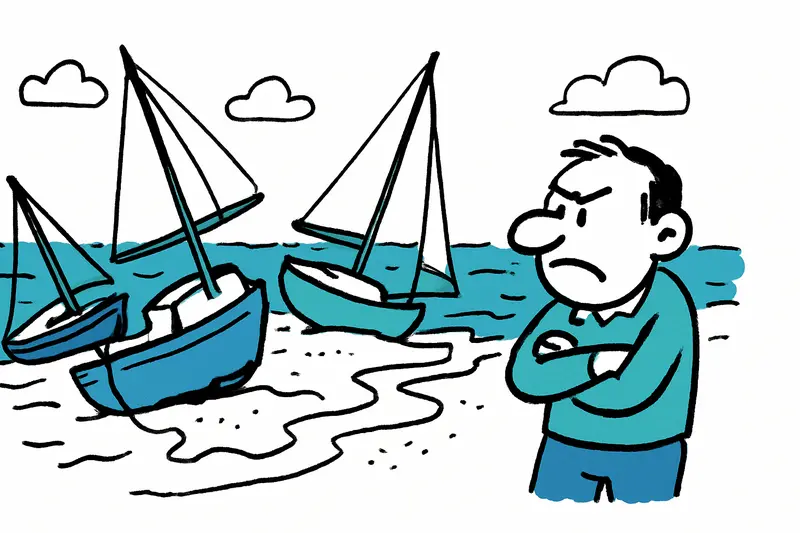
Three sailboats were pushed ashore at Playa Son Matias after mooring lines snapped. The incident raises the question: who ensures safe anchorages and rapid assistance along Mallorca's coasts?
Three Boats on the Sand: What the Stranding at Son Matias Reveals about Our Coastal Planning
Key question: Why does a popular anchorage like Playa Son Matias repeatedly end with damaged or stranded boats — and who is responsible when gusts churn the waters off Palmanova?
The morning after the storm the hulls lay just above the surf zone, sails stowed, mooring lines in tatters on the sand. Three sailboats were affected at the same time; their owners took photos, passersby stopped and children pointed at the unusual sight on the shore. Such scenes are not entirely new at Playa Son Matias. The beach is considered a “typical anchorage,” people say, because it is easy to reach and close to the promenade. At the same time the bay is open, little protected and without natural barriers — an invitation for the sea to turn violent in strong winds.
The immediate cause was simple: strong winds in recent days and snapped lines. But on closer inspection it becomes clear that it is not just bad luck. Many boats remain at anchor across seasons, with improvised moorings or only a stern line. In a storm thin lines or insufficient anchoring techniques are not enough. The result we now see on Son Matias beach: hull damage, a blocked shoreline, potential oil or diesel leaks and effort for salvage companies.
Public discourse often stays on the surface: a few photos, outrage in the comments, the call for quick cleanup operations. What is rarely addressed is the detailed responsibility: who approves long-term anchor spots, who inspects moorings, who must provide preventive information? In Mallorca multiple actors operate — harbour authorities, the Palmanova/Calvià municipality, the coast guard — and between them are leisure skippers, charter companies and residents, a dynamic detailed in More Boats, More Questions: Mallorca Under Pressure from Rising Boat Arrivals. When responsibilities blur, prevention and sanctions are missing.
A walk along the Passeig Marítim in the afternoon shows the everyday imbalance: joggers, vendors and older people with shopping bags, plus the constant roar of the sea. Tourists stop, take pictures and discuss. Longtime residents just shrug: “This happens more often in storms,” says a woman with a dog and gloves. The calm is pragmatic: people know the spots that become dangerous in northerly or easterly winds.
Critical aspects often missing: first, the technical equipment of the anchorages. Many places are meant for short stops, not for months-long stays. Second, the information campaign: skippers do not always receive precise warnings early enough about which coves are unsafe. Third, enforcement of rules: there are hardly any checks to inspect slackened lines regularly or to require defective moorings to change position.
Concrete solutions can be identified without long theorizing: more permanently fixed mooring buoys in exposed bays would reduce strain on anchors and lines. A simple data basis — a publicly accessible map with risk levels and recommended securing measures for each cove — would give skippers quick orientation. Additional inspections in the storm season, combined with clear sanctions and mandatory notifications by charter companies, could lower the number of accidents, an issue highlighted in Drunk Boats, Battered Bays: When Private Boat Rentals Put Mallorca's Coasts at Risk. And practically: a municipal or harbour hotline for emergencies and rapid coordination with salvage firms.
Local prevention also helps: resident initiatives that check boats or organize assistance when storm warnings are issued have proven effective elsewhere; cautionary lessons appear in Tragedy in Son Bauló: Small Cove, Big Questions — How Safe Are Mallorca's Unassuming Beaches? Skippers' associations could coordinate free spots for emergency anchoring so boats do not resort to dangerous coves due to lack of space. Finally, insurers must be involved: clear rules about required security measures for coverage to apply.
For the immediate situation at Son Matias this means: rapid salvage, checks for leaks, transparent information for residents and promenade users, and a review of whether this stretch must be more strictly regulated in the future. Images of hulls in the sand perform well on social media, but they must not obscure that the issue is about lasting measures, not just cleaning up after every storm.
Conclusion: Three stranded sailboats are more than a brief local incident. They point to a structural issue on Mallorca's coasts: attractive anchorages are often poorly protected against extreme weather, responsibilities are fragmented and prevention is patchy. If Palmanova wants fewer stranded boats rather than reactive effort, it needs clear rules, better infrastructure and improved communication between authorities, boat owners and residents. Son Matias could become a case study — but only if we turn the photo into a plan now.
Frequently asked questions
Why do boats sometimes end up stranded on Son Matias beach in Mallorca?
Is Son Matias in Palmanova safe for anchoring during bad weather?
What should boat owners in Mallorca do before a storm?
Who is responsible when a boat is damaged on Mallorca’s coast?
What are the risks for people walking along Son Matias beach after a boat has run aground?
Are there better mooring solutions for exposed coves in Mallorca?
What kind of weather makes the coast near Palmanova more dangerous?
How can Mallorca reduce repeated boat strandings on popular beaches?
Similar News

When the Wallet Becomes a Danger: Attack in Peguera and Lessons for Mallorca
In Peguera, two women are said to have stolen the wallet from a 75-year-old German couple. When the victim intervened, t...
Plata stays Plata: Young people take over, Llonguets remain
A small bar on Carrer de l'Argenteria will continue: Tolo Serra hands the place over to young Mallorcans at the end of t...
Unnoticed in the Luggage Compartment: How a Boy Traveled More Than 100 Kilometers in a Team Bus
A minor traveled in the undercarriage of a team bus for more than 100 kilometers until his cries for help were heard. A ...

Cap Vermell Grand: Second Michelin Key – a Gift for the East
The Cap Vermell Grand in Capdepera has been awarded its second Michelin key. For the region this elevates the luxury off...
Eurowings lets four aircraft carry names – a friendly idea that also reaches Mallorca
Eurowings is launching a campaign: four Airbus A320s are to carry the first names of people who help others in everyday ...
More to explore
Discover more interesting content

Can Cap de Bou

Townhouse Lleo 72
