
Suspended Sentence after Glass Attack on the Paseo Marítimo: What's Missing in Protection Against Nighttime Violence?
A German tourist attacked in summer 2023 in a bar on the Paseo Marítimo with broken glass. The victim bears deep facial scars and received €40,000 in compensation. The verdict: prison sentence suspended, fine, probation. We ask: Is that enough to safely go out again in Palma?
Suspended Sentence after Glass Attack on the Paseo Marítimo: What's Missing in Protection Against Nighttime Violence?
Key question: Is a suspended sentence sufficient when a person has been injured in the face and permanently disfigured?
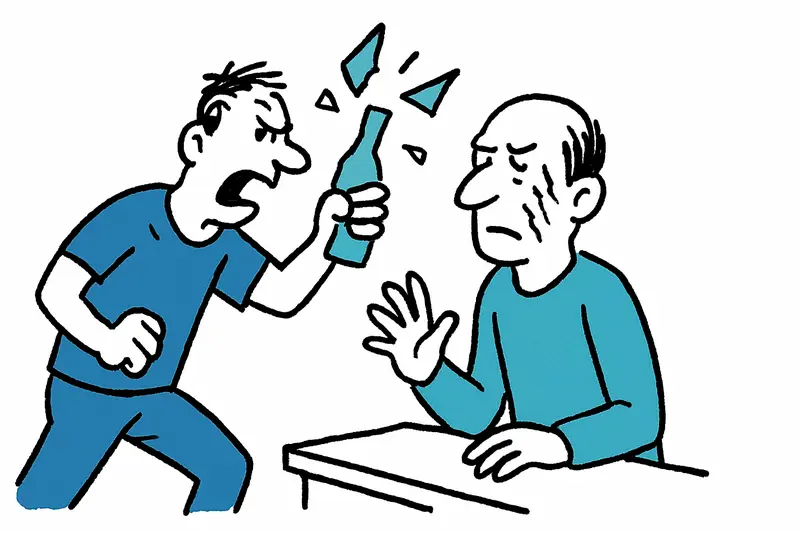
In Palma de Mallorca a case came to an end on Wednesday that will stay in the minds of many night owls. In the summer of 2023 two German men clashed in a bar on the Paseo Marítimo. According to court records, one of them grabbed a glass, broke it and inflicted severe cutting injuries to the other's face. The victim, a German resident on the island, had to be treated at Son Espases hospital with around 30 stitches and still carries scars that have changed his appearance. The court awarded the injured party €40,000 in compensation. The attacker pleaded guilty, deposited the amount before the trial and participated in the hearing via videoconference from Germany. A prison sentence was imposed but suspended for five years; he also received a fine.
The scene in the early morning—around 4 a.m.—describes a familiar Palma picture: loud music, taxi lights on the promenade, people on their way home. This early-morning pattern has been noted in reports such as Nighttime Attack on the Paseo Marítimo: How Safe Is Palma’s Party Mile Really?. Two officers of the Policía Nacional, who said they were also on the island at the time, witnessed the altercation and intervened. Their quick response likely prevented worse; the emergency number 112 was alerted and ambulances and additional patrols arrived shortly after.
Critical analysis
Legally, the verdict is the result of a plea agreement: confession, restitution, mitigation of the sentence. The victim received financial compensation, and the defendant does not have to go to prison as long as he complies with the terms. For the prosecution and the judge this may be formally acceptable. Similar suspended sentences were reported in cases like Playa de Palma: Probation after Elevator Assault — Enough Justice for Guests?, which add to public unease. But the question of whether this is sufficient to address the consequences for the victim and the safety of popular nightlife spots like the Paseo Marítimo is far more complicated.
First, it remains unclear how venues using fragile glassware should operate in areas with high alcohol consumption. Second, the case shows that private interventions—here by officers who happened to be present—often defuse the most dangerous moments; public crisis management, however, must work systematically and cannot be left to chance. Third, the verdict raises the question of prevention versus retribution: How much deterrence does a suspended prison sentence produce when compensation has also been paid?
What is missing from the public debate
The debate usually focuses on the headlines about the act and the punishment. Less visible are the practical consequences: long-term psychological support for victims, coverage of costs beyond court-ordered compensation, mandatory prevention training for bar and counter staff, or binding rules for glassware in nightlife districts. Also rarely discussed in concrete terms is how the tourism authority and the city of Palma can act preventively. High-profile incidents, including the Fatal Accident on the Paseo Marítimo: Trial Raises Questions About Safety and Control, have highlighted these coordination gaps.
Everyday scene from Palma
Anyone walking along the promenade late at night knows the nervous jumble: delivery vans between taxis, laughter with drinks, the clinking of dishes. Such a night can escalate quickly. Residents and shop owners report that physical altercations increase during the summer months; concerns about safety are reflected in small gestures—doors being closed earlier, bartenders calling for help sooner, regulars looking out for one another.
Concrete solutions
1) Glass management: In especially busy streets, venues should switch to shatterproof glasses or certified drinking vessels. This reduces the possibility of severe cutting injuries. 2) Staff training: Mandatory de-escalation and first-aid training for employees in nightlife districts. 3) Local and city plans: Joint safety plans for the Paseo Marítimo, including more visible patrols during night hours and better coordination with emergency services. 4) Victim support: Fast, guaranteed access to psychological care and medical follow-up, independent of the outcome of criminal proceedings. 5) Legal tightening: Examine whether cases with disfiguring consequences should be treated more severely in practice—not as a call for vengeance, but as a signal for serious prevention.
Conclusion
The court ruling provides the injured party with financial recognition and gives the defendant legal clarity. For Palma's night-time public, however, the question remains open: How do we make the Paseo Marítimo safer without destroying the character of the beachfront promenade? A single criminal verdict is not enough. Local rules, better prevention in venues and visible measures are needed so that police, emergency services and operators do not only react after someone has already been seriously injured.
Frequently asked questions
Is a suspended sentence common in Mallorca assault cases after a plea deal?
How safe is the Paseo Marítimo in Palma late at night?
What should I do if I witness a violent incident in Palma?
What kind of injuries can happen in bar fights with broken glass in Mallorca?
What safety measures could reduce nightlife violence in Palma de Mallorca?
Can tourists and residents in Mallorca claim compensation after an assault?
Why do summer nights in Palma often see more disturbances?
What can bars in Mallorca do to prevent glass-related injuries?
Similar News
Car on MA-13 near Inca in flames – a safety check for the island
A vehicle caught fire on the MA-13 towards Alcúdia on Tuesday afternoon. The driver was uninjured, the car was destroyed...

Real Estate in Mallorca: Fewer Buyers, Higher Prices — What's Behind It?
Sales on Mallorca are falling, yet prices continue to climb. Why fewer transactions do not equal relief — and what shoul...
Just Bought — Already Trouble: Water Damage in the Heiters' Villa and What Owners in Mallorca Should Know Now
A newly purchased sea-view property — and within days a water damage. What risks lurk in new properties in Mallorca, and...

Rich, Richer, Mallorca? A critical look at the growing super-rich bubble
Numbers: Around 3,600 millionaires in the Balearic Islands hold a combined €27.6 billion. What this concentration of wea...
Chain reaction on the MA-1: Eight injured in rear-end collision near Portopí
On Tuesday morning there was a crash at the Andratx exit to the MA-1 towards Palma: a rear-end collision between a car a...
More to explore
Discover more interesting content

Can Cap de Bou

Townhouse Lleo 72
