
After a Swimming Accident in Peguera: Who Is Really Responsible for Safe Beaches in Calvià?
After a Swimming Accident in Peguera: Who Is Really Responsible for Safe Beaches in Calvià?
The death of a 73-year-old German visitor in an unguarded cove near Peguera has reignited the debate over beach safety in Calvià. The lifeguards' union speaks of long-standing failures. Who is responsible — and what must happen immediately?
After a Swimming Accident in Peguera: Who Is Really Responsible for Safe Beaches in Calvià?
Key question: Can municipalities and emergency authorities continue to open coves without ensuring comprehensive supervision?
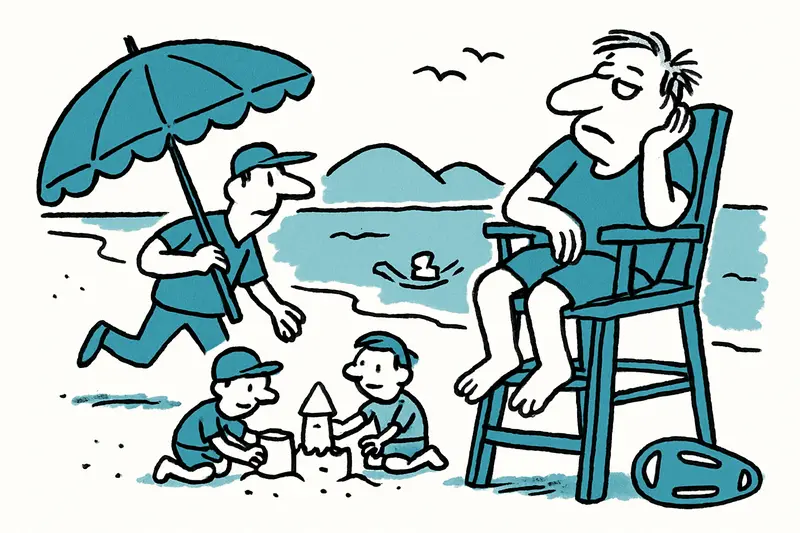
Early afternoon on the promenade in Peguera: vendors with parasols, children building sandcastles, and the steady whir of air conditioners from the hotels. A small cove, Caló de Ses Lises, appears harmless at first glance. Yet a few days ago a 73-year-old German tourist lost his life there. According to rescue services, there was no regular lifeguard supervision at that spot. Other bathers pulled the man from the water; emergency crews arrived later.
The lifeguards' union in Calvià describes the situation as the result of years of structural gaps. This is not an accusation against individual colleagues on the beach, but against organization, planning and prioritization. The central question remains: Are seasonal teams and occasional presence enough when coves continue to be open for bathing?
Critical analysis: The problems can be summarized in three areas. First, personnel: the deployment of rescue staff is apparently too limited, shifts are shortened and duty periods end while many people are still in the water. Second, geography: small, hard-to-see coves are often not continuously monitored, yet they remain open. Third, transparency: there apparently is no publicly accessible, reliable map showing which beaches are supervised when — neither for locals nor for visitors.
What is missing from the public debate: hard, verifiable numbers. How many lifeguards are actually missing? At which beaches is supervision only provided for limited hours? Which deployment plans take priority — main tourist beaches or hard-to-reach coves? These details would make the discussion more objective. There is also a lack of debate about working conditions: fair contracts, enforceable rules on overtime and commitments through the end of the high season are relevant points here.
Everyday scene from Mallorca: on a sunny morning I often see the same faces — retirees jogging along the paseo, teenagers with backpacks, families with picnic baskets. When a lifeguard leaves their post while young people are still in the water nearby, a tangible imbalance arises. It becomes clear how much safety depends on the schedule of individual people, not on a reliable system.
Concrete solutions: In the short term, the municipality should clearly mark which sections are currently not supervised and cordon off or close these areas more visibly. Visible signs in several languages, well-placed AEDs (Automated External Defibrillators) and regular boat or foot patrols could bridge gaps. In the medium term, an increase in staff, fixed overlapping shifts at the end of the day and better pay are necessary to retain qualified personnel. A digital public map with live information on supervised beach sections would be a pragmatic step toward transparency.
At the political level, it must be clarified who bears responsibility: the municipal administration, the regionally responsible general directorate for emergencies, or a coordinated structure combining both authorities. Binding agreements on minimum duty times, standards for hard-to-reach coves and annual assessments by independent auditors are necessary.
What the lifeguards' union is now demanding sounds less like activism and more like groundwork: the obligation to name hazards and to demand resources. The balance between tourism revenue and safety must not be tipped to the detriment of the people who bathe here — whether they are visitors or residents.
Concise conclusion: Expressing regret after a tragedy is not enough. Calvià needs immediately visible measures, transparent numbers and working conditions that allow responsible rescue. Otherwise the cove in Peguera will remain just the next example in a series of avoidable accidents, such as Cala Blava: A Day at the Beach Ends in Death — Who Must Act? and Can Picafort: Death on the Beach – Was There Enough Protection Against Water Hazards?.
Frequently asked questions
How safe are beaches and coves in Calvià when lifeguards are not on duty?
What should I check before swimming in a cove in Mallorca?
Are small coves in Peguera usually supervised by lifeguards?
Who is responsible for beach safety in Calvià, the municipality or emergency authorities?
What can a beach without lifeguards do to warn swimmers in Mallorca?
Why do lifeguard shifts matter so much on Mallorca beaches?
Is there a public map showing which beaches in Mallorca are supervised?
What should tourists do if they are unsure whether a beach in Mallorca is safe?
Similar News

Who Benefits from the Half‑Hourly Flight on the Edge? Aena, Investments and the Island's Interests
Almost one billion euros is flowing into Son Sant Joan. The figures show the scale of investment and expected beneficiar...
Are the Balearic Islands the Southern Border of Europe? A Reality Check on Immigration
The Balearic Islands are again calling for EU aid after a sharp rise in arrivals by sea. Conflicting priorities between ...

"Expensive chaos" and many open questions: What clients can do when a lawyer suddenly stops responding
Several clients complain that a well-known German lawyer in Mallorca has been unreachable for months. Key question: What...

TV tip: 'The Last Problem' — Mallorca as the setting of a classic crime
A classic whodunit on Mallorca: A new miniseries set in spring 1959 brings storm, an isolated hotel and a dense web of s...

Nipping Sea Creatures: Why Bathers in Cala Major and Elsewhere Should Be Cautious
In Cala Major, bathers have reported being nipped by small fish. What is behind it, how can problems be avoided — and wh...
More to explore
Discover more interesting content

Can Cap de Bou

Townhouse Lleo 72
