
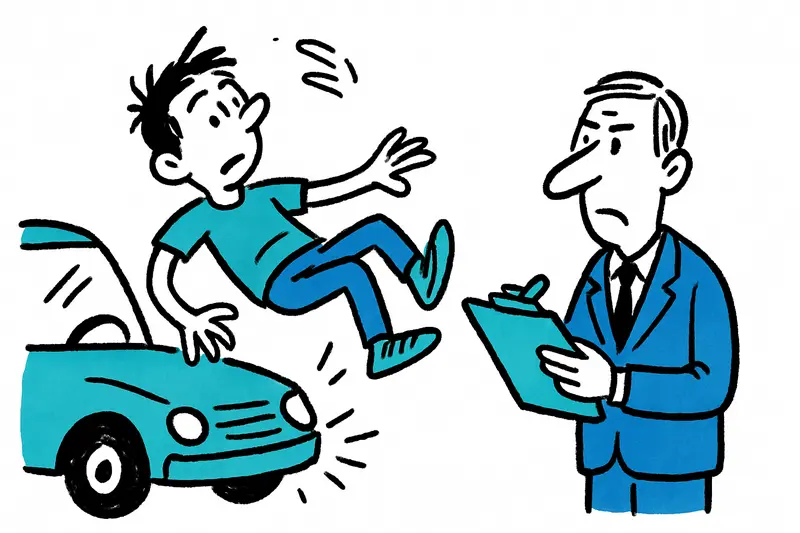
Teenager in Critical Condition After Accident: A Reality Check for the MA-2110
Teenager in Critical Condition After Accident: A Reality Check for the MA-2110
At night a 17-year-old was struck by a car between Lloseta and Inca (MA-2110, km 3) and taken to Son Espases. Who is responsible, and what is missing to make such accidents less frequent?
Teenager in Critical Condition After Accident: A Reality Check for the MA-2110
In the cool night air of Mallorca, when the orange groves near Lloseta are only interrupted by occasional headlights, the thing many residents fear happened: at around 2:17 a.m. a 17-year-old was struck on the road between Lloseta and Inca (MA-2110, km 3). Emergency crews stabilized the teenager on site and transported them to Son Espases hospital. From what is known, the teenager is in critical condition. How exactly this happened is still unclear.
Key question
How can it be that on a short stretch like the MA-2110 at kilometer 3 a young person ends up in a life-threatening situation — and what questions should we now be asking of politicians, authorities and our community?
Critical analysis
The bare facts are sparse: time, age, location, hospital. But from these details some problem points can be inferred without resorting to speculation. The stretch between Lloseta and Inca is often quiet on weekdays, yet not deserted at night: pedestrians, cyclists, night-shift workers and occasional groups of young people use the connecting road. On country roads like the MA-2110 many sections lack sidewalks, lighting is limited and the carriageway is narrow — all of which increases the risk for those not behind the wheel. Emergency actions such as stabilizing the injured at the scene show that the emergency chain works — as in the case of the Nighttime rollover on the Ma-19 at Can Pastilla — but it does not automatically end with treatment; many consequences are preprogrammed if preventive measures are missing.
What is missing from the public debate
After accidents the public conversation often looks for someone to blame or offers quick explanations. What is essential frequently remains unmentioned: structured hazard analyses for specific road sections, regular data on nighttime traffic density, and long-term action plans. People talk about individual cases, but rarely about systematic gaps, as recent coverage of the Fatal accident on the MA-5013 near Sant Jordi demonstrates: lighting, safe crossing points, speed monitoring and a reliable nighttime public transport offer for young people. Without this perspective, similar accidents will repeat themselves.
A typical scene from Mallorca
Imagine: it is shortly after two in the morning, no café is open anymore, the streetlights cast long shadows on the olive trees. A delivery van drives slowly toward Inca, lights disappear in the rearview mirror. A teenager walks along the roadside — perhaps heading home, perhaps coming from a meeting. A dog barks on a property, somewhere a moped makes scraping noises. This mix of calm and occasional movement is typical for many stretches here. And in this calm, seconds can decide.
Concrete solutions
What needs to happen now can be divided into short-, medium- and long-term steps: In the short term, residents and municipalities need transparent information about what actually happened — not an exchange of speculation, but factual on-site findings. Police and Guardia Civil should document the accident scene promptly and examine whether temporary warning signs, reflectors or mobile speed controls make sense. In the medium to long term, responsible parties must add this section of the MA-2110 to a hazard map: improve lighting, create safe shoulders or sidewalks, install designated crossing points and enforce consistent speed monitoring. Schools and youth centers need targeted traffic safety programs — not as one-off events, but as regular measures.
Who should take action?
Responsibility is distributed: the municipality of Lloseta, the Ayuntamiento de Inca, the Consell de Mallorca and traffic authorities each bear parts of the responsibility. Measures such as lighting and sidewalks usually require municipal funding; speed controls and accident investigation fall under the Guardia Civil and Dirección General de Tráfico. Citizen initiatives can apply pressure and trigger short-term measures — for example petitions for better street lighting or announcements of increased patrols.
Realistic steps for the coming weeks
1) Demand a fast, publicly accessible accident analysis: what exactly happened at km 3 of the MA-2110? 2) Implement temporary visibility measures (reflectors, warning signs) before spring. 3) Consider night-time speed reductions and mobile speed cameras. 4) Launch an information program at schools in Lloseta and Inca about nighttime risks and safe routes. 5) Open a dialogue between municipalities and the Consell to determine funding needs for permanent infrastructure measures.
Pointed conclusion
The response must not be limited to sympathetic concern. We must use this moment to identify and close gaps. That a 17-year-old ends up in life-threatening condition at night on a short country road is unacceptable — and preventable, if we take it seriously. Politics, authorities and communities must now talk to each other, instead of spending the coming weeks on speculation.
The family of the teenager and everyone who uses the roads between Lloseta and Inca deserve answers and concrete measures. Son Espases is treating the injured — we should make sure fewer people end up there.
Frequently asked questions
Is the road between Lloseta and Inca safe to walk at night?
What should pedestrians and cyclists do on Mallorca country roads at night?
What kind of road safety problems are common on Mallorca rural roads?
How should emergency teams respond after a serious road accident in Mallorca?
What should Mallorca authorities do after an accident on the MA-2110?
Who is responsible for road safety between Lloseta and Inca?
What road safety improvements could help on the MA-2110 in Mallorca?
Why do serious accidents still happen on quiet roads in Mallorca?
Similar News
Just Bought — Already Trouble: Water Damage in the Heiters' Villa and What Owners in Mallorca Should Know Now
A newly purchased sea-view property — and within days a water damage. What risks lurk in new properties in Mallorca, and...

Rich, Richer, Mallorca? A critical look at the growing super-rich bubble
Numbers: Around 3,600 millionaires in the Balearic Islands hold a combined €27.6 billion. What this concentration of wea...
Chain reaction on the MA-1: Eight injured in rear-end collision near Portopí
On Tuesday morning there was a crash at the Andratx exit to the MA-1 towards Palma: a rear-end collision between a car a...
Happy Couple and Water Damage in Mallorca: A Reality Check for Home Buyers
Just moved in, already water under Mallorca's sun: the case of the influencer couple highlights risks often overlooked w...
Bendinat as a meeting place: Padel Cup brings together nearly 120 players
Three days of padel at the Bendinat Urban Country Club: organized by El Económico and Borbalán, with around 120 particip...
More to explore
Discover more interesting content

Can Cap de Bou

Townhouse Lleo 72
