
Three-year-old girl dies after car mounts sidewalk in Coll d'en Rabassa — a reality check
Three-year-old girl dies after car mounts sidewalk in Coll d'en Rabassa — a reality check
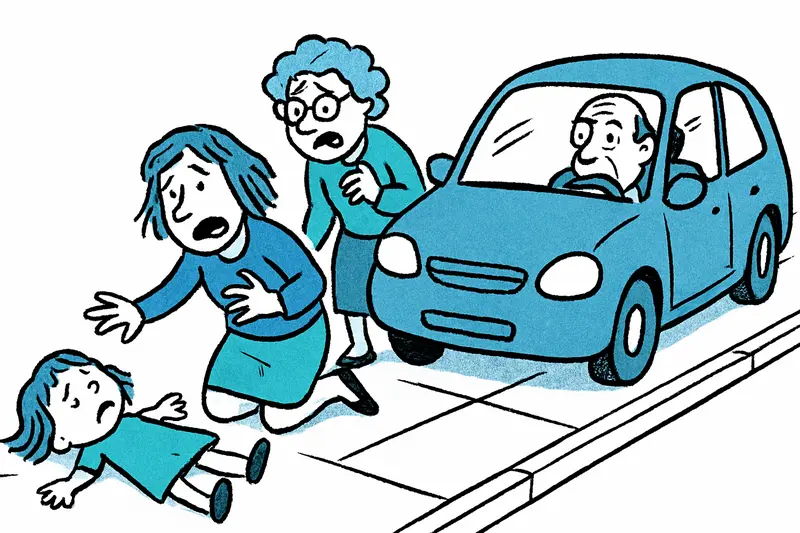
On Can Caimari street in Coll d'en Rabassa a car mounted the sidewalk and struck several family members. A three-year-old girl died; the mother and grandmother were injured. The circumstances raise questions about traffic safety and the monitoring of older drivers.
Three-year-old girl dies after car mounts sidewalk in Coll d'en Rabassa — a reality check
What does this tragedy mean for everyday safety in Mallorca?
Yesterday morning the quiet Can Caimari in Coll d'en Rabassa briefly turned into a scene of sirens, flashing blue lights and bewildered onlookers. A car ended up on the pavement and hit several members of a family, as reported in Tragedy in Coll d’en Rabassa: Child Killed on Sidewalk — Who Protects Our Pavements?. A three-year-old girl did not survive the collision; the mother and grandmother were injured. Emergency services secured the scene, residents stopped and listened to the sound of the vehicles — an image no one on the island wants to see.
Key question: How can we prevent medical emergencies at the wheel from turning into future deaths and injured family members?
So far the findings are sparse but consistent: the driver, significantly older, is said to have suddenly lost consciousness. An alcohol screening was negative. Police investigations into the exact cause of the accident are ongoing. We do not know more at this time, and that is part of the problem: when facts are missing, public debate fills the gaps — often with blame instead of solutions; other local collisions, such as After head-on crash in Palma: Fleeing and many questions – 31-year-old dies, show how incomplete facts fuel speculation.
A sober analysis shows several levels of risk. First, the medical: sudden loss of consciousness can have many causes — heart problems, stroke, metabolic disorders or side effects of medication. In public debate the topic of older drivers is often moralized, rarely considered medically. Second, urban design: in many parts of Mallorca, including Palma, sidewalks are narrow, curbs low, and physical protection such as bollards is lacking in busy areas. Third, prevention: there are no blanket age limits, but there are health requirements for obtaining a driver's license. How rigorously these checks are applied to older drivers often remains unclear.
What is missing from public discourse is a calm assessment that brings together health issues, traffic planning and family responsibility. Instead, the debate usually focuses on individual perpetrators or blanket calls for driving bans for seniors. A systemic view would be more useful: what do the data show about accidents involving loss of consciousness at the wheel? Which road sections in Mallorca are particularly at risk? And which preventive measures are affordable and practical?
A typical everyday scene here: on a cold December morning in Coll d'en Rabassa you see delivery vans, school buses, older neighbors heading to the baker's, and children with small backpacks. The street is often the traffic pulse of this neighborhood: narrow junctions, short lines of sight and sidewalks where pedestrians have little protection if a vehicle leaves the carriageway. This is exactly where the tragedy happened.
Concrete approaches — without false promises:
- Strengthen medical checks: Regular, age-dependent health screenings for license holders could specifically check for cardiovascular and neurological risks. However, these checks must be scientifically justified and fairly organized, otherwise they will only create bureaucracy.
- Involve families and doctors: General practitioners, pharmacies and family members should receive more support to recognize and report warning signs — for example clear, easy-to-use guidelines on when a driving ban should be considered.
- Improve infrastructure: At critical locations like Can Caimari, physical barriers, higher curbs and bollards are sensible investments. Small adjustments to road layouts can prevent a vehicle that leaves the lane from reaching the sidewalk.
- Data and open analysis: The Balearic government should systematically record accidents suspected to have medical causes and provide publicly analyzable metrics (see WHO data on road traffic injuries). Only those who can measure the problems can find targeted solutions.
- Emergency response and first aid: Quick help reduces consequences. More training offers for neighborhoods, additional automated external defibrillators (AEDs) in public places and coordinated emergency plans for rescue services help increase survival chances.
Conclusion: Tragedies like the one in Coll d'en Rabassa challenge us to remain sober. It is not about scapegoats, but about shared responsibility: from medicine to the family to urban planning. A system that connects health risks, safe sidewalks and clear data cannot completely prevent such accidents — but it can make them less frequent. Similar tragedies across the island, such as Fatal accident in Santa Margalida: concrete slabs bury worker – calls for improved workplace safety, underline the need for coordinated responses. In the end, the question is whether we learn from the pain or quickly return to business as usual. On Can Caimari residents sit today with the memory of sirens and shock — and with the hope that authorities, doctors and neighbors will work together to ensure this does not happen again.
Frequently asked questions
What happened in Coll d'en Rabassa in Mallorca?
Can a driver suddenly lose consciousness while driving in Mallorca?
Are older drivers in Mallorca subject to extra driving checks?
Why are sidewalks in parts of Mallorca vulnerable to car crashes?
What safety improvements could help prevent similar accidents in Mallorca?
What should residents in Coll d'en Rabassa watch for on busy streets?
What can families do if an older relative in Mallorca seems unfit to drive?
What is the role of emergency response after a serious traffic accident in Mallorca?
Similar News
Head-first dive into the shallow part of Cala Fonoll: An accident and the unresolved question of responsibility
A young tourist dove into Cala Fonoll and was seriously injured. Key question: Why are clear warning signs missing at da...
Mistaken identity with fatal consequences: Brutal assault in S'Aranjassa — what's missing in the follow-up?
At S'Aranjassa a visitor to a finca was tied up, beaten and thrown out of a van. Three men have been arrested, including...
High heel slips, car accelerates: accident on Camí de Son Hugo
A woman lost a high-heeled shoe on the forecourt of the sports facility at Camí de Son Hugo. The car accelerated, mounte...
Phone Scam: How Two Hotel Employees at Playa de Palma Lost Thousands of Euros
One morning in September, two reception employees at Playa de Palma were pressured by alleged alarm-company staff — in t...
When the Wallet Becomes a Danger: Attack in Peguera and Lessons for Mallorca
In Peguera, two women are said to have stolen the wallet from a 75-year-old German couple. When the victim intervened, t...
More to explore
Discover more interesting content

Can Cap de Bou

Townhouse Lleo 72
