
Tighter controls: What Mallorca drivers need to know now
The traffic control center DGT is stepping up checks against drunk driving. Which limits apply, what penalties are possible — and what is often missing in everyday life on the island.
Tighter controls: What Mallorca drivers need to know now
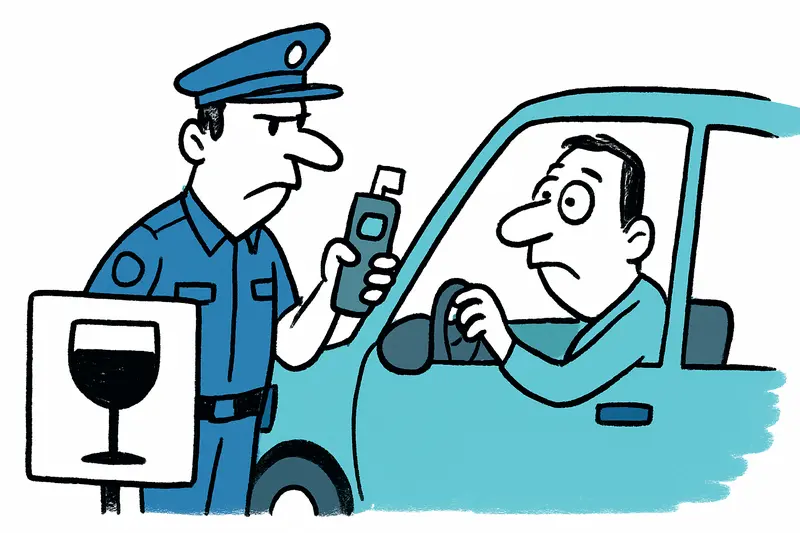
Police checks in Mallorca have been noticeably more present in recent months. Notable: more roadblocks at access points, traffic checks on the Ma-20 and increased inspections near nightlife districts such as the Paseo Marítimo. The message is clear: drinking and driving is not a minor offence. But how strict is enforcement really — and where does implementation fall short?
Key question
More precisely: Are the tougher checks alone enough to prevent accidents, or is there a lack of prevention, information and measures that reach both tourists and residents equally?
Critical analysis
The rules are clear: For experienced drivers in Spain the maximum limit is 0.5 g/l in blood (approximately 0.25 mg/l in breath). Novice drivers with less than two years’ licence and professional drivers are allowed significantly less: 0.3 g/l in blood or 0.15 mg/l in breath. Since 2022 there has been zero tolerance for minors on e-scooters, bicycles or mopeds: 0.0 is mandatory. Those who exceed these limits can face fines of €500 and 4 points on their licence as soon as breath alcohol exceeds 0.25 mg/l. From 0.50 mg/l, €1,000 and 6 points are possible. In addition, particularly high values or repeat offences can lead to criminal investigations.
The technical side is regulated: after an initial measurement the police wait an appropriate time and repeat the test. Only if both measurements show an excess is a procedure initiated. Affected persons have the right to request an additional blood test. In practice they usually bear the costs if the result is later confirmed.
What is often missing in public discourse
In conversations at the bar, in taxis or at the rental desk I repeatedly hear the same gaps: tourists do not know the limits, rental car companies often provide only rudimentary information, as noted in Mallorca's Curves without a Racing Heart: Staying Safe on the Tramuntana & Co., and many young people underestimate the effect of long drinks or mixed cocktails. Language barriers play a role: multi-language leaflets would be useful. Also, the zero tolerance for minors on e-scooters is rarely clearly explained — many adolescents do not know that even small amounts can lead to loss of licence when it concerns mopeds.
Everyday scene from the island
Friday evening at the harbour: music comes from the quay, waiters shout orders, a city bus passes by. On the corner a police car with flashing lights and an officer asking a driver to step out of the vehicle. The tourist from Potsdam looks confused, his girlfriend explains the rules in English. It is a small scene that shows: checks are working, but comprehensibility and prevention are still lacking.
Concrete solutions
1) Clearer information at rental companies: handover protocols should briefly list limits, penalties and the right to a blood test in several languages. 2) Cooperation with bars: free water campaigns, visible notices at taps and voluntary small breath screenings before leaving could become routine. 3) Public campaigns at transport hubs and the airport: short films on screens about fitness to drive and guidance on taxis and shuttle alternatives, as discussed in New Taxi Rules in Mallorca: Caps, Ramps and the App — Will the Plan Match the Island's Rhythm?. 4) Apps and calculators in multiple languages that realistically show how much alcohol stays in the body and for how long. 5) Employers and bus companies: mandatory education for professional drivers and regular testing of company vehicles. 6) For repeat offenders: mandatory addiction-prevention courses instead of only fines; this could reduce relapse rates.
Legally and practically
The legal provisions are strict and the range of penalties clear. Criticism is directed more at practice: checks are effective at specific points, but sustainable prevention is missing. If you drive between Cala Mayor and Magaluf on a summer weekend, you will see visible police presence, but hardly any preventive information in bars or on beaches.
Concise conclusion
Stricter checks are necessary, but not everything. Anyone who really wants to reduce accidents must get administrations, hospitality, landlords and transport operators around the same table. A mix of clear information, practical alternatives for getting home and targeted outreach to risk groups would achieve more than just additional checkpoints. For drivers the rule still applies: better to drive sober or take out your phone and call a taxi. On Mallorca the bill can be high — not just financially.
Frequently asked questions
What is the weather usually like in Mallorca in late November?
Can you still swim in Mallorca in November?
What should I pack for Mallorca in late autumn?
Is Mallorca a good destination in November?
What is Palma like in late autumn?
Are the beaches in Mallorca still worth visiting in November?
What are the best things to do in Mallorca if the weather is mixed?
How busy is Mallorca in November compared with summer?
Similar News
When the Wallet Becomes a Danger: Attack in Peguera and Lessons for Mallorca
In Peguera, two women are said to have stolen the wallet from a 75-year-old German couple. When the victim intervened, t...
Plata stays Plata: Young people take over, Llonguets remain
A small bar on Carrer de l'Argenteria will continue: Tolo Serra hands the place over to young Mallorcans at the end of t...
Unnoticed in the Luggage Compartment: How a Boy Traveled More Than 100 Kilometers in a Team Bus
A minor traveled in the undercarriage of a team bus for more than 100 kilometers until his cries for help were heard. A ...

Cap Vermell Grand: Second Michelin Key – a Gift for the East
The Cap Vermell Grand in Capdepera has been awarded its second Michelin key. For the region this elevates the luxury off...
Eurowings lets four aircraft carry names – a friendly idea that also reaches Mallorca
Eurowings is launching a campaign: four Airbus A320s are to carry the first names of people who help others in everyday ...
More to explore
Discover more interesting content

Can Cap de Bou

Townhouse Lleo 72
