
Party in the Aisle: When Holiday Excitement Displaces Safety on Board
Party in the Aisle: When Holiday Excitement Displaces Safety on Board
A viral video shows passengers dancing in the aisle shortly before landing in Ibiza and obstructing the crew's work. How dangerous is it — and what is missing from the discourse?
Party in the Aisle: When Holiday Excitement Displaces Safety on Board
Key question: How much fun is allowed on board before safety and the work of flight attendants suffer?
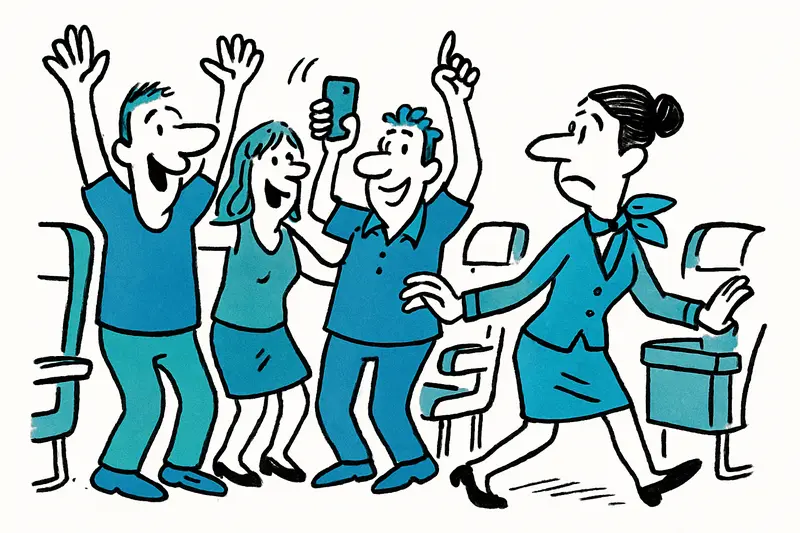
A video currently circulating on social media shows several passengers on a Ryanair flight about 20 minutes before landing in Ibiza standing in the aisle, singing, dancing and filming each other. The cabin crew can be seen trying to carry out their cabin rounds but are repeatedly obstructed. The images seem harmless and can easily be dismissed as "holiday mood" — until you remember that important safety tasks take place precisely in this phase of the flight.
Critical analysis: The scene is more than just noise. When people get up from their seats, block aisles and prevent staff from working undisturbed, the risk increases for everyone: evacuation routes are narrowed, safety instructions are missed, and the crew can no longer act freely. The video documents not only the behaviour of some passengers but also the powerlessness of the crew, who navigate between service, safety and the duty to avoid escalation, as in the Carry-On Dispute at the Emergency Exit: Why a Loud Row Reveals More Than Bad Manners. Added to this is the dynamic of social-media recording: the act of filming itself amplifies tabloid behaviour and normalises disruptions.
What is missing from the public discourse: Such incidents are usually either dismissed as funny anecdotes or reduced to the airline being solely responsible. Rarely is the bridging function discussed that island traffic and party destinations create: flights to Ibiza or other party hotspots attract a crowd already in party mode before landing, a dynamic discussed in When storms crash the party: Lessons for Majorca from the island weekend. Also, there is little discussion about the working conditions and decision-making scope of the cabin crew. Who is allowed to intervene? When is intervention mandatory, and when should tougher measures have been taken? These questions often remain unanswered.
Everyday scene from Mallorca: On the way from the Tramuntana bus to the Plaça Major I often hear snatches of conversation on warm evenings about "the next flight to Ibiza" or "just a few hours of partying." These are not abstract internet comments but real plans by people who live and work here, as local events such as Night Pilgrims and Motorcycle Ride: When Festive Spirit Meets Traffic Bottlenecks show. The same island that supplies trades in the morning and fills restaurants in the evening is also the starting point for such short trips — creating overlaps between leisure culture and public responsibility.
Concrete solutions that are more than phrases: First, clear rules and their enforcement on board: keep seats free during critical phases, do not block aisles, and put phones away when asked. This must be communicated transparently — not only in the onboard announcement but before boarding, by e-mail and at the gate. Second, preventive measures on the ground: airports and airlines could stagger drink sales before boarding or limit strong alcohol to reduce peaks just before boarding. Third, strengthen powers and protection for the crew: training in de-escalation, clear escalation pathways up to handing over to airport or police services upon arrival, as in cases like E-cigarette on board: How a small puff causes major disruptions on Mallorca routes. Fourth, sanctions that work: not just bans, but comprehensible consequences for repeat offenders — from removal from the flight to passenger lists that, in extreme cases, can restrict the sale of further tickets. Fifth, an awareness campaign: tourist behaviour guidelines should be part of travel information; anyone planning a short party trip should know that an airplane is not the same as a private party.
What to do immediately: Airlines and airport operators should jointly examine which measures can be implemented in the short term — for example, additional staff at boarding, visible notices at the gate, or increased security presence on particularly busy routes. At the same time, talks are needed with tour operators and local providers; those who promote partying must also communicate the rules.
Pointed conclusion: A video that spreads well is no substitute for responsibility. Fun and holidays belong together, but not at the expense of safety and the ability to work of the people who make air travel possible. If we continue to post throwaway comments like "never fly with X to Y", we only shift the question of blame. Better: clear rules, enforcement and a dose of consideration — on Mallorca, on Ibiza and in the air between.
Frequently asked questions
What is considered disruptive behaviour on a flight to Mallorca or Ibiza?
Why is it important to stay seated before landing in Mallorca?
Can passengers drink alcohol before a holiday flight to Mallorca?
What should you pack for a summer trip to Mallorca if you are flying?
Is Ibiza-style party behaviour common on flights from Mallorca?
What can flight attendants do if passengers are blocking the aisle on a Mallorca flight?
How can airlines reduce disruptive behaviour on flights to Mallorca?
What are the rules for filming other passengers on a flight from Mallorca?
Similar News
When the Wallet Becomes a Danger: Attack in Peguera and Lessons for Mallorca
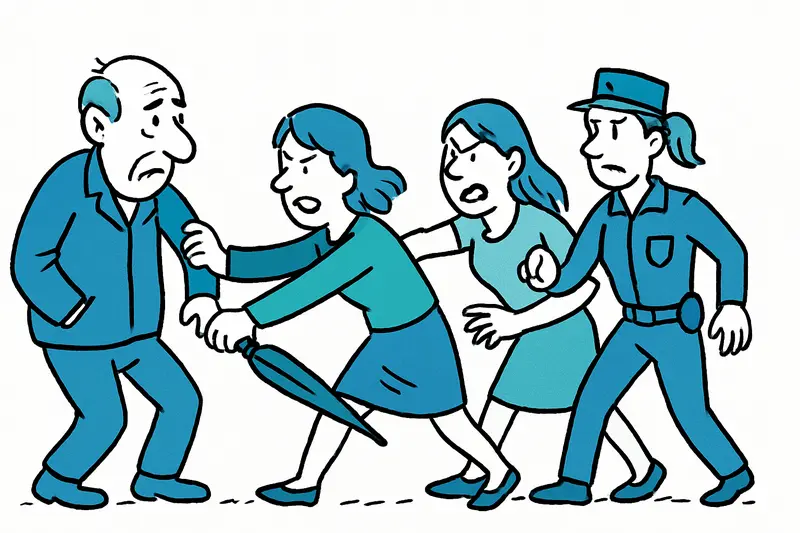
In Peguera, two women are said to have stolen the wallet from a 75-year-old German couple. When the victim intervened, t...
Plata stays Plata: Young people take over, Llonguets remain
A small bar on Carrer de l'Argenteria will continue: Tolo Serra hands the place over to young Mallorcans at the end of t...
Unnoticed in the Luggage Compartment: How a Boy Traveled More Than 100 Kilometers in a Team Bus
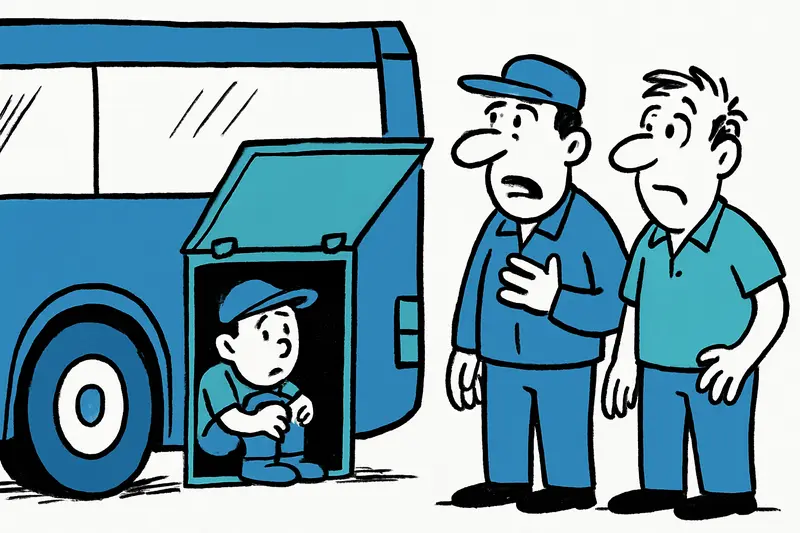
A minor traveled in the undercarriage of a team bus for more than 100 kilometers until his cries for help were heard. A ...

Cap Vermell Grand: Second Michelin Key – a Gift for the East
The Cap Vermell Grand in Capdepera has been awarded its second Michelin key. For the region this elevates the luxury off...
Eurowings lets four aircraft carry names – a friendly idea that also reaches Mallorca
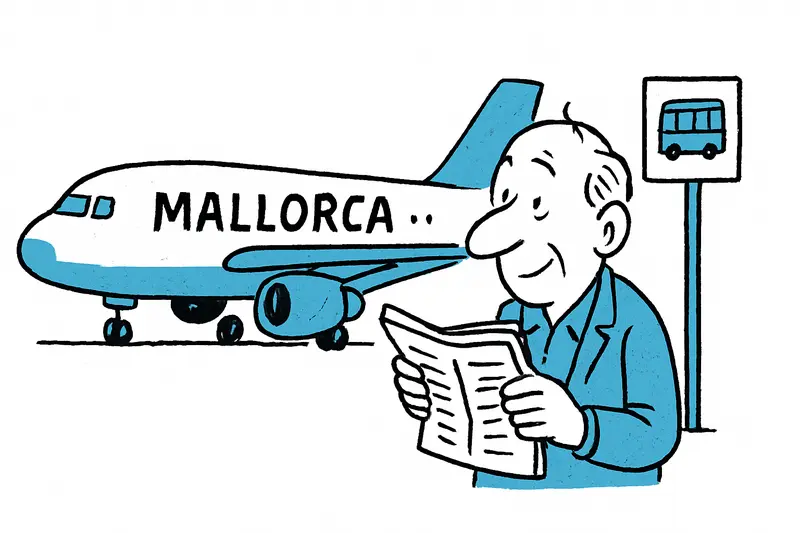
Eurowings is launching a campaign: four Airbus A320s are to carry the first names of people who help others in everyday ...
More to explore
Discover more interesting content

Can Cap de Bou

Townhouse Lleo 72
