
Graduation in the Stadium? The UIB, Son Moix and the Question of Good Organization
Graduation in the Stadium? The UIB, Son Moix and the Question of Good Organization
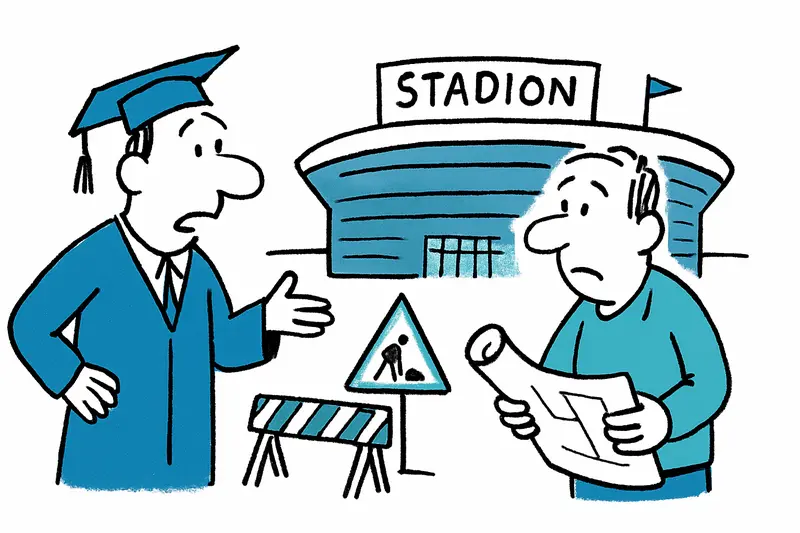
Because of construction work the large auditorium is unavailable: the University of the Balearic Islands is considering moving its graduation ceremony to Son Moix stadium. A good idea — but not without a plan.
Graduation in the Stadium? The UIB, Son Moix and the Question of Good Organization
Leading question: Can a university graduation celebration for several thousand people be conducted responsibly, fairly and practically at Son Moix?
The Universidad de las Illes Balears is considering moving this year's diploma ceremony to the Son Moix stadium because the usual auditorium of the hotel management school on campus is currently unavailable due to construction. Negotiations with the stadium operator Real Mallorca are underway; no final decision has been made yet. What is clear: under a proposal for a single large graduation ceremony, several thousand people could gather — students, professors, parents, grandparents, friends.
The image is conceivable: Son Moix, with its stands and parking lots, seems practical. Nevertheless, the idea stumbles over many questions that so far have received little attention in public discussion. Students report that they prefer smaller, faculty-based celebrations — intimacy, their own speeches, the moment on stage with their own group instead of an anonymous mass. That is more than nostalgia: graduation ceremonies are for many the emotional endpoint of a long course of study.
Critical Analysis: More than Just Space
Capacity is only the first consideration. A stadium is not an auditorium. Acoustics, sightlines, program structure, technical requirements for speeches and musical contributions — all of this requires experience and time for test setups. With several thousand guests, entry and seating organization becomes a logistical puzzle. How many companions is each graduate allowed to bring? Are there numbered seats, or free seating? Who provides the sound system? Who ensures audio without disturbing adjacent residential areas?
Mobility is another limit: Son Moix is not located in the city center; the quick route from campus is not available for many. A large event requires coordinated traffic management, more buses, bicycle parking spaces, perhaps shuttles from central points — arrangements similar to those used during stadium events such as the Family Festival at Son Moix: Paella, Music and Extra Buses for RCD's Match Against Osasuna. For people with reduced mobility, barrier-free access must be guaranteed — ramps, reserved parking, special seating and a clear emergency plan.
Costs and responsibilities are not trivial. Who pays for cleaning, additional security, equipment, extra staff? How are these costs divided between the university and the stadium operator? And finally — what does a graduation feel like when you sit in a stand surrounded by a football atmosphere but without the personal closeness many desire?
What is Missing from the Discourse
The students' perspective is often missing from the previous debate: what form of celebration meets their expectations? Also overlooked are the staff who organize the events — from faculty secretariats to technical services. Hardly discussed either are the environmental impacts of a large event (more arrivals and departures, more waste) and inclusion of people with disabilities.
Everyday Scene from the Island
You can imagine it like this: a sunny morning in Palma, espresso cups clattering in a café near campus, dust from the hotel school's construction site mixing in the air. Students wearing doctoral hats or casual shirts walk by, discussing photo spots and how diplomas should be handed out. A few buses pass, the city is in motion, as on busy match days such as the Season Opener at Son Moix: Packed House, Festive Atmosphere, but the construction site is a reminder: not everything is as usual — and that makes organization more complicated.
Concrete Solutions
- Think modularly: Instead of either one large mass celebration or many small events, you can combine both. Use Son Moix as a stage for a central ceremony with a keynote and group photo; the faculties could celebrate afterward in smaller venues or in hybrid formats.
- Time slots and ticket system: Staggered time slots for individual degree programs, limit number of people per graduate, online reservations — this prevents the stands from becoming a seating scramble and evens out entry.
- Livestream and regional satellites: Those who do not want to attend the stadium can follow the ceremony via livestream in lecture halls or family locations. This allows intimate sections while also maintaining the big community feeling.
- Mobility concept: Coordination with municipal transport operators for special buses, clear bicycle parking zones, shuttle services and special parking areas for people with reduced mobility.
- Noise and environmental protection: Time limits, clean waste systems, intensified cleaning and a communication campaign for car-free arrival.
- Participation: A short, binding dialogue with student representatives and faculties before a final commitment. Small working groups could check the schedule, technical needs and costs.
Conclusion
The idea of moving the graduation to Son Moix is not automatically wrong. But it is more than a space problem: it is about organization, participation and what makes a celebration. Whoever decides should hear the voices of students, plan logistical details in advance and offer an option that leaves room for intimacy — even in a stadium.
Frequently asked questions
What is the weather like in Mallorca during the early season?
Can you swim in Mallorca before summer starts?
What should I pack for Mallorca in spring or early autumn?
Is Mallorca good for outdoor activities outside peak summer?
What is Palma de Mallorca like in the shoulder season?
Is it a good time to visit Port de Sóller before the busy season?
What is Alcúdia like for a trip outside the hottest months?
How do you plan a Mallorca trip when the weather is still changing?
Similar News
Head-first dive into the shallow part of Cala Fonoll: An accident and the unresolved question of responsibility
A young tourist dove into Cala Fonoll and was seriously injured. Key question: Why are clear warning signs missing at da...

Mistaken identity with fatal consequences: Brutal assault in S'Aranjassa — what's missing in the follow-up?
At S'Aranjassa a visitor to a finca was tied up, beaten and thrown out of a van. Three men have been arrested, including...

High heel slips, car accelerates: accident on Camí de Son Hugo
A woman lost a high-heeled shoe on the forecourt of the sports facility at Camí de Son Hugo. The car accelerated, mounte...

Phone Scam: How Two Hotel Employees at Playa de Palma Lost Thousands of Euros
One morning in September, two reception employees at Playa de Palma were pressured by alleged alarm-company staff — in t...

When the Wallet Becomes a Danger: Attack in Peguera and Lessons for Mallorca
In Peguera, two women are said to have stolen the wallet from a 75-year-old German couple. When the victim intervened, t...
More to explore
Discover more interesting content

Can Cap de Bou

Townhouse Lleo 72
