
When Cabin Announcements Turn into Puzzles: Communication on Board an Island Airline
At Son Sant Joan everything sometimes sounds like background noise: cabin announcements in Luxembourgish are often unclear — a safety and service issue that annoys many travellers in Mallorca. What lies behind it, what risks does it pose, and how could the situation be pragmatically improved?
When Cabin Announcements Turn into Puzzles: Why Intelligibility Is More Than Politeness
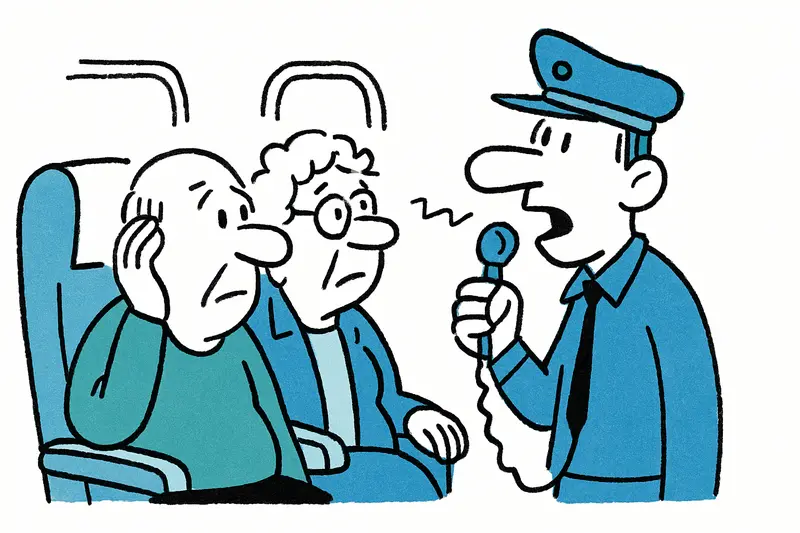
At Gate B2 in Palma, between the clatter of suitcase wheels and the smell of fresh coffee from the Marítim café, some travellers sit and think: I should have paid more attention. Last week I heard two older Luxembourgers whispering next to each other: “Did you understand that?” — and both shook their heads. This is not an isolated case; similar operational problems have appeared in incidents such as Fog paralyzes Son Sant Joan: Why visibility disrupts the flight schedule. On a regional airline from Luxembourg, announcements on board often take place in Luxembourgish. Culturally understandable, but in practice frequently very unclear — and that is more than just a nuisance.
Key question: Who is responsible for clarity?
The central question is: Is the problem technical, staffing-related, or due to passengers' expectations being too high? A look behind the scenes shows: several factors overlap. Job adverts from the airline increasingly emphasize that perfect Luxembourgish is no longer a requirement — "basic terms are enough", reads the wording. That may work at check-in and for general service, but not for announcements in stressful situations.
Added to this is the acoustic reality on board: engines, cabin air systems, human noise. Even a clear voice needs time and space to convey incoming information intelligibly. If speakers do not command the language fluently, unclear sounds, clipped words and sentence melodies form that quickly become unintelligible in the cabin.
Why this is more than just a comfort issue
On Mallorca, flights connect not only holiday bookings but also family visits and medical returns; pressure from more overbookings in the Balearic Islands can exacerbate the problem. When older passengers find themselves in an unusual situation — seat changes due to technical problems, medical care issues or safety instructions — clear, quick and comprehensible announcements are essential. Political inquiries from the neighbouring country show that worries exist there too: older people need their mother tongue in emergencies.
At the same time I repeatedly hear the same complaints along the Paseo Marítim or on the way from the terminal: the crew is friendly, the cabin is clean — but communication leaves much to be desired. High-profile crew concerns, such as reports about a fake pilot on wet-lease flights, have only increased passenger anxiety. Delays are annoying, but missing information creates uncertainty and sometimes even anger — even events such as the Zurich stowaway that caused a lengthy delay show how a single incident can cascade.
What is missing in the discussion
The debate is often reduced to “Which is the right onboard language?”. This overlooks how much pronunciation training, volume, the recording quality of the PA system and standardised phrasing influence intelligibility. Variations within a language — dialect, tempo, emphasis — also play a role. A slow, clearly articulated sentence in Luxembourgish would help many listeners more than a fast, technically perfect announcement in the standard language.
Concrete, pragmatic solutions
The good news: many measures are simple to implement and inexpensive. Suggestions that would immediately ease the situation:
1. Bilingual, slow announcements: Standard announcements in two languages (Luxembourgish + English/Spanish), spoken slowly and clearly.
2. Recordings and technology: Pre-recorded core announcements with a clear voice for safety information; better speaker tuning in older aircraft.
3. Staffing policy: More transparent job adverts with clear language requirements (e.g. CEFR level) and mandatory pronunciation training for crew members.
4. Visual support: Digital information boards, multilingual leaflets or display messages on seat screens and apps — that reassures when the ear fails.
5. Emergency protocols: For critical situations clear language rules: prioritise the mother tongue, repeat important information, provide interpreter access by phone if in doubt.
What travellers can do themselves
Until structural changes take effect, practical behaviours help: ask loudly, turn to the crew or neighbours if unclear, inform relatives and request repetitions in English or Spanish if needed. Frequent flyers often have a simple trick: take off headphones — sometimes the ear filters less then and you hear better.
At Son Sant Joan the noise level can be high, the sun reflects off rolling suitcases, and the loudspeakers do their best. But intelligibility is not a luxury — it is part of safety and service. With a few concrete changes the airline could make travel more relaxed for many people. Until then the motto remains: politely but firmly insist. A friendly “Could you please repeat that?” can work wonders on board.
A critical look at language, technology and staffing policy — so that our flights do not lose clarity.
Frequently asked questions
Why are some airline announcements in Mallorca so hard to understand?
What should I do if I do not understand an announcement on a flight from Palma?
Do airlines in Mallorca need to speak English on board?
Are airline announcements in Mallorca important for safety?
What causes unclear announcements on flights from Mallorca?
Is Palma airport noisy enough to make boarding messages difficult to hear?
How can older passengers in Mallorca flights avoid missing important information?
What changes would make airline communication better on Mallorca routes?
Similar News

Release after bloody attack in Palma: Why the court's decision raises questions
An 18-year-old who allegedly inflicted a serious neck injury on a man at Plaza Gomila using a wristwatch wrapped around ...
Kidnappings in Inca: Three young men forced into car trunks and abused in the forest – a reality check
In Inca, three 18-year-old men were forced into car trunks by masked assailants at the Plaça des Bestiar, taken to a for...
Spreading Massification: The Brake That Still Has Much Work to Do
Marga Prohens announces limits on volume tourism. The measures sound harsh — but are they enough to save everyday life, ...

Through the Keyhole onto the Party Yacht: How Daniela Katzenberger Is Planning Her 40th on Mallorca
Daniela Katzenberger turns 40 and wants to celebrate it on the island — likely with a boat, cake and her mother. A relax...
By Boat Instead of the Road: Palma's Water Bus — a Reality Check
The 'Bus Nàutic' launches in two stages — but questions remain over interim operations, fares and environmental requirem...
More to explore
Discover more interesting content

Can Cap de Bou

Townhouse Lleo 72
