
Violence on Schinken Street: One Incident, Many Questions
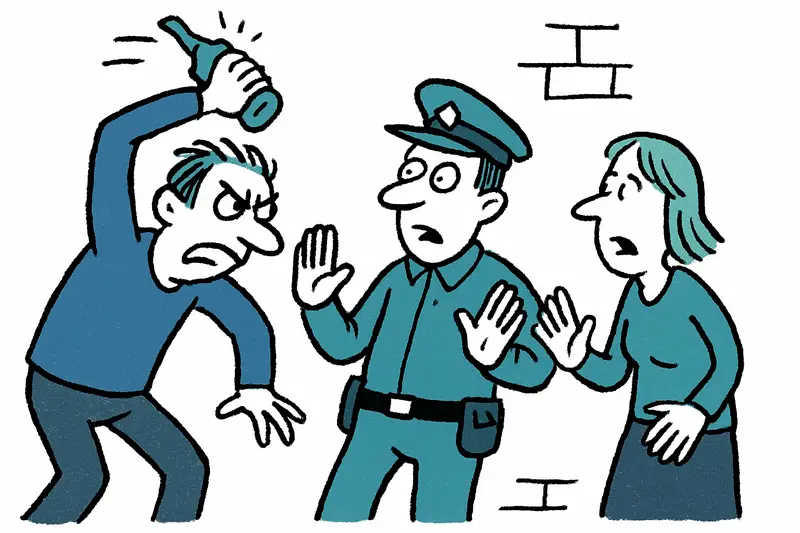
In the night to Sunday there was a dangerous incident on Schinken Street: A 25-year-old German is said to have injured several people with a glass bottle and threatened emergency personnel. The case exposes urgent safety questions for Playa de Palma.
Violence on Schinken Street: One Incident, Many Questions
It is shortly after midnight, the lights of Schinken Street cast a yellow glow on wet cobbles, loud music spills from the bars, occasionally the click of taxi doors and groups calling out as they search for the next venue. On this night a scene escalated that no one wants: According to witnesses, a 25-year-old German became involved in a violent confrontation in front of the Bierkönig, similar to other episodes reported in Brawl at Playa de Palma: Why a verbal exchange could have ended fatally. The bottle broke, people were injured, and passersby and police officers were reportedly threatened with shards. According to on-site reports, the man was subdued by several officers and taken into custody overnight for safety reasons. During a search, officers found suspected narcotics, apparently ecstasy. The young man is now being investigated for bodily harm and resisting arrest; as of now no pretrial detention has been ordered.
Main question
How can the island prevent nights of partying from turning into tangible dangers for locals, workers and visitors?
Critical analysis
In short: this incident is not an isolated flare-up but a focal point of several problems converging in Playa de Palma. First: alcohol and glass bottles are a dangerous combination in dense crowds. Second: drug use on party nights increases the likelihood of violent outbursts; in this case officers say suspected ecstasy was found. Third: the narrow layout of Schinken Street, the many guests and the fast pace of the local hospitality scene create a situation in which conflicts can quickly become physical.
The police operation itself shows two sides: on the positive side, officers were on site quickly and managed to subdue the man — several colleagues were able to bring the situation to an end. But a critical issue is prevention: why do such escalations repeatedly occur in the same places? Is the police presence sufficient, how well are procedures coordinated between venue operators, security services and police, and how well trained are staff in de-escalation? Coverage of related incidents, such as Assault at Palma Station: Why Visibility Alone Doesn't Protect, raises the same questions.
What is often missing in public debate
The debate quickly focuses on individual perpetrators and sensational images. Less attention is paid to structural factors: the role of operators, serving drinks in glass vessels, how drugs are handled at the scene, and the responsibility of event organizers and tour operators. Also rarely discussed is the burden on personnel — bartenders, bouncers, cleaning staff and paramedics — who night after night must absorb and manage dangers. Coverage also extends to theft and arrests, for example Arrests at Playa de Palma: How safe are phones on the Schinkenstraße?.
An everyday scene
Anyone strolling down Schinken Street on a Saturday night often sees staff working with practiced haste: plastic cups stacked at the bar, a bouncer tugging at a guest's jacket, two paramedics sitting on a wall gulping coffee. These images are part of island reality — and also the place where a single altercation can trigger a chain reaction.
Concrete solutions
1) Ban on glass in the promenade zone: In particularly busy sections like Schinken Street, glass bottles and glasses should be consistently prohibited at night. This can be regulated locally and enforced through inspections of establishments. 2) Stronger cooperation with operators: Clubs and bars need clear rules and joint action plans with the police, including reporting chains for escalating situations. 3) More foot patrols for prevention: Visible, foot-based presence reduces risk and enables faster interventions before situations get out of control. 4) De-escalation and first-aid training: Hospitality and security staff as well as police should receive regular training to defuse conflicts and treat the injured immediately. 5) Low-threshold drug education and harm reduction: Information stands, multilingual flyers, and quick-response points for overdoses can save lives and prevent violence. 6) Sanctions and fast procedures: Where violence occurs, administrative measures and criminal procedures should be designed so that perpetrators are held accountable promptly — without premature judgments, but with clear signals to potential copycats.
Conclusion
The incident on Schinken Street is more than the story of a night out that went wrong. It is a mirror of the limits of the night shift at Playa de Palma: too many people, too much alcohol, occasional drug use and too few preventive structures. Anyone who wants long-term calm and safety here must not only name the perpetrator but change places, rules and responsibilities. Otherwise the uproar will be today's news — and the next escalation only a matter of time.
Frequently asked questions
Why do violent incidents happen so often in Playa de Palma at night?
Is it safe to go out on Schinken Street in Mallorca at night?
What should visitors to Mallorca know about alcohol and glass bottles in nightlife areas?
How can Mallorca reduce violence in busy nightlife zones like Playa de Palma?
What role do drugs play in nightlife incidents in Mallorca?
What happens if someone is arrested after a violent incident in Mallorca?
What can bars and clubs in Playa de Palma do to prevent fights?
What should tourists do if they see a violent situation in Playa de Palma?
Similar News
Rescue operation at Tolleric: Why nighttime cliff parties become dangerous
A British holidaymaker fell about ten meters at the cliffs of Tolleric during the night, later climbed back up and was r...
Car accident on the MA-1: Mother and daughter on a bicycle struck by a fellow countryman – Who protects cyclists here?
On the MA-1 between Portopí and the Cala Major exit, a mother and her daughter on a bicycle were struck by a car. A para...
Smoke over the UIB: Who is responsible for the fire on the roof?
On Saturday afternoon a fire broke out on the roof of the Arxiduc Lluís Salvador building at the University of the Balea...
Short Getaway with Sea View: Inmood Aucanada among Spain's Top Hotels for Dinner Breaks
A small hotel on the coast of Alcúdia was highlighted by a Spanish experience platform as particularly suitable for shor...
Cala Pi crowned Mallorca's most beautiful beach: A morning at the rocky cove
The travel portal Holidaycheck praises Cala Pi as Mallorca's most beautiful beach: a narrow, romantic cove, clear water,...
More to explore
Discover more interesting content

Can Cap de Bou

Townhouse Lleo 72
