

Small Baggage Tag, Big Risk: Why You Shouldn't Throw Away Your Tag at the Airport
At Palma airport next to Gate 4 a tourist disposes of his baggage tag – harmless? No. Barcodes and numbers often reveal more than you think. A look at the dangers, simple protection rules and what airports could do.
Small tag, central question: Why should a slip of paper on luggage concern you?
A few days ago, 35°C in the air, the beeping of baggage carts and the scent of café con hielo from the kiosk by Gate 4: a tourist folds his baggage tag and throws it in the bin, as a local report described Small Baggage Tag, Big Risk: Why You Shouldn't Throw Away Your Tag at the Airport. Harmless, right? This scene answers a simple but crucial question: can a seemingly innocuous piece of paper cause real security problems? The short answer: yes.
What the tag shows — and why that's dangerous
Baggage tags don't just show destinations and a baggage number. In many cases they contain machine-readable codes, routing IDs and the PNR — the booking code — hidden on them. With such data, some airlines' systems allow retrieval of information: email addresses, phone numbers, flight connections, return dates, and sometimes even payment details or booking amounts.
This means that whoever collects tags can not only satisfy curious glances but can also gather data for targeted manipulation. Examples: rebookings or cancellations, fraudulent compensation claims for "lost" luggage, or social-engineering attacks on hotel and rental-car reservations. This is not a distant theory but a vulnerability in everyday travel.
What public debate often overlooks
Alarm bells rarely ring about bins at the baggage carousel. Instead we talk about large cyberattacks or stolen credit-card data. But small physical clues like discarded slips provide entry points for focused fraud attempts — and this is often underestimated. Equally undiscussed is how little standardized labeling is across different airlines. Some print easily readable PNRs, others use internal codes only. A consistent standard to protect this data is missing; see IATA guidance on baggage handling standards for industry-level recommendations.
Airports could also do more: secure disposal containers, notices at the carousels, and training for ground staff. These are small investments with big effects — especially at busy hubs like Palma; local coverage highlighted similar concerns in Spanish Pequeña etiqueta de equipaje, gran riesgo: por qué no debe tirar la etiqueta en el aeropuerto.
Concrete, practical rules for travelers
A few simple steps are enough to significantly reduce the risk:
1. Take the tag with you – or photograph it for documentation and discard the paper later at home. A photo is often sufficient for claims, but the original should not be left lying around.
2. Destroy the barcode and numbers – fold, tear or mark them unreadable with a pen. Even a damaged code prevents automatic queries.
3. Do not write down sensitive data – neither addresses nor ID numbers on the tag. This is sometimes a reflex, but it opens the door to misuse.
4. Watch for open bins – especially next to carousels or collection points. If possible, take the slip with you or dispose of it later in a closed trash container.
5. Use digital boarding passes and monitor your booking – you will notice unusual changes more quickly. Change passwords if something seems off.
If something does happen: immediate steps
React quickly. Contact the airline directly — preferably via the official hotline or app. Check emails and account notifications. Change passwords on booking platforms and email. For guidance on data protection, consult EU GDPR guidance on personal data protection. Document irregularities (screenshots, timestamps) and report the incident to the airport or local police. Sometimes quick action prevents larger damage.
What airports and airlines could do
The solution isn't solely on the traveler. Small organizational changes would achieve a lot: locked disposal containers at baggage claims, clearly visible notices in multiple languages, staff training and technical changes to tags (e.g. encrypted QR codes instead of openly readable PNRs). Cooperation between airports on the island could also test standards — after all, Mallorca is a tourism hub, and prevention helps everyone.
A little vigilance costs almost no time but can save a lot of trouble. I've seen people casually slip three tags into a pocket — apparently hunting for "finds." Strange? Yes. Dangerous? Potentially.
Conclusion: Treat your baggage tag like a semi-private postcard: don't leave it lying around, don't thoughtlessly throw it into a public bin. A brief moment of caution at the carousel gives you peace of mind for the days ahead — and spares you phone calls to hotlines in the middle of a holiday.
Do you have your own anecdote or another tip? Write it in the comments. The island is small enough that good tips spread quickly.
Frequently asked questions
Why should I keep my baggage tag after flying into Mallorca?
What information can be on a luggage tag at Palma airport?
How should I dispose of my baggage tag safely when traveling through Mallorca?
Can someone use my airport baggage tag to access my booking?
What should I do if I think my Mallorca travel details were exposed through a baggage tag?
Are baggage tag bins at Mallorca airports safe to use?
Do I need to keep my baggage tag for a lost luggage claim in Mallorca?
What simple travel habits help protect privacy at Palma de Mallorca Airport?
Similar News

Popular AIDA Stella Leaves Palma – a Quiet Autumn at the Harbour
The AIDA Stella has left Palma and is heading across the Mediterranean toward Antalya – a long transfer to Asia begins. ...

New Rain Alert in Mallorca: Where Danger Looms and What We Should Do
Aemet reported strong rain on Sunday in the Serra de Tramuntana and in the north and northeast — up to 20 l/m² in one ho...
Taking Off Differently: Pilot, Pere Garau Resident and Rock Musician
Andreas Thiele flies an Airbus A320 for Lufthansa, has an apartment in Pere Garau — and will release an alternative-rock...

Palma takes to the streets: Thousands demand 'Housing as a Right'
Around 3,000 people marched through Palma on Saturday to demand affordable housing. The protest followed the rejection o...
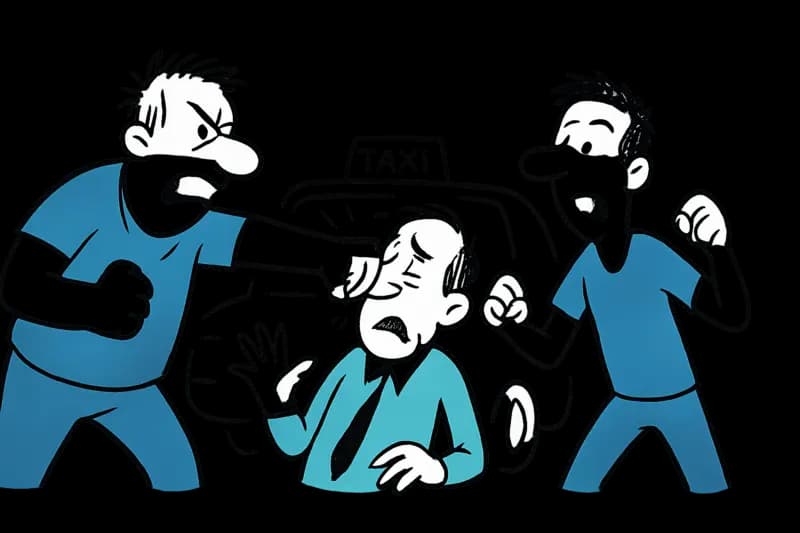
Beatings in Palmanova: Two British tourists injure taxi drivers — what needs to happen now
In Palmanova, two taxi drivers were attacked at night by apparently drunk tourists. One suffered severe facial injuries ...
More to explore
Discover more interesting content

Can Cap de Bou

Townhouse Lleo 72
