
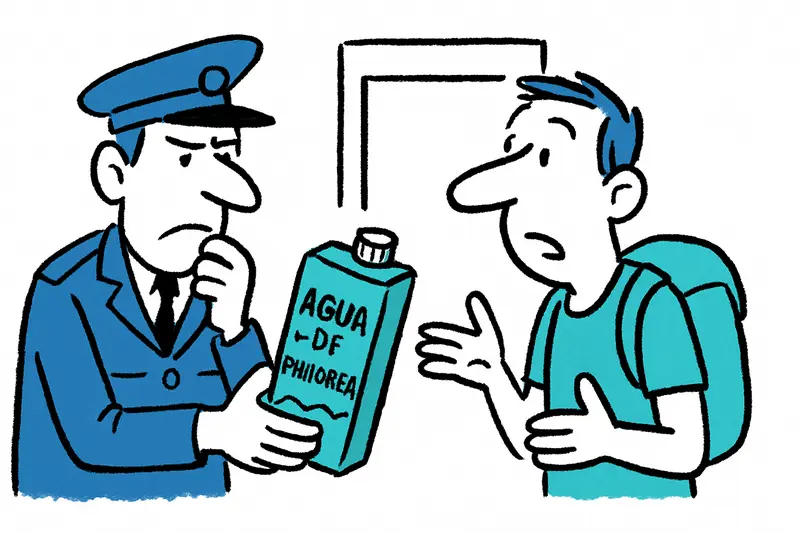
When does water count as 'Mallorca'? Airport inspection raises questions about origin labelling
When does water count as 'Mallorca'? Airport inspection raises questions about origin labelling
Around 2,000 half-liter tetrapacks labeled 'Agua de Mallorca' were seized at Palma airport. The Balearic government is investigating possible false claims — an opportunity to take a critical look at supply chains and controls on the island.
When does water count as 'Mallorca'? Airport inspection raises questions about origin labelling
Key question: How clearly must origin be stated on products to protect consumers and the island's image?
At Palma airport nearly 2,000 tetrapacks (0.5 l) labeled "Agua de Mallorca" were recently seized. The Balearic government reports that the water was bottled outside the Balearics. The inspection followed a complaint from within the industry, and the authorities warn of fines — based on the current facts it could be a more serious offence, with a possible minimum penalty of €3,000.
That is the dry fact. The question that remains, and which headlines rarely make clear, is this: is this only about a few crates of mineral water or about the trust in an island brand that many retailers and producers defend? Anyone sitting on the Passeig del Born in Palma watching tourists often sees the same picture: water bottles with local names as souvenirs, wines with place names lined up in small shops, products that sell Mallorca — sometimes rightly, sometimes with more marketing than provenance. This matters particularly when some towns have tightened their rules on water use, as reported in When the Tap Becomes a Luxury: Seven Municipalities Tighten Water Rules in Mallorca.
A critical assessment: origin labelling is not just a bureaucratic detail. It concerns consumer protection, fair competition and the local economy. If "Agua de Mallorca" suggests the product comes from here but the bottling takes place elsewhere, that can undermine local production and mislead customers. At the same time, the case at the airport shows a form of control that is reactive: an industry complaint triggered an inspection, not a routine check by the authorities.
What is often missing in public discourse: clear information about how origin is defined and what proof obligations retailers and manufacturers have. Also little examined is practice along the supply chain: who inspects the filling facilities, the logistics partners and the label printers? Initiatives aiming at greater transparency, such as Real-time for Mallorca's Water — a Step, But Is It Enough?, touch on some of these issues but do not solve all verification gaps.
An everyday scene from Palma: on the way from the terminal to the bus stop you hear luggage trolleys rattling, taxi whistles and vendors offering water bottles in several languages. A holidaymaker reaches for the bottle marked "Mallorca" because it feels familiar. In that second a decision about trust and purchase is made. If a different bottling address is hidden behind the label, that is not only formally wrong, it breaks the expectations of many visitors.
Concrete solutions we propose here: first priority must be better traceability. A mandatory label clearly indicating the place of bottling and a registration number of the bottling plant would create transparency. Authorities could intensify spot checks at points of entry and exit such as airports, ports and large logistics centres, instead of only reacting to complaints.
Food retailers and travel providers should be liable for the information on their sales displays, not only the brand owners. Graduated sanctions help: minor offences with warnings and corrective orders, systematic or repeated false labelling with higher fines and public disclosure of the violation. The role of hospitality businesses is already in the spotlight in pieces like Water scarcity in Mallorca: Why hotels must now take responsibility, which argues for clearer duties across the sector. A publicly accessible register would also be useful, where consumers can see where a product was actually bottled.
Technically practicable are also QR codes on labels that lead to a short supply-chain summary: source of raw materials, bottling location, date. That costs a little but protects reputation and helps honest producers in Mallorca. At the same time, information campaigns should raise awareness among guests and locals: origin is not just a selling point, it is a value that must be protected, especially given worrying figures on regional water reserves highlighted in 41 Percent: When the Taps Run Drier on Mallorca and the Neighboring Islands.
One final point: controls need binding rules and resources. The Balearic government has already acted, but without a clear strategy — preventive, transparent, with clear responsibilities — we will see more individual cases. Customer checks at the kiosk give the tourist a good feeling; in the long term the island needs a system that makes deception difficult and promotes honest products.
Conclusion: It was right for authorities to intervene in the "Agua de Mallorca" case. Far more important, however, is to sharpen the rules so that such cases become rarer. Shoppers in Palma should not have to guess where their water comes from. And anyone who puts the name Mallorca on a label should use it responsibly.
Frequently asked questions
What does “Mallorca” on a product label actually mean?
Why was water labelled “Agua de Mallorca” seized at Palma airport?
Can you buy water on Mallorca that is bottled outside the island?
What should travellers look for when buying locally branded products in Mallorca?
How are false origin claims on Mallorca products punished?
How can Mallorca authorities check whether a product really comes from the island?
Why does origin labelling matter for Mallorca’s local economy?
Would QR codes help shoppers verify bottled water from Mallorca?
Similar News

Mistaken identity with fatal consequences: Brutal assault in S'Aranjassa — what's missing in the follow-up?
At S'Aranjassa a visitor to a finca was tied up, beaten and thrown out of a van. Three men have been arrested, including...
High heel slips, car accelerates: accident on Camí de Son Hugo
A woman lost a high-heeled shoe on the forecourt of the sports facility at Camí de Son Hugo. The car accelerated, mounte...
Phone Scam: How Two Hotel Employees at Playa de Palma Lost Thousands of Euros
One morning in September, two reception employees at Playa de Palma were pressured by alleged alarm-company staff — in t...

When the Wallet Becomes a Danger: Attack in Peguera and Lessons for Mallorca
In Peguera, two women are said to have stolen the wallet from a 75-year-old German couple. When the victim intervened, t...
Plata stays Plata: Young people take over, Llonguets remain
A small bar on Carrer de l'Argenteria will continue: Tolo Serra hands the place over to young Mallorcans at the end of t...
More to explore
Discover more interesting content

Can Cap de Bou

Townhouse Lleo 72
