
Water, Words, Responsibility: The Dispute over Horse-Drawn Carriages in Palma
Water, Words, Responsibility: The Dispute over Horse-Drawn Carriages in Palma
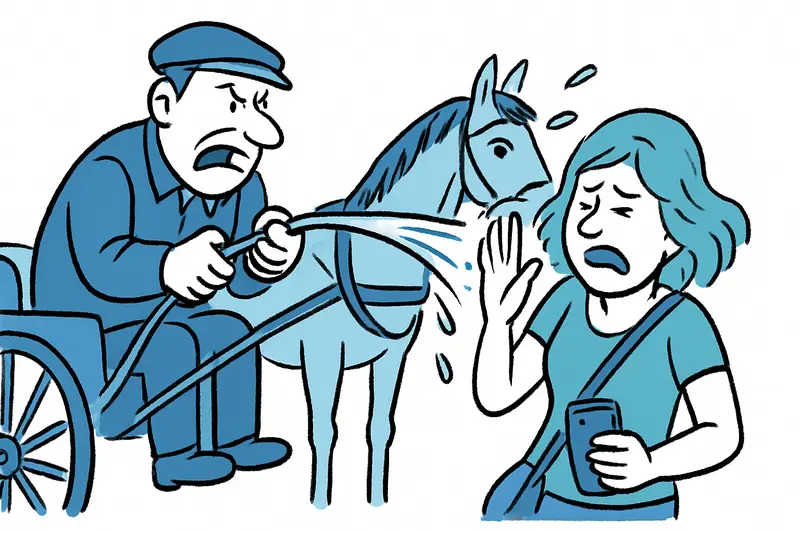
A German tourist in Palma is sprayed with water by a carriage driver. Protests, accusations and a city investigation show: this is about much more than a single scene on the roadside.
Water, Words, Responsibility: The Dispute over Horse-Drawn Carriages in Palma
What exactly happened — and why the outrage is bigger than the incident itself
On the edge of the old town, where horse-drawn carriages have been ferrying tourists over cobblestones for years, an altercation escalated: a German tourist objected to the treatment of the teams, the discussion was filmed — and in the end a carriage driver sprayed the woman with water. Shortly afterwards, the recordings circulated, tensions rose, and the city administration announced a review procedure.
Key question
Who bears responsibility when outrage, lack of oversight and a language chaos collide: the passenger, the driver, the authorities or the system that permits horse-drawn carriages as a tourist attraction?
Critical analysis
The incident is more than a fleeting headline. Three levels converge here: animal welfare, the working and economic situation of the drivers, and the role of tourists as an informing public. The available material shows that the driver has since publicly apologized, while also reporting insults and a racist slur directed at him and colleagues. The video records only a fragment; the language barrier makes reconstruction difficult. The result: emotions fill gaps, while facts remain thin (recent episodes, such as a carriage horse collapsing in front of San Nicolás, have further sharpened scrutiny).
Legally, the city will have to clarify the review process: was the spraying of water an assault or a hasty action in a stressful situation? In parallel, possible medical checks for carriage horses and other animal welfare questions are in question — and an organization is demanding that the case be handed over to the judiciary. Without independent findings, the debate threatens to descend into mutual accusations.
What is missing in the public discourse
Firstly: reliable information about the working conditions of the drivers and the care of the horses on hot days. Secondly: a neutral, comprehensible investigation report that documents both the driver's behavior and the tourist's complaints in a traceable way. Thirdly: clear complaint procedures that are more than outraged comments on social media. As long as these gaps remain, only loud voices benefit, not reasoned solutions.
Everyday scene from Palma
On the Passeig, on a late-summer morning, a small group of retirees stands on a bench, a cat on a leash, the smell of freshly brewed coffee mixed with horse sweat. A boy shows his father a video on his phone. This is how opinions are formed: immediate, heated, often without background knowledge. It is precisely this fast lane of judgment that accelerated the present incident.
Concrete solutions
1. Immediate, independent animal inspections at heavily frequented spots during the hot months; clear minimum standards for water, rest breaks and shade. 2. A binding code of conduct for drivers with mandatory de-escalation training and clear disciplinary practices for assaults against passersby. 3. An easily accessible, multilingual complaints office at the City of Palma with digital documentation and deadlines for decisions. 4. Video recordings at central stopping points that — under data protection-compliant rules — can serve as evidence. 5. A funded transition plan for the sector: subsidized electric cabs and retraining offers, accompanied by a clear timetable and implementation monitoring.
Practical example
A concrete step could look like this: at all official stops a bilingual information notice is visibly posted with tourists' rights and drivers' duties. In hot months additional drinking stations and a weekly check by a veterinary authority would be mandatory. In case of violations, a graduated sanction system applies — from warning through fines to temporary driving bans.
Concise conclusion
Anger about the scene is understandable, but outrage alone is not enough. The city must investigate, report transparently and enforce rules. Drivers need prospects, horses reliable protection, and tourists an understandable complaint mechanism. Only then can single incidents be prevented from fragmenting the whole debate — or from leaving people and animals once again between outrage and powerlessness.
Frequently asked questions
What sparked the controversy over horse-drawn carriages in Palma?
What are the main concerns about the welfare of horses used for carriage rides in Mallorca?
What kinds of reforms are being proposed to improve safety and conduct around carriage drivers?
How can residents or visitors report issues with horse-drawn carriages in Palma, and what happens after?
Are there plans to replace horse-drawn carriages in Palma with electric alternatives?
What practical steps could be taken at official stops in Palma to improve the situation?
Why is reliable information and transparent reporting crucial in incidents like the Palma carriage dispute?
What does the Mallorca carriage debate say about the island’s broader tourism system?
Similar News

End of October: Can you still swim in the sea in Mallorca?
The late-autumn sun still warms the air and the sea has retained its summer heat—many people don't pack away their swimw...
Years of abuse in Costa de la Calma – Neighbor calls Guardia Civil
In a villa in Costa de la Calma a neighbor alerted the Guardia Civil: a 19-year-old woman reported years of violence by ...

Schauinsland Takes Over Management of the Morito in Cala Millor – a Reality Check
From March 2027 the German tour operator Schauinsland will manage the Morito hotel in Cala Millor. The Batle Erikson fam...
Still bathing season? Why Mallorca still invites a plunge into the sea at the end of October
The air is mild, the beaches quieter — and the water surprisingly warm. We have summarized the current temperatures and ...
A Spanish Evening at the Auditorium: Guitar, Colors and the Sea in Palma
Rodrigo, Ravel, Albéniz — and a new work by the guitarist: the second subscription concert brings Spanish music in a lar...
More to explore
Discover more interesting content

Can Cap de Bou

Townhouse Lleo 72
