
When the Island Loses Its Children: Why Fewer and Fewer Spaniards Live in Mallorca
When the Island Loses Its Children: Why Fewer and Fewer Spaniards Live in Mallorca
New figures show: population growth from incoming residents — but Spaniards are leaving. A critical assessment of what this means for daily life, the housing market and our future.
When the Island Loses Its Children: Why Fewer and Fewer Spaniards Live in Mallorca
Leading question: Is Mallorca losing its own population — and if so, what does that mean for everyday life?
The latest provisional figures from the Spanish statistics office make it clear: the Balearic Islands now have 1,266,279 inhabitants; since the start of the year that is 5,943 more people, as discussed in How many residents can Mallorca sustain? Growth, pressure and ways out of overcrowding.
What exactly do the data show? Between the beginning of January and July 1, 2026, the number of people born in Spain on the islands fell by 654 (from 890,552 to 889,898). At the same time, the population born abroad rose by 6,597 to 376,381. The trend is concentrated on Mallorca: the island recorded a net gain of 3,635 people, with almost 830 Spain-born residents leaving while 4,465 people arrived from abroad. Mallorca is approaching the one-million mark with more than 982,500 inhabitants. Ibiza, Menorca and Formentera show different nuances, but there too the group born abroad is growing: Ibiza +1,667 (Spanish residents +149, foreign-born +1,518; total 167,988), Menorca +429 net (Spanish -38, foreign-born +467; total 103,588), Formentera +212 (Spanish +65, foreign-born +147; total 12,203). Overall, almost 30 percent of the Balearic population now comes from abroad — well above the Spanish average.
Critical analysis: More arrivals do not automatically mean integration
The numbers are honest, but they tell only part of the story. That people come from abroad is not surprising for an island with an international flair. It becomes problematic when births, young people and local labor leave or can no longer afford to stay. Then not only the statistics change, but the fabric of neighborhoods, schools, clinics, craft businesses and clubs.
In plain terms: newcomers do not automatically replace the Spaniards who are lost. The housing market shifts; more demand from buyers and long-term renters with good incomes drives prices and availability up, as shown in When Living Rooms Become Bedrooms: How Mallorca Suffers from a Housing Shortage. At the same time, many jobs remain seasonal, poorly paid or tied to the tourism sector. Young Mallorcans looking for affordable housing and future prospects in Palma increasingly look to the mainland or abroad.
What is missing from the public debate
Public discussion often talks about "growth" or "record numbers," but rarely about the people who are left behind: teachers, carers, small retailers, construction companies that can no longer find apprentices. There is a lack of honest debate about the balance between private ownership, second homes, affordable housing for workers and the preservation of local structures. Nor do we often read enough about the long-term consequences: closing primary schools in villages, fewer doctors in rural areas, seasonal gaps for craft businesses, as highlighted in When Rent Decides: How Villages Lose Their Families.
Everyday scene from Palma
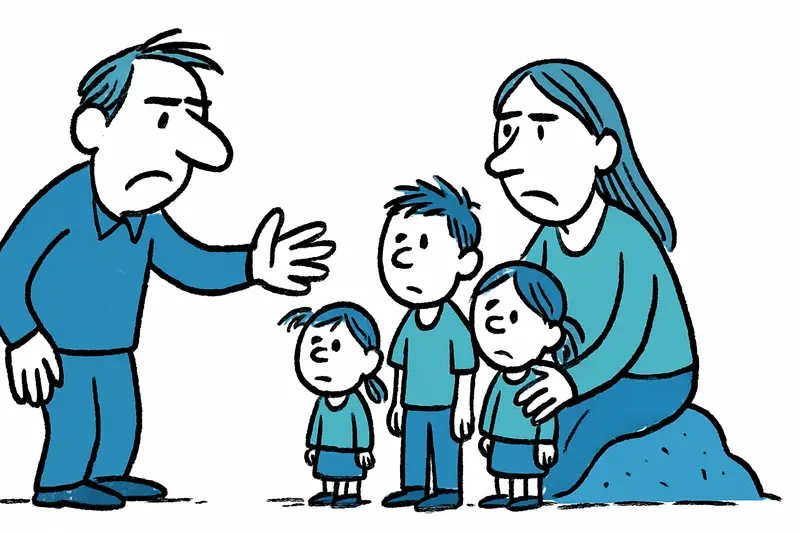
An early morning on Passeig Mallorca: delivery vans hum, the market traders at Mercat de l'Olivar call out to their regular customers, and outside on the street a group of construction workers briefly discuss shifts and wages. A young teacher with a coffee in her hand says she has to commute two hours a day because affordable housing near the school is scarce. In Calle de Sant Miquel a small bookstore closes earlier — the rent has overtaken it. Such scenes repeat in Portixol, Coll d'en Rabassa and in many small towns along the east coast.
Concrete solution approaches
The situation is not a natural disaster; it can be managed. Five proposals that could have immediate effect:
1. Social housing with mixed-occupancy quotas: Municipalities and the Balearic government should purposefully create housing for workers, tied to conditions that prevent conversion into holiday rentals.
2. Tax incentives to encourage people to stay: Support for young households, teachers and care workers who settle permanently, instead of privileges for short-term investors.
3. Job quality instead of mere job numbers: Promote vocational training and continuing education in professions that provide stability outside the season — trades, education, healthcare.
4. Limit second homes in critical zones: Stricter regulations in areas where the housing market is collapsing, linked to local allocation criteria.
5. Strengthen regional cooperation: Better transport connections and digital administration services so smaller municipalities become more attractive for families and workers.
A pragmatic outlook
Anyone who reflexively says "Stop the influx" or "We just need more tourism" overlooks the complexity. It's not about isolation but about steering: which residents do we want on the island in ten years? Who will operate emergency services, schools and craft businesses? The statistics office's figures show that Mallorca's everyday life will look different in the future if nothing changes.
Our conclusion: the sober statistics are a warning sign. Mallorca is growing, but not necessarily in the direction the island society needs. Politics and civil society must now set concrete priorities so the island does not finally lose its children — and so that breakfast on Passeig Mallorca is still filled with local voices in ten years' time.
Frequently asked questions
What is the best time of year to visit Mallorca for beach weather and swimming?
What should I pack for a trip to Mallorca?
Are Mallorca's beaches suitable for families, and what should I expect at the coast?
What are must-see places to visit in Mallorca if I have a few days?
Do I need a car in Mallorca, or can I get around by public transport?
What should I expect weather-wise in different parts of Mallorca?
Are there good hiking or outdoor activities to try in Mallorca?
What local experiences in Mallorca are worth adding to a trip?
Similar News
Magaluf: Watchtower Alarm – Lifeguards Pull Unconscious Beachgoer from the Water
After a drama in the late afternoon, two lifeguards at Magaluf beach rescued an unconscious 44-year-old man. He was stab...
Turquoise in the City: How dangerous is the color play of the Sa Riera?
The Sa Riera in Palma suddenly turned turquoise — a pretty motif, but behind the effect lies a discharge of saline waste...

Jeckliner at Sunnesching: Cologne spirit sets sail from Palma
In September 2027 the Mein Schiff 2 briefly becomes a floating carnival stage: four days with Cologne bands, comedy and ...
Finally Home: Mike and Leyla Heiter Buy Villa with Sea View in Mallorca
The reality TV couple Mike and Leyla Heiter have bought a house in Mallorca with a roof terrace and sea view. An Instagr...
Arrest after series in Palma: Who protects apartments from repeat offenders?
The National Police arrested a man in Palma who investigators say may have broken into several apartments. In one incide...
More to explore
Discover more interesting content

Can Cap de Bou

Townhouse Lleo 72
