
When the Pension Isn't Enough: How a 64-Year-Old in Mallorca Fell Through Every Safety Net
When the Pension Isn't Enough: How a 64-Year-Old in Mallorca Fell Through Every Safety Net
A woman, a small finca, broken solar panels and no refrigerator: why do older residents in Mallorca fall through the social safety net? A reality check with concrete solution proposals.
When the Pension Isn't Enough: How a 64-Year-Old in Mallorca Fell Through Every Safety Net
It's a clear, cold morning in February. On the small terrace two dogs turn their noses toward the sun, further back an old stair creaks, from a distance you can hear the cry of a crane and the faint hum of a tractor bringing water to the cistern. The air smells of damp wood smoke — the stove is new, but the firewood is delivered by helpers. This is what a good day looks like for Katja. Most days in recent years have been harder.
Key question
How can it be that people who have worked and lived on this island for decades end up without sufficient pension, without reliable power supply and without social support?
Critical analysis
Katja's case is not an isolated incident but a pattern. She came to Mallorca with her husband in 1992, they built a small business together and bought a finca. Savings? Barely. Provision? Insufficient. In 2017 her husband became ill; in 2018 he died. The marriage had been short and the time in the Spanish system too brief to establish a claim to a significant widow's pension. Suddenly low income, illness and a fragile house infrastructure were the issue: a defective solar system, no refrigerator, broken batteries, cracks in the walls. Delivery services refused to drive the narrow access road; water had to be brought to the cistern by tractor.
The Spanish social and health system (Seguridad Social) does offer benefits, but the combination of short marriage durations, cross-border insurance periods and lack of guidance makes it difficult for many to clarify their entitlements. Added to this: in rural areas there is often no one who checks in regularly on lonely older people. Volunteer initiatives fill this gap — in Katja's case the 'herztat' foundation with her sponsor Christina Rehfeldt and support from the Lions Club — but such groups depend on donations, volunteers and the skills of individuals.
What's missing in the public discourse
We talk a lot about holidays, promenades and tourist infrastructure, while reporting also highlights housing shortages in the Balearic Islands and the broader housing crisis on Mallorca. We rarely talk about the people who live away from the beaches. Data on German-speaking residents who fall into old-age poverty is patchy; see Fewer seniors in Mallorca: Opportunity or a ticking gap?. There is a lack of coordinated outreach by consular services, municipal administrations and social services as well as a simple, low-threshold information platform in German that informs about pension entitlements, emergency aid and local offers.
A typical everyday scene
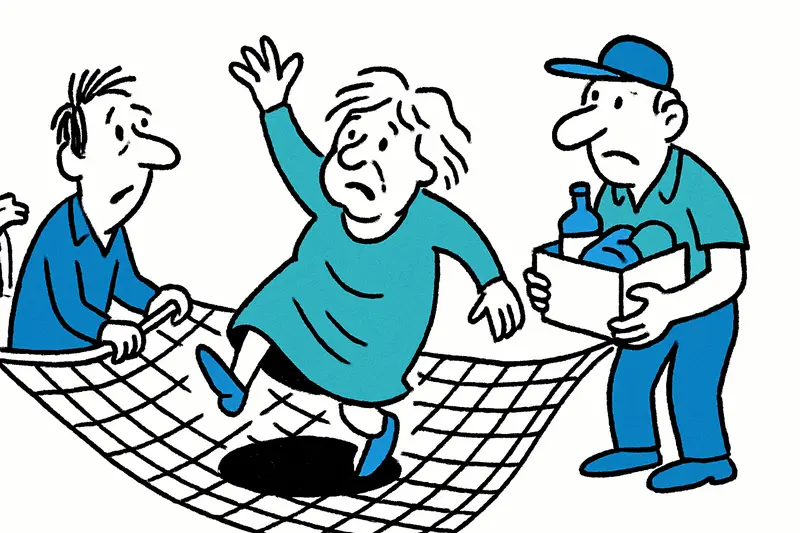
Imagine the driveway to the finca: a dusty, narrow track between olive trees where a delivery van reverses because it cannot get through. A neighbor lifts logs over the low fence, the dogs bark, and the sponsor from 'herztat' stands there with a box of food while the generator hums quietly. This is how help works: improvised, person to person — and unfortunately often makeshift.
Concrete solutions
- Mobile social teams: interdisciplinary teams (social work, legal advice, care) travel regularly to rural zones and target German-speaking residents.
- Emergency funds and repair brigades: a municipal or non-profit fund for urgent repairs (solar replacement, roof repairs, water pipes) linked to local craft networks that work at low cost.
- Energy assistance: subsidies or microloans for replacing solar batteries and efficient cooling systems; partnerships with technical schools for repair internships.
- Simplified pension advice: joint consultation hours of Spanish authorities and German pension offices in municipalities with many residents, plus a clear guide on widow(er)'s pension rules.
- Transport solutions: volunteer networks for doctor visits and groceries; municipal standards so water suppliers also serve remote access roads.
- Public outreach: a German-language information portal at municipal level and targeted awareness campaigns that address long-term residents as well as tourists.
What neighbors and politicians can do immediately
Neighbors: simply knock, ask, exchange phone numbers. Politicians: set up a small, transparent repair fund, appoint municipal coordinators and involve consulates in regular information sessions. Volunteer organizations like 'herztat' need stable funding lines instead of only one-off donations.
Conclusion — briefly and pointedly: Mallorca must not be seen only as a postcard island. If people stay here, we must ensure that infrastructure, advice and the social safety net grow with them. Otherwise the island idyll becomes just an image — and people are left out in the rain. Those who want to help: the herztat foundation can be reached at www.herztat.de, mallorca@herztat.de or by phone at +34 634041668. A call, a visit, a donation or a helping hand can make the difference here.
Frequently asked questions
Can long-term residents in Mallorca end up with too little pension?
What should I check about widow’s pension rights in Spain if I lived in Mallorca?
What help is available for older people in rural Mallorca who live alone?
How can residents in Mallorca get pension or social support advice?
What practical problems can people face living on a finca in Mallorca?
Can solar systems and batteries be a problem in rural Mallorca homes?
Where can people in Mallorca turn for urgent home repairs if they are elderly or low-income?
How can neighbors help isolated people in Mallorca who seem to be struggling?
Similar News
Mistaken identity with fatal consequences: Brutal assault in S'Aranjassa — what's missing in the follow-up?
At S'Aranjassa a visitor to a finca was tied up, beaten and thrown out of a van. Three men have been arrested, including...
High heel slips, car accelerates: accident on Camí de Son Hugo
A woman lost a high-heeled shoe on the forecourt of the sports facility at Camí de Son Hugo. The car accelerated, mounte...
Phone Scam: How Two Hotel Employees at Playa de Palma Lost Thousands of Euros
One morning in September, two reception employees at Playa de Palma were pressured by alleged alarm-company staff — in t...
When the Wallet Becomes a Danger: Attack in Peguera and Lessons for Mallorca
In Peguera, two women are said to have stolen the wallet from a 75-year-old German couple. When the victim intervened, t...
Plata stays Plata: Young people take over, Llonguets remain
A small bar on Carrer de l'Argenteria will continue: Tolo Serra hands the place over to young Mallorcans at the end of t...
More to explore
Discover more interesting content

Can Cap de Bou

Townhouse Lleo 72
