
Who protects our children — and how? Mallorca reviews Madrid's social-media plan
Who protects our children — and how? Mallorca reviews Madrid's social-media plan
Madrid wants to keep under-16s away from social networks. On Mallorca there is skepticism: practical enforceability, data protection and educational gaps are being discussed. What is missing in the discourse — and what could a better solution look like?
Who protects our children — and how? Mallorca reviews Madrid's social-media plan
Guiding question: How does the government intend to implement a ban for under-16s in practice and lawfully — without undermining families' everyday life and privacy?
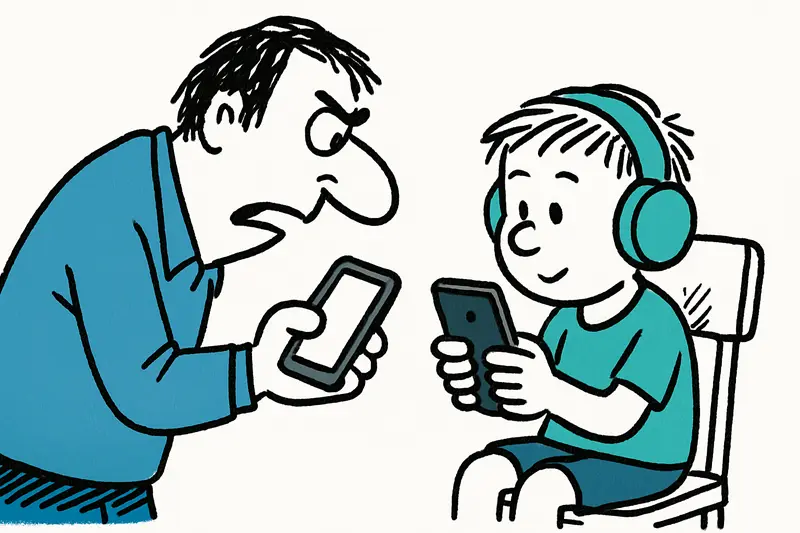
In the late afternoon, at 14°C with a light wind from the sea, parents with children sit in the street café on Passeig Mallorca 9A holding smartphones in their hands. On line 1 toward Plaça d’Espanya teenagers scroll with headphones deep in their ears while older travelers read newspaper clippings. This scene shows how closely digital communication is already woven into daily life in Mallorca. That is precisely what makes the measure announced from Madrid so controversial: a blanket ban sounds clear on paper, but in reality it is complicated.
Critical analysis: Technically, age cannot be reliably verified without compromises. Platforms now often use simple age declarations at registration, sometimes linking to phone numbers, and only rarely biometric checks. But IDs can be forged, family devices are shared, and VPNs circumvent country blocks. Data protection is also at stake if young people are required to submit their identity to companies. On Mallorca as elsewhere, large-scale age verification would be an expensive and error-prone undertaking — with uncertain benefits.
Another point: Who should monitor and punish? If sanctions target platform operators, responsibility is shifted away from families and local schools without creating more on-site control. If providers cannot be compelled and effective checks are not established, circumventions by smaller apps or international services not registered in Spain are likely, and violent online rhetoric has already led to arrests in the city, according to Palma: Arrest After Threat Post — How Dangerous Is Online Rage in Mallorca?. The problem affects not only children but also small businesses and artists in Mallorca who use social media to communicate with customers and could be surprised by abrupt regulatory changes.
What is missing in the public discourse: The debate focuses strongly on bans and penalties and less on prevention, education and support. How well prepared are teachers and counseling centers on the island to talk with children about online experiences, cyberbullying and digital balance? How will socially disadvantaged families be reached when online information is lacking? Cases such as Mother arrested in Palma – Three children left alone: How could this happen, and what needs to change? highlight gaps in family support that preventive policies would need to address. And what financial resources do municipalities like Palma, Calvià or Manacor have for prevention programs?
An everyday vignette from Palma: In a classroom in Son Gotleu the teacher asks the ten-year-olds how often they use social apps. Many raise their hands. The mother of a fourth-grader in the supermarket near Playa de Palma sighs: "I don't want to ban everything, but sometimes I don't know how to set boundaries." These small scenes show: a law alone does not solve parenting questions.
Concrete solution approaches, practicable for Mallorca and comparable regions: First, a phased approach instead of a blanket ban. Pilot projects in municipalities should test age verification methods with clear data protection guarantees. Second, expansion of digital education in schools: mandatory modules on media literacy, detecting disinformation and coping with peer pressure. Third, better support for families: free counseling hours at municipal offices, workshops in neighborhood centers and easily accessible guides in multiple languages. Fourth, technical measures with restraint: secure youth accounts that restrict functions instead of fully blocking access, coupled with parental consent and transparent deletion processes.
At the regulatory level, Spain could combine stricter liability rules with clear incentives: reports on moderation practices, sanctions for repeated failures and funding for smaller platforms that invest in transparent age checks. International exchange is important because users and services are global. For Mallorca this means: facilitating cooperation between municipal offices, schools, doctors and local telephone providers to test solutions, and attention to incidents such as Playground attack in Palma: Who protects our children from unleashed dogs? that show how offline harms intersect with online governance.
Punchy conclusion: Those who want to protect children need more than bans and scare tactics. On Mallorca a mix of protection, education and support would be more credible and practical than Madrid going it alone without local implementation plans. A law can set the framework; whether it holds is only shown when it reaches the plaza, the classroom and family life.
Frequently asked questions
How realistic is a social-media ban for under-16s in Mallorca and Spain?
Why is age verification on social media such a problem in Mallorca?
What would a social-media ban mean for families in Mallorca?
How can schools in Mallorca help children use social media more safely?
What local support do parents in Mallorca need for children online?
Would a social-media ban also affect small businesses in Mallorca?
What are the main alternatives to a social-media ban in Mallorca?
Why do local authorities in Mallorca need to be involved in online child protection?
Similar News
Mistaken identity with fatal consequences: Brutal assault in S'Aranjassa — what's missing in the follow-up?
At S'Aranjassa a visitor to a finca was tied up, beaten and thrown out of a van. Three men have been arrested, including...
High heel slips, car accelerates: accident on Camí de Son Hugo
A woman lost a high-heeled shoe on the forecourt of the sports facility at Camí de Son Hugo. The car accelerated, mounte...
Phone Scam: How Two Hotel Employees at Playa de Palma Lost Thousands of Euros
One morning in September, two reception employees at Playa de Palma were pressured by alleged alarm-company staff — in t...
When the Wallet Becomes a Danger: Attack in Peguera and Lessons for Mallorca
In Peguera, two women are said to have stolen the wallet from a 75-year-old German couple. When the victim intervened, t...
Plata stays Plata: Young people take over, Llonguets remain
A small bar on Carrer de l'Argenteria will continue: Tolo Serra hands the place over to young Mallorcans at the end of t...
More to explore
Discover more interesting content

Can Cap de Bou

Townhouse Lleo 72
