
Who Protects the Paying Guest from Reserved Sun Loungers? A Court Ruling as a Wake-up Call for Mallorca
Who Protects the Paying Guest from Reserved Sun Loungers? A Court Ruling as a Wake-up Call for Mallorca
A German court recognized permanently occupied hotel loungers as a travel defect and ordered nearly €1,000 repayment. What does the ruling mean for Mallorca holidaymakers — and how should guests and hotels handle this going forward?
Who Protects the Paying Guest from Reserved Sun Loungers? A Court Ruling as a Wake-up Call for Mallorca
Key question: Must tourists fight for loungers every morning — or are tour operators and hotels responsible?
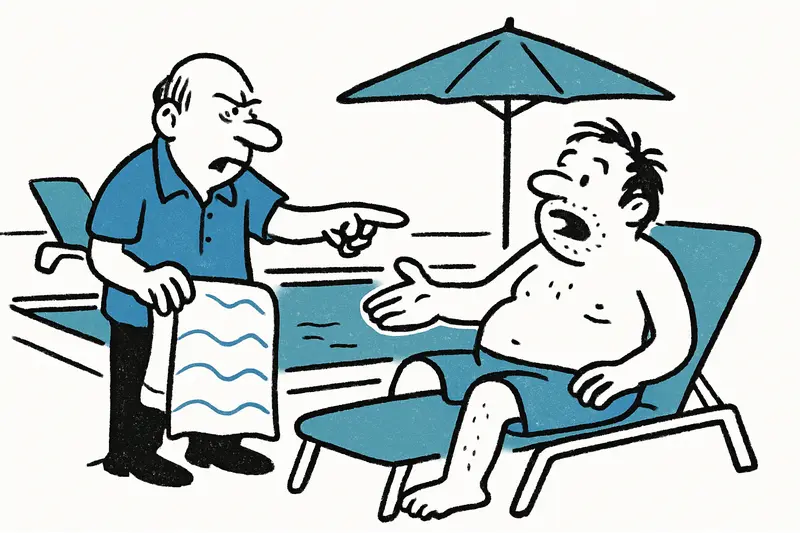
A court in Germany recently ruled that permanently blocked pool or sun loungers can constitute a so-called travel defect. The facts are brief: a German family booked an expensive package holiday in 2024 (several thousand euros), traveled to the Greek island of Kos, and — despite numerous pools and hundreds of loungers — never found free spots on any day and ultimately sued. The local court ruled in favor of the family and ordered the tour operator to repay almost €1,000.
Why is the ruling interesting for Mallorca? Because the scene many know from here looks the same everywhere, as recently highlighted in Towel wars at hotel pools: When sunbeds become currency — what Mallorca can learn: in the early morning hours towels rustle across loungers, coffee cups clink, and those who arrive late often only find a thin strip of shade at the pool edge. On the Passeig Marítim you hear the familiar murmur of English, German and Spanish — and the quiet ticking of watches measuring the race for the best spot.
Critical analysis: legally, the court found that a service sold as part of the booking — in this case the use of loungers in a hotel area — must actually be usable. If large numbers of loungers remain effectively unavailable because they are reserved for the entire stay, a guaranteed part of the travel service is missing. That has consequences: the defect justifies a price reduction if the hotel and tour operator remain inactive.
What is often missing in public debate is the practical question: how do you prove such a thing? Court decisions are not based on emotions but on evidence. A photo of a full row of loungers without visible users helps little if it lacks timestamps, no conversation with staff and no official complaint made on site. The ruling shows that a refund is possible — but proving it remains the guest's task.
Everyday scene from the island: imagine it is seven in the morning at Playa de Palma. Two mothers with prams stop in front of a hotel terrace, young couples jog by, and towels already lie in neat rows on loungers. A hotel employee walks past, says nothing, and the sun rises. That is the reality for many guests here — and the moment when holiday idyll turns into annoyance, a tension also covered in Emptier sunbeds, growing worries: How is Mallorca reacting to more frugal beachgoers?.
Concrete solutions for guests:
1) Document immediately: Record date and time in photos/videos; short clips with a visible clock or smartphone timestamps are useful.
2) Have complaints confirmed in writing: Report to reception and request a confirmation (email or written note).
3) Inform the tour operator: File a complaint with the tour operator setting a deadline; request written offers for remedial measures.
4) Use consumer protection: For cross-border issues, contact the European Consumer Centre or the national consumer advice agency.
What hotels and tour operators could do differently:
1) Post clear rules visibly: Time windows for reservations and notices that unoccupied loungers will be released after a set period.
2) Active monitoring: Regular checks by staff, targeted release of unused spots, possibly a deposit refund system for reserving guests.
3) Alternative offerings: Priority areas for families or guests with children, reservation systems via app or numbered tickets in the morning.
The feasibility of some suggestions depends on staffing and cost issues, and recent disputes over premium sunbeds in Cala Major show the sensitivity of pricing and access. Still, it is clear: if hotels advertise loungers as part of the offer, they must ensure that this offer is not undermined by inactive reservation behavior.
Sharp conclusion: the court ruling is not a cure-all — but it is a clear signal to tour operators and hotels: those who have paying guests cannot appease them with a morning lounger lottery. Holidays should not become a daily wake-up call for reservers. For guests: stay calm, document, complain — and if necessary, turn to consumer protection. For the industry: create and enforce rules before the dispute at the pool permanently shapes the holiday image.
Frequently asked questions
Can I complain in Mallorca if hotel sun loungers are reserved all day?
What should I do if I cannot find a free sun lounger in Mallorca?
Do photos of reserved loungers in Mallorca help with a complaint?
Can I get money back if hotel loungers were unusable on my Mallorca holiday?
When is the best time to get a sun lounger in Mallorca?
Are hotels in Mallorca responsible for keeping pool loungers available?
What is the best way to complain about reserved loungers at a Mallorca hotel?
Where can Mallorca holidaymakers get help if a lounger dispute is ignored?
Similar News

Rental Car Theft in El Arenal: What This Incident Reveals About Our Gaps
A teenager steals a running rental car in El Arenal, flees on foot, climbs over walls and is caught by the Guardia Civil...

Red Rope in Palma's Library: What Helps Against Selfie Tourism — and What's Missing
Palma's city library cordoned off an area with a red rope to keep selfie tourism away from reading and working activitie...

Fort San Carlos: Museum, Harbor Dispute — and a Conflict That Demands Answers
The military museum at Fort San Carlos sits right on Palma's harbor, with unexpectedly quiet rooms filled with cannons a...
Old Town Under Pressure: When a Doorway Becomes a Sleeping and Shower Place
For months a woman has been living with a parasol, a clothes rack and personal belongings next to the social welfare off...

When Shopping Weighs Heavier: Mallorca Demands a Tax Pause on Food and Fuel
Rising prices are putting pressure on households and agriculture. The Balearic Islands are calling for temporary tax rel...
More to explore
Discover more interesting content

Can Cap de Bou

Townhouse Lleo 72
