
Emptier sunbeds, growing worries: How is Mallorca reacting to more frugal beachgoers?
Fewer bookings for sunbeds are causing revenue losses for rental companies and restaurateurs. What consequences does the saving trend have for Mallorca's coastal economy — and what solutions are there?
Emptier sunbeds, growing worries: How is Mallorca reacting to more frugal beachgoers?
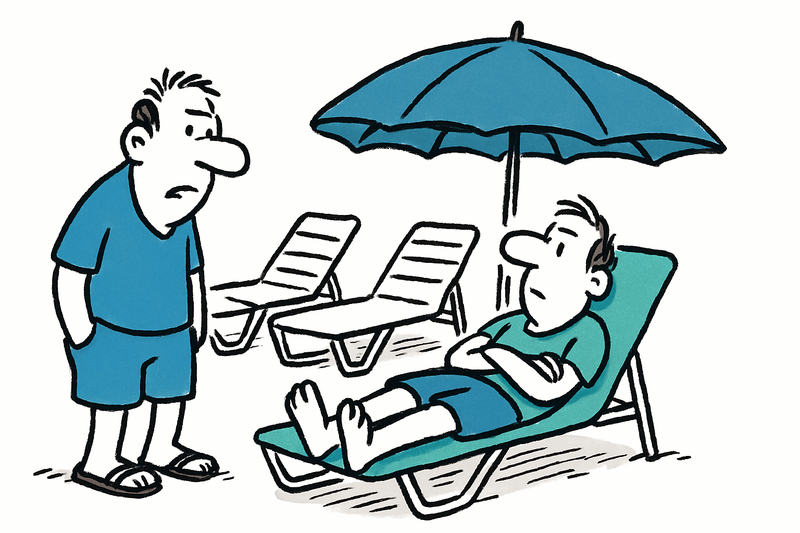
Early in the morning, when the first fishing boats return to Can Picafort and the sound of the waves mixes with the clatter of coolers and stacks of loungers, one thing stands out: more free beach spots than usual. Operators of sunbeds and umbrellas at hotspots like Playa de Muro report noticeably lower demand this July. The association of rental companies speaks of losses in the order of around 20 percent compared with the previous year. A figure that is now causing tense conversations in the street cafés and beach bars.
The key question: Are guests saving — or is a business model changing?
Is the phenomenon just a short-term reaction to rising prices, or does it mark a deeper shift in the beach experience in Mallorca? According to local observations, holidaymakers are increasingly spending more frugally: instead of renting a sunbed for a week, many spread out a towel, even bring their own umbrellas, or go without shade altogether. Sometimes a family sits persistently in swimwear and flip‑flops on a blanket while the empty sunbeds with their sticker wait for customers.
There are several reasons for this: higher flight and hotel prices are squeezing disposable budgets, while sensitivity to additional costs is growing. Many travelers now consider carefully what they pay for — and discover that a day at the beach is possible without a paid sunbed.
Underestimated aspects: operating costs, allocation practices and seasonal fixed costs
Discussions often point to the supposed stinginess of guests. Less examined are the providers' structural costs: licenses for beach sections, logistics, staff during the high season, insurance and the acquisition of high-quality umbrellas and loungers are fixed items. When occupancy falls, profitability is quickly affected.
Added to this is the municipalities' allocation practice. Concession awards with high minimum payments to town halls force rental companies to keep their prices — even when demand falters. That leaves little room for short-term price cuts or more flexible offers.
Fewer bookings for activities as well: another signal
Not only are the sunbeds staying empty: providers of jet skis, stand‑up paddling and boat tours also report declining bookings. Particularly noticeable is the late decision‑making: many holidaymakers only book activities on the last day of their holiday — or not at all. This suggests that spending is being planned more carefully and that spontaneously purchased entertainment money is being saved.
The role of critical messages — one factor among many
Onofre Fornés, president of the rental association, also blames the more critical voices against mass tourism in this debate. Such messages could influence the image and prompt holidaymakers to choose other destinations or behave more frugally. That is possible — but too simplistic if presented as the sole cause. Travelers' decisions are multifactorial: price development, expected experience, awareness of sustainability and the availability of inexpensive alternatives all play a role.
Who pays the price? Small businesses and gastronomy
The effects are widespread. Beach bars report less spending-happy guests; restaurants see smaller orders and increasing attempts to cut costs. For many small entrepreneurs this raises existential questions: seasonally employed staff, fixed costs for premises, supply contracts — everything tightens when revenue per head falls.
What is not being discussed enough
Flexible instruments are often missing at the political level: tiered prices for concessions, short-term subsidies in weak months, joint marketing campaigns for "value-conscious quality travel" or funding for the digitalization of providers (online bookings, dynamic pricing, combo packages). Also, aspects like promoting multigenerational tourism, longer stays instead of high daily turnover, are considered too rarely in strategy papers.
Concrete: opportunities and proposed solutions
Instead of only lamenting lost income, operators and municipalities could become more creative. Some approaches:
1. Flexible pricing models: discounts for morning slots, short-term prices for two- to four-hour use, last‑minute apps that offer free loungers at reduced prices.
2. Bundled offers: hotels and rental companies join forces: lounger including a soft drink, combo tickets with a snorkeling trip or family packages.
3. Digital pre-booking: online reservations reduce uncertainty for providers and give guests planning security — fewer empty slots, better staff planning.
4. Cooperation with municipalities: more flexible concession contracts that take seasonal fluctuations into account, as well as temporary fee reductions in weaker years.
5. Service expansion: low‑priced activities (sunrise beach yoga, guided nature walks, local markets) can attract new target groups and increase length of stay.
Looking ahead: pragmatic and local
The island is not facing a simple problem, but a chance to adapt. The bustle of lively markets in Inca, the clinking of glasses on the Paseo Marítimo or the calm at a lesser‑known cala are resources that can be used smarter. Those who now stare only at lost revenues overlook the chance to realign the beach experience and the business model — smaller, but more stable, sustainable and perhaps more resilient to market price fluctuations.
It will not be without conflict: some rental companies demand protective measures, others see training and cooperation as the way forward. One thing is clear: empty sunbeds are more than a truism about frugality — they are a wake-up call for an island that wants to live not only in summer months but year‑round.
In the end, this very frugality could be a nut Mallorca has to crack to become more sustainable and resilient. With creative offers, more flexible prices and increased cooperation, the gap can be closed — and the silence on some beaches soon filled with voices again.
Frequently asked questions
Why are there more empty sunbeds on Mallorca beaches this summer?
Can you still enjoy a day at the beach in Mallorca without renting a sunbed?
Is it getting more expensive to go to the beach in Mallorca?
Why are beach bars and rental companies in Mallorca worried about lower spending?
What is happening with sunbed demand in Playa de Muro?
Are people in Can Picafort booking beach activities later than before?
Do Mallorca beaches still offer flexible or cheaper ways to rent a lounger?
How is Mallorca changing its beach tourism model?
Similar News

Orange Alert over Parts of Mallorca: Are We Prepared?
Dark clouds and an announced wet spell have triggered an Orange alert in parts of Mallorca. A reality check: what's miss...

Sundair & Co.: Sale speculation and what it could mean for Mallorca
Rumors about a possible sale of the airlines Sundair and Fly Air 41, which belong to Schauinsland-Reisen — and whether b...
Anne Wünsche in Mallorca: A job offer with a catch — who fits the role of personal assistant?
Influencer Anne Wünsche has left Berlin and is urgently looking for a full-time personal assistant in Mallorca. Why the ...

Daily from New York: Palma Between Boom and Strain
United will increase the Newark–Palma route to daily flights in 2027 using Boeing aircraft (231 seats). What does the in...

Palma Gets a Welcoming Park: Tirador Goes Greener — and a Café Is Coming
A new green project in Es Fortí/Camí de Jesús will transform the old Voltadora into a city park with an experience fores...
More to explore
Discover more interesting content

Can Cap de Bou

Townhouse Lleo 72
