
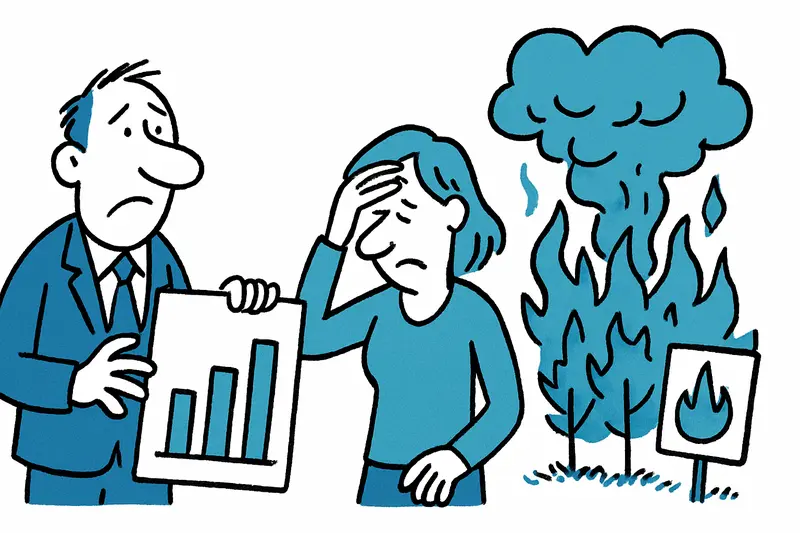
Wildfire Balance 2025: Good Numbers — Dangerous Calm?
Wildfire Balance 2025: Good Numbers — Dangerous Calm?
82 fires, 17 hectares burned — at first glance a success story. But the statistics hide risks: almost all fires are human-caused, climate change and prevention gaps remain. A reality check with concrete steps for Mallorca.
Wildfire Balance 2025: Good Numbers — Dangerous Calm?
Key question: Are the good numbers from 2025 enough to let us relax — or is the calm deceptive?
The raw figures are impressive: 82 reported wildfires in the Balearic Islands in 2025, affecting only 17 hectares. On Mallorca alone, 39 fires were recorded. For comparison: the ten-year average is 88 fires and 148 burned hectares per year. That reads like a success — and yet the statistics hide a number of open questions.
Critical analysis
Almost 96 percent of the fires were caused by human activity, only four percent by natural events such as lightning. This is central: if people are the main cause, then behavioral changes and organizational measures are effective — but only if they are implemented seriously. The Balearic government initially provided €1.5 million for measures such as firebreaks in winter. That is a start, but not automatically a long-term solution.
Another point: the small burned area in 2025 could also have been due to chance or favorable weather. Climate experts warn — and this is reflected in official admonitions — that climate change increases overall wildfire risk, a point underscored when smoke from mainland wildfires reached Palma. Fewer fires in one year does not mean the risk has decreased. On the contrary: low damage figures can reduce political attention, while long-term measures continue to require resources.
What is missing from the public discourse
The debate often revolves around annual totals and individual measures, but rarely about three central questions: Who owns the affected lands? Who manages them long-term? And how is the effectiveness of funding checked? Without answers, short-term programs risk fizzling out after a few years. Also underexposed is the role of livestock and extensive grazing as a preventive measure — in many municipalities on the island, sheep and goat flocks are a natural tool to reduce combustible material.
Everyday scene from the island
Imagine a frost-clear winter morning on a secondary road near Campos: a shepherd drives a small flock along the field tracks, a tractor scrapes at a freshly cut firebreak, and at a viewpoint a forester checks the boundary of the reserve. Such scenes are not idylls but prevention. Unfortunately they are not standard everywhere — often personnel, equipment or clear responsibility between municipalities and regional administration are missing, as shown by an evening fire by the Ma-15 that burned three hectares and led to evacuations.
Concrete solutions
1) Targeted allocation of funds and transparency: €1.5 million is good, but funds must be tied to measurable, multi-year projects: kilometers of firebreaks, hectares maintained, regular inspections.
2) Promotion of targeted livestock grazing: subsidies for grazing in critical edge zones reduce fuel and support the local economy. Mobile shepherd protection and insurance for shepherds could help.
3) Early warning systems and night shifts: invest in drones and thermal cameras for early detection plus better coordination of fire departments, forestry offices and volunteer brigades.
4) Prevention instead of punishment alone: public outreach, clear rules for barbecues and open fires, campaigns in tourist centers and with landlords — especially in the transition period before the high season. This is particularly relevant as authorities marked the official end of the wildfire season in Mallorca.
5) Long-term landscape plan: instead of isolated strips, we need a network of maintenance areas, corridors and rewilding projects that combine erosion control, biodiversity and fire protection.
Conclusion
The 2025 balance is encouraging — but it must not become a sedative for politics and society. That 96 percent of fires are caused by people is an opportunity: we can reduce risk if we act consistently, transparently and locally. Mallorca needs not just money for strips in winter but a connected concept that brings shepherds, municipalities, foresters and fire brigades closer together. Otherwise the good statistics remain a fleeting moment in a warming future.
Island perspective at the end: Good news is important — even more important is that we draw the right conclusions from it.
Frequently asked questions
Why were Mallorca’s wildfire numbers lower in 2025?
What causes most wildfires in Mallorca?
Is it safe to relax after a quiet wildfire season in Mallorca?
What should people in Mallorca do to reduce wildfire risk before summer?
Why is sheep and goat grazing used for wildfire prevention in Mallorca?
What wildfire prevention measures are being used in Mallorca?
What happened near Campos during the winter wildfire prevention work in Mallorca?
What does the end of the wildfire season mean in Mallorca?
Similar News
Released with Conditions: The Plus Ultra Suspicion and a Mallorcan Finca as Residence
A Dutch entrepreneur, sought in connection with the Plus Ultra case, was extradited to Spain after his arrest in Germany...

Haute Nuit in Puerto Portals: Fashion, Art and Indulgence by the Water
On October 2 the Lobster Club in Puerto Portals will be transformed into a stage for curated fashion, art and culinary e...
Magaluf: Watchtower Alarm – Lifeguards Pull Unconscious Beachgoer from the Water
After a drama in the late afternoon, two lifeguards at Magaluf beach rescued an unconscious 44-year-old man. He was stab...

Turquoise in the City: How dangerous is the color play of the Sa Riera?
The Sa Riera in Palma suddenly turned turquoise — a pretty motif, but behind the effect lies a discharge of saline waste...

Jeckliner at Sunnesching: Cologne spirit sets sail from Palma
In September 2027 the Mein Schiff 2 briefly becomes a floating carnival stage: four days with Cologne bands, comedy and ...
More to explore
Discover more interesting content

Can Cap de Bou

Townhouse Lleo 72
