
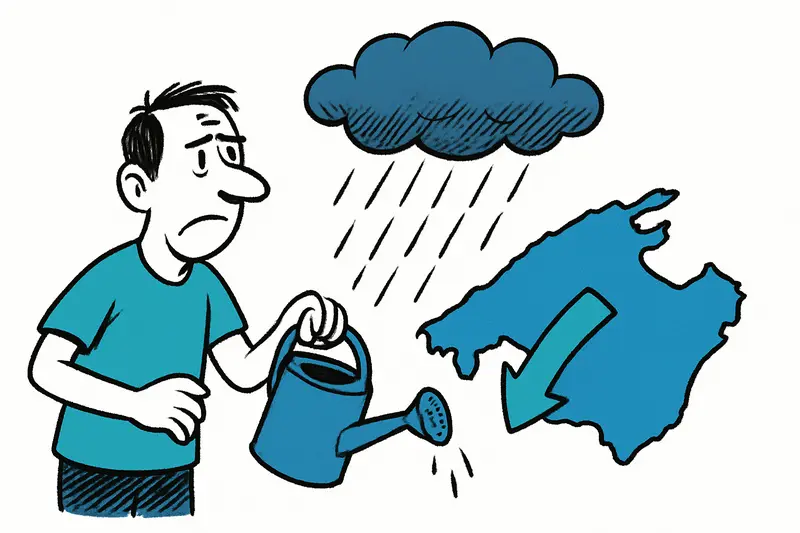
Rain in Sight – Will the Water Be Enough for Mallorca by the End of the Week?
Rain in Sight – Will the Water Be Enough for Mallorca by the End of the Week?
Aemet predicts showers at the end of the week. But a few drops and a slight temperature drop are not enough to ease the tense situation on the island. A reality check from Palma, Llucmajor and the fields.
Rain in Sight – Will the Water Be Enough for Mallorca by the End of the Week?
Key question: Will the forecast showers really ease the drought?
The Spanish weather agency Aemet expects rain towards the end of the week, locally even heavier thunderstorms (see Thursday will be cooler and wetter — but is Mallorca really prepared?). In the city heat shimmers above the Passeig del Born, in Llucmajor the asphalt sticks to the soles of shoes, and in Sant Elm families seek shade under narrow pines in the late afternoon – this is everyday life here while the island's elite watches for any rain signal.
In the short term the forecast mainly means two things: a slight drop in daytime highs – Aemet expects about 35 °C on Monday and then around 32 °C until Thursday – and isolated showers that can be heavy locally, as reported in Storm alert on Friday: Is Mallorca prepared for heavy rain?. But: nights remain warm at 22 to 26 °C, and the hoped-for rain does not cool the heat across the board.
Critical analysis: A few thunderstorm cells in the south or in the Tramuntana valley bring a lot of water locally, but short, intense rains do not fill large reservoirs, and they help deep soil layers only to a limited extent. Anyone working in the fields in Porreres or Sineu knows that individual showers hardly provide lasting relief for crops.
What is missing in public discourse: concrete figures on the island's water reserves, transparent information on irrigation restrictions for agriculture and golf courses, information on the fire brigade's preventive measures and municipal plans for drinking water rationing in extreme cases. This information would help put the announcement "it will get wet" into realistic perspective, as discussed in Restless week in Mallorca: How well is the island prepared for heavy rain?.
A snapshot from daily life: At Mercat de l’Olivar vendors fan themselves with bunches of peppers, a delivery van kicks up dust on the Camí dels Reis, and in Santanyí's village square old people sit with fans and watch cloud-covered mountains. Conversations revolve not only around the heat, but around the small, annoying factor: how much water is left for gardens, pools and the irrigation of olive trees?
Concrete solutions for the coming days – and beyond:
- Short term: Water only in early morning or late evening; do not completely refill pools every day; shower instead of bathing; ask restaurants to bring bottled water only on request.
- Municipal: Consider temporary irrigation bans for public green spaces; set up mobile water depots where households report problems; information campaigns about reservoir levels.
- Agriculture: Prioritize drip over flood irrigation; temporarily allow reallocation of water rights so that sensitive crops get priority.
- Medium term: Promote rainwater harvesting projects at schools and sports facilities; require storage in municipal new-build projects; examine desalination and recycling capacities and make them transparent, echoed by Weather Change in Mallorca: Are We Ready for a Longer Rainy Period?.
What every tourist and neighbor can do now: avoid watering gardens, plan laundry loads sensibly, drive carefully during thunderstorms (branches may fall) and follow local municipal notices.
Punchy conclusion: The announced rain is welcome, but it is not a cure-all. A few wet hours can create puddles and relief, but not necessarily full reservoirs or less fire risk. Those living in Palma, Llucmajor or the rural communities should expect more hot days and take water and fire safety measures seriously now.
Frequently asked questions
What is the best time of year to visit Mallorca for warm weather?
Can I swim in Mallorca year-round?
What should I pack for a Mallorca trip?
Are there family-friendly beaches in Mallorca?
What are good day trips from Palma?
Is Mallorca easy to explore using public transport?
What should I know about Mallorca’s weather and sea conditions?
Are there practical safety tips for visiting Mallorca?
Similar News
Beach Emergency in Portals Nous: Why Seconds Can Decide Life or Death
A visitor from Asturias suffered a cardiac arrest on Friday afternoon off Portals Nous and was brought ashore after prol...
Arrest in Son Sant Joan: Tourist attacks taxi driver — what the incident reveals about the island
A dispute over a pedestrian crossing escalated at Palma Airport: a British tourist struck two taxi drivers and damaged a...

Community at Sea: A Sailing Club in Port d'Andratx Opens Its Hatches
In the harbor of Port d'Andratx, residents share a 13-metre sailing yacht, organize trips themselves and thus keep a sma...
28 Dead on the Way to Mallorca: What This Shipwreck Says About Rescue in the Mediterranean
A boat traveling from Algeria to the Balearic Islands capsizes, 28 people die and only four survive. Who is responsible,...
Graffiti on the Ma-10: "Mallorca is not Germany" – What's behind it, what to do?
On the Ma-10 between Estellencs and Andratx the German sentence "Mallorca ist nicht Deutschland" appeared on several roa...
More to explore
Discover more interesting content

Boat Tour with BBQ along Es Trenc Beach

Private transfer from Mallorca Airport (PMI) to Pollensa
