
After the Storm: Why Many Fish Died at Riuet de s'Illot — and What's Still Missing
After the Storm: Why Many Fish Died at Riuet de s'Illot — and What's Still Missing
After the severe storm, numerous dead fish were found in the Riuet de s'Illot wetland. Who is affected, why it may have happened, and which measures are now necessary.
After the Storm: Why Many Fish Died at Riuet de s'Illot — and What's Still Missing
Between Manacor and Sant Llorenç des Cardassar lies the Riuet de s'Illot, a small, sensitive wetland. After the severe storm last Thursday, residents and volunteer helpers discovered numerous dead fish, mussels and other marine creatures there. A pungent, rotten smell hung over the area and drove a few tourists away from the shoreline in the morning — the seagulls circled, the shore stones were fouled, and on the Camí that leads to the Riuet conversations were quieter than usual.
Key question
Was the fish die-off a direct consequence of the storm — or does this incident reveal larger, systemic problems in how we manage wetlands?
Critical analysis
The first, obvious explanation is: intense stirring of the sediment by the storm and wave action released organic material from the bottom into the water. As this material decomposes, oxygen is consumed; in a largely enclosed waterbody that can quickly lead to hypoxia. In that respect the picture fits: various species are affected — mullet, sea bass, gobies, sardines, eels, mussels, shrimps and even thornback rays were found — so it is not just one fish species but the whole Mediterranean assemblage.
But the scientific explanation alone is not enough. A wetland like the Riuet depends on regular water exchange. Measures that can improve exchange — such as pipes or pumps to the sea — have already been implemented elsewhere. Yet the current incident shows that isolated technical fixes are not enough when fundamental elements are missing: continuous monitoring of water conditions, a clear emergency plan for storm damage, as discussed in Stormy night in the island's interior: What's missing when rain becomes a problem?, and a tiered cleaning and restoration protocol for wildlife.
What's missing in the public discourse
The public debate usually focuses on the spectacular image of dead fish, and less often on the longer-term consequences for biodiversity, local fishers and tourism, as highlighted in Sea off Mallorca: When the Underwater Meadow Disappears. Also little noticed are micro-pollutants and plastic remnants that helpers found while cleaning — cigarette butts, plastic pieces — and the long-term contamination of the soil. Likewise missing is a simple information chain for residents and swimmers: when is an area safe again? Who decides that? And what assistance is there for threatened species, for example eels, which are particularly vulnerable?
Everyday scene from Mallorca
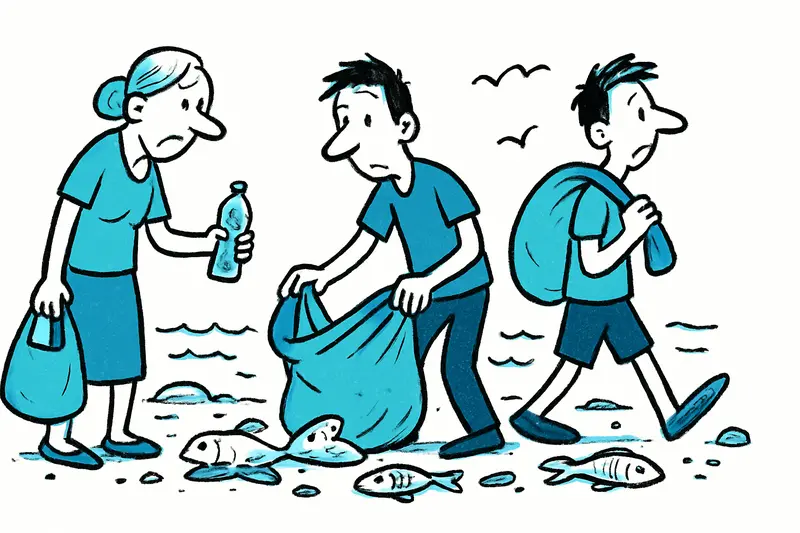
Imagine the small neighborhood initiative that meets on a Saturday morning at the beach to collect litter: parasols are rolled up, an elderly woman with a shopping bag hands out water bottles, young people carry sacks. They had actually intended to retrieve rubbish from the sea but could not go into the water because of the strong waves. Instead they found fish carcasses and filled bags with plastic. Such volunteer actions are typical for the island — they show commitment but quickly reach their limits when it comes to biological risks and disposal.
Concrete solutions
1) Short term: Systematic removal of carcasses by specialized teams, proper disposal and testing of the water for oxygen levels, nutrients and pollutants. Municipal cleaning companies like SAM can support here but need clear directives and laboratory capacity, as examined in After the Rain: Who Cleans the Streams — and Is It Enough?.
2) Medium term: Establishment of a permanent monitoring point for temperature, oxygen and turbidity in the Riuet. Data should be publicly accessible so residents and researchers can follow trends.
3) Long term: A master plan for the Riuet that combines hydrodynamics, possible pipe and pump installations, renaturation zones and an emergency protocol. Involvement of local fishers, biologists, municipalities and neighborhood associations is indispensable.
4) Pollution prevention: Regular beach clean-ups with professional support, better waste-disposal infrastructure along access routes and awareness campaigns for tourists — in German, Spanish and English.
Conclusion
The mass death at the Riuet de s'Illot is more than a single natural event after a storm. It is a wake-up call: we need more data, clearer responsibilities and a combination of technical and ecological planning so that a small wetland does not remain so vulnerable. The volunteers who filled bags with rubbish and dead animals that morning took action. The island's institutions must now follow — quickly, transparently and with an eye to the future of the species that live here.
Frequently asked questions
What is the best time to visit Mallorca for outdoor activities?
Do I need to pack for beach days if I visit Mallorca in spring?
What should I pack for a Mallorca trip in general?
Are there family-friendly activities and places suitable for kids in Mallorca?
Is it easy to get around Mallorca without renting a car?
What are some quieter beaches on Mallorca for a peaceful day by the sea?
What should I know about swimming safety and coastal conditions in Mallorca?
Which towns offer a good sense of Mallorca’s culture and traditional food?
Similar News
Who will clean up? Illegal rubbish heaps on the highway near Son Gual drive residents onto the streets
For months, construction debris and household waste have piled up along the highway between Palma and Manacor near Son G...

Amundi takes over Bikini Island & Mountain Port in Sóller – many questions remain open
The French asset manager Amundi has acquired the four-star Bikini Island & Mountain Port hotel in Sóller from an Austria...

Silvia was allowed to see the sea once more – a small farewell in Port de Soller
A team from the Balearic health service IB-Salut fulfilled a terminally ill woman's wish: one last trip to the water in ...
Magaluf: Imprisonment for Beach Club Employee after Theft of a Bag — What the Ruling Overlooks
A former dishwasher received a one-year prison sentence for stealing a Louis‑Vuitton bag. The appellate court upheld the...

Road collapse at Port de Valldemossa: Who will pay for the next wave of damage?
A section of the MA-1131 near Port de Valldemossa slipped after heavy rains from cold front "Adam". Residents are strand...
More to explore
Discover more interesting content

Can Cap de Bou

Townhouse Lleo 72
