
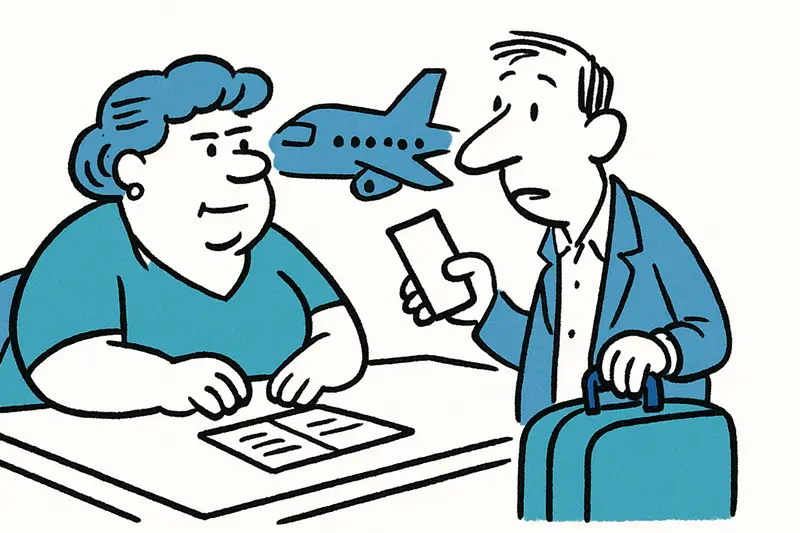
Before apps and low-cost carriers dominated travel, propellers, the Caravelle and the Tristar carried holidaymakers to the island. A local look back at the airlines that shaped Mallorca — with sounds, smells and a touch of homesickness.
When Mallorca Began with Propellers
In the past, when holidays were still a ritual at the travel agency, Mallorca looked different. You slid notes into folders, carried suitcases through smoke-filled departure halls and waited for the announcement over the loudspeaker, whose crackle now sounds almost nostalgic. My uncle Werner insists that a rainy Wednesday in Düsseldorf with a sturdy travel agent and a paper rucksack full of tickets produced more anticipation than any app today.
Pioneers with Propeller Charm
The first flights to the island resembled expeditions. Vickers Viking or Douglas DC‑4: propellers hummed, the airfield smelled of engine oil and petrol, cushions creaked. It wasn't mass tourism; it was a privilege people treated themselves to. Some passengers knew each other; they exchanged tips about hotels and the best sangría even before reaching Palma. The landing was a small event, accompanied by the clatter of landing gear flaps and the quiet murmur of the island unfolding beneath the wings.
The Jet Era and Its Sound
The Caravelle opened a new chapter. The aircraft brought speed, new design and — for some — even an onboard bar, recalled today with a wink. Later, larger types like the Lockheed L‑1011 Tristar rolled down the runway. Airlines such as LTU and Condor became summer brands: advertising, catalogue photos and the promise of sun. On the ramps you saw the Boeing 727, the Douglas DC‑9 and later the first generation of the A320 family and 737s. Each engine had its own pulse. In the early morning, around 6:30 at Palma airport, you can still hear that — a different roar than that of the new generations, older and somehow more handcrafted.
Names That Shaped Mallorca
For years many carriers determined where holidaymakers came from. Some, like Condor, remained almost taken for granted. Others, like Südflug, Air Commerz, Bremenfly or Hamburg Airlines, appeared and disappeared again. Sometimes the start-ups felt like local heroes: they organised special flights, filled holiday resorts with new guests and helped villages like Calvià or Alcúdia blossom over the summer. In Stuttgart and Munich you had your favourites, Hamburg often supplied creative ideas, and larger providers emerged in Frankfurt. For a closer look at these holiday carriers see Antes de las vacaciones: Las aerolíneas que marcaron Mallorca.
Regional Traces in Everyday Life
The presence of certain airlines left traces: tour guides wearing the same uniform, hotel guests with familiar routines, newspapers with regular adverts. At the markets and in the tapas bars you picked up new words, prices seemed to shift seasonally, and even the rubbish collection in some places knew exactly when high season began. Pilots who had a small glass at the harbour bar after duty told stories about the craft of flying. Local coastal stories are part of that tapestry, as shown in A man from Bremen, his boat and the new heartbeat: how a sailboat in Mallorca quietly went electric. Older airport staff still remember the times when you said goodbye to a suitcase in person.
What Remains — and What Doesn't
Today A320s and 737s dominate the scene, check-in is mostly digital, and low-cost carriers have made travel possible for many. That has changed Mallorca — for the better and in complicated ways. More guests bring more life, but also new pressure on infrastructure and landscape, a dynamic examined in More Boats, More Questions: Mallorca Under Pressure from Rising Boat Arrivals. Still: on some chilly mornings, when the sun over the Sierra de Tramuntana has just gilded the roofs, someone sits with a coffee at the terminal window and listens. An old pilot likes to say, “There was more craftsmanship in it.” I smile, take a sip, watch an A320 taxi by and think: every generation has its own sound — and its own stories that stick to the island.
A local look at Mallorca's aviation history — with a wink and the sound of past engines in your ear.
Frequently asked questions
How did travel to Mallorca change from propeller planes to today’s jets?
What was flying to Mallorca like in the early days of tourism?
Which airlines helped shape Mallorca’s holiday boom?
What is Palma de Mallorca airport like in the early morning?
Why did places like Calvià and Alcúdia grow with Mallorca’s charter flights?
Do low-cost airlines in Mallorca make travel easier or more complicated?
When is the best time to notice Mallorca’s older aviation atmosphere?
What should I know about Mallorca’s aviation history if I’m interested in local culture?
Similar News
Why the Striped Breams in Cala Pí Should Be a Wake-up Call
Once again bathers in Cala Pí were surrounded while swimming by small, nippy fish — some wounds bled. Time for clear rul...
Daily from New York: How Palma's Air Traffic Is Growing — and What Must Change
United will increase the Newark–Palma service to daily flights in 2027 (Boeing, 231 seats). Strong tourist numbers clash...

When Love Ends in Shards: Destruction in Son Vida and the Questions That Remain
In Son Vida a relationship dispute escalated: a woman destroyed furniture in a luxury villa, later pressed a panic butto...
Who Bears the Burden? Mallorca Between Tenant Protection and Landlord Fears
Madrid's new housing decrees strengthen tenant rights — but on Mallorca concern is growing: will the law drive small lan...
On the Edge: What Mallorca's Airport Loses If a Major Low-Cost Carrier Falters
The company that operates numerous connections from Palma to France and domestically is negotiating with creditors to re...
More to explore
Discover more interesting content

Can Cap de Bou

Townhouse Lleo 72
